
Why Lebanon Deserves International Support
BRATISLAVA – The news from Lebanon in recent weeks has been grim. As street protests in Beirut and other cities intensify, so does the country’s economic suffering. A political, economic, and social crisis has taken hold, leading to hard-currency shortages that hinder imports of vital daily commodities such as wheat, medicine, and fuel. Moreover, these problems are occurring against a backdrop of faltering economic growth and huge external debts. Local banks have imposed unprecedented capital controls, and thousands of Lebanese have recently lost their jobs or had their wages greatly reduced.
Seen from outside, there is only one viable solution: Lebanon itself needs to resolve its political crisis and implement necessary and overdue economic and fiscal reforms. But to succeed, the country needs the international community to back it financially.
At a conference in Paris in 2018, international donors pledged $11 billion in loans and grants to Lebanon, conditioned on the implementation of various reforms – a message donors recently reiterated. The formation of a functioning cabinet is a first step on that path, so that the international community can see effective government returning to the country. These conditions seem fair and in line with some of the protesters’ demands. At the same time, international support for Lebanon in its hour of need must be firm and unequivocal.
It is important to remember why Lebanon is in such economic difficulty. For starters, the country has suffered the consequences of the war in neighboring Syria: it is hosting 1.5 million refugees who have fled the conflict, as well as bearing the enormous economic impact of having a close trading partner at war. By settling and caring for these refugees, Lebanon is shouldering an intolerable burden in the hope of bringing greater security and stability to a very dangerous region. In addition, US sanctions aimed at the Shia political party and militia Hezbollah also affect ordinary Lebanese citizens and businesses.
Domestic political discord has also contributed to the current crisis. Lebanon’s presidency was vacant for more than two years until October 2016, and Prime Minister Saad Hariri’s resignation announcement in Saudi Arabia in 2017 shocked the country’s financial markets and triggered capital outflows. Following Lebanon’s May 2018 parliamentary election, a further nine-month delay in forming a new government – again headed by Hariri – highlighted the country’s leadership vacuum and political drift.
Furthermore, Lebanon’s international credit rating has been downgraded, most recently by Fitch, which lowered its rating from triple-C to double-C. This is hardly surprising: with an unsustainable debt-to-GDP ratio of 152% – partly the result of the heavy borrowing required to finance post-war reconstruction – Lebanon is the world’s third-most indebted country. Interest payments consume almost half of government revenues, while a 2017 public-sector wage increase and higher interest rates have added to the budget deficit.
In contrast to the economic mismanagement of successive Lebanese governments, the central bank, Banque du Liban (BDL), has competently and diligently steered a path through the current market turbulence and served as a welcome stabilizing force. Although BDL Governor Riad Salameh has been criticized by the Lebanese Communist Party and Hezbollah, he otherwise is widely seen as having played a vital role in preventing a much worse crisis.
For example, the BDL has sold US dollars to leading importers to ensure the continuation of essential supplies and has lent to the government so that it can pay key public-sector workers, including the armed forces. Furthermore, the central bank has instructed local banks to increase their capital by 20% by June this year, and is encouraging the use of the Lebanese pound.
Lebanon has received strong signals from the international community that it also should seek assistance from the International Monetary Fund and the World Bank. Hariri – currently serving as caretaker prime minister, having resigned soon after the protests began in October 2019 – appears open to doing so. Moody’s recently warned that without such international support, Lebanon would be increasingly likely to face “a scenario of extreme macroeconomic instability,” in which a debt restructuring and an abrupt destabilization of the currency peg to the dollar would result in major losses for private investors.
The continued discussion about providing economic support to Lebanon in this moment of crisis is therefore encouraging and indicates a strong international consensus to help the country help itself. There was a further positive (but under-reported) development in December, when the US government released $115 million in institutional aid to Lebanon.
Of course, it will not be easy for Lebanon to get its political house in order, given the ongoing street protests and heightened tensions. But political leaders must urgently form a new cabinet and deliver the raft of reforms required by the international community. In return, the country needs and deserves a global pledge that as it makes progress on this path, the $11 billion in international assistance will quickly follow the recently disbursed US funds.
The international community has a vital interest in a stable, recovering Lebanon, both for the country’s own sake and that of stabilizing a geopolitically strategic region. Moreover, the heavy sacrifices of this small country as a result of the war in Syria have gone a long way toward bolstering our own security in Europe. On behalf of our own grateful citizens, we owe Lebanon our strong support.
à lire aussi
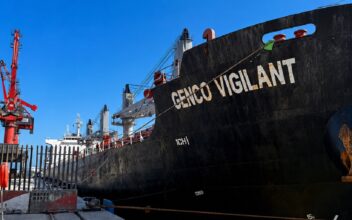
Article : Au port de Casablanca, un premier navire Supramax de 55.000 tonnes pour Cosumar
Un premier navire vraquier sucrier d'une capacité avoisinant 55.000 tonnes, affrété par le groupe Cosumar, a été accueilli au terminal polyvalent de Marsa Maroc au port de Casablanca. Ce navire est le premier à bénéficier de l’approfondissement des quais à 12 mètres de tirant d’eau.

Article : Épisode 3. « Nous ne sommes pas venus regarder un match »
Après avoir découvert la diversité des profils présents à Santiago, une autre réalité apparaît au fil des entretiens. Les centaines de Marocains qui ont traversé la planète pour assister à la finale de la Coupe du monde U20 ne se considèrent pas comme de simples spectateurs. Pour beaucoup d’entre eux, leur présence constitue une contribution à la performance de l’équipe nationale. Entre soutien moral, devoir patriotique et sentiment de participation, ils développent une conception particulière du supportérisme qui brouille la frontière entre les tribunes et le terrain.
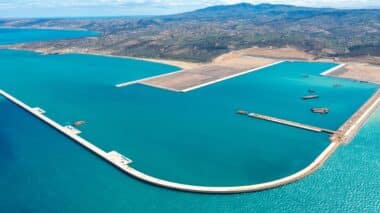
Article : Marsa Maroc : Mohammed Bendahmane aux commandes du terminal Ouest de Nador West Med
Passé par le Togo, l’Irak, le Canada et la Guadeloupe, le dirigeant rejoint un projet porté avec CMA CGM et présenté comme une étape majeure pour l’industrie maritime marocaine.
Article : L’Office des Changes lance “SARF”, sa nouvelle plateforme digitale de gestion des devises
Déployé après un programme de formation mené dans toutes les régions, l’outil doit permettre aux sociétés de change de traiter les achats et ventes de devises, d’éditer les bordereaux et de renforcer leur conformité LBC/FT.
Article : Marchés publics : le gouvernement prêt à revoir le quota de 30% réservé aux TPME
Devant les députés, Younes Sekkouri a reconnu les limites du dispositif censé ouvrir la commande publique aux petites entreprises, encore freinées par les délais de paiement et les difficultés d’accès aux appels d’offres.
Article : AXA Crédit Maroc change de dénomination et devient Stellantis Salaf Maroc
Rachetée majoritairement par FIDIS en septembre 2025, la société déploie désormais une offre de financement automobile pour les marques du groupe, tout en maintenant son activité historique de prêt personnel.