

Measuring What Matters
KIGALI – As many as 150 million people globally, roughly the combined population of Canada, France, and the United Kingdom, may have fallen into pandemic-induced extreme poverty over the past year. Partly as a result, governments are currently pumping unprecedented amounts of money into their COVID-19 response, spending over $14.6 trillion on rescue and stimulus measures in 2020 alone.
But a recent report by the United Nations Environment Programme and the University of Oxford indicates that only 18% of current recovery investments can be considered “green.” That’s a problem. As governments prime the pumps of economic recovery, they must change the yardsticks by which they measure human progress and welfare. Otherwise, their investments risk further fueling the inequalities and environmental destruction that prepared the ground for the COVID-19 pandemic. Environmental degradation and increasing contact between wildlife and humans enabled SARS-CoV-2, the virus that causes COVID-19, to jump from animals to people. And the conditions the virus encountered – shaped by vast social inequities – enabled it to erupt into a pandemic with devastating health, social, and economic consequences. Even in countries that have stated their intention to address both environmental destruction and inequality, rescue packages are dominated by spending that supports unsustainable pre-pandemic economic activities. These misguided investments reinforce the conditions that got us here in the first place. For example, countries such as India, Canada, South Africa, and China have set aside funding for green recoveries but are simultaneously propping up their fossil-fuel industries. While China has put forward an ambitious green recovery plan, construction of coal plants in its provinces surged in the first half of 2020. South Africa has earmarked $3.5 billion of investment in three new energy projects that will ostensibly “reduce the use of diesel-based peaking electrical generators.” But the state-owned electric utility, Eskom, previously built the world’s third- and fourth-largest coal-fired power plants. The industrial region around Middelburg, with a population of 4.7 million, includes 12 coal-fired power plants and a huge refinery that produces liquid petroleum from coal. This facility generates more greenhouse-gas emissions annually than entire countries such as Norway and Portugal. Respiratory diseases in the region likely cause more than 300 premature deaths per year. Other unsustainable activities – such as destroying forests, plowing and paving grasslands, and polluting fresh water – continue unabated. These natural resources sustain billions of people. They account for 47% of the rural poor’s household incomes in India, nearly 75% in Indonesia, and 89% in Brazil’s northern Amazon. Over 70% of people in Sub-Saharan Africa depend on forests and woodlands for their livelihoods. To correct our course, we must change the way we measure human development and social progress. Without the right signposts, we will be unable to achieve the transformation our economies and societies must undergo to ensure our survival. National gross domestic product, the most widely used economic-development measure, is useful and provides a great deal of information closely related to human welfare. But it offers no guidance regarding how to avoid unsustainable and unequal outcomes. Fortunately, as countries plan their post-pandemic recovery expenditures, they can consider a new tool: the Planetary-Pressures Adjusted Human Development Index (PHDI) developed by the United Nations Development Programme and its partners. The PHDI is a gauge of human progress that accounts for poverty, inequality, and planetary strains. It measures not only a country’s health, education, and living standards, but also its carbon dioxide emissions and material footprint. The resulting index gives policymakers an indication of how development priorities would change if the well-being of both people and the planet were central to defining humanity’s progress. Using this approach, more than 50 countries drop out of the very high human development group based on UNDP’s standard Human Development Index, while countries like Costa Rica, Moldova, and Panama rise at least 30 places. Planning that conserves nature would improve the well-being of billions of people. Some might argue that GDP is a well-established universal yardstick, and that the PHDI is too complicated for countries facing urgent and competing development priorities. But the new index enables us to identify and measure the sustainability problem, and offers a clear alternative to relying on one main indicator – GDP – as a gauge of a country’s progress. Without a different approach, we risk inviting the next pandemic by widening inequities and deepening the environmental crisis. The two go hand in hand. And when disaster ultimately strikes, the best we can hope for will be timely humanitarian relief. Instead, governments should adopt new measures to address the environmental crisis and growing inequality, and make these part of a longer-term strategy that begins now. By measuring what matters, governments will be able to deliver recovery plans that strengthen green stewardship and reduce inequities, improving the prospects for a healthier and more prosperous future for all.
© Project Syndicate 1995–2021
à lire aussi
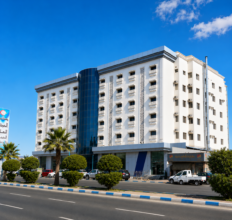
Article : Santé : Akdital poursuit son offensive saoudienne avec un nouvel hôpital à Djeddah
En reprenant un établissement déjà bâti de 120 lits, dont l’ouverture est visée au premier trimestre 2027, le groupe coté à Casablanca porte à quatre ses projets dans le Royaume et avance vers son objectif de 2.000 lits à l’international d’ici 2030.
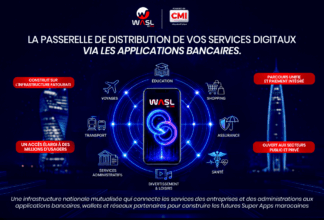
Article : WaSL by CMI : vers des “Super Apps” marocaines pour payer, réserver et accéder aux services
Après avoir habitué les Marocains à régler factures, taxes et créances depuis leurs canaux bancaires ou partenaires, le CMI veut franchir une nouvelle étape : intégrer les services eux-mêmes dans ces parcours. Avec WaSL, administrations, entreprises, fintechs et établissements de paiement pourront brancher leurs offres sur une infrastructure déjà utilisée par plus de 100 organismes et 32 banques, avec l’ambition de rapprocher les démarches du quotidien des usages numériques existants.
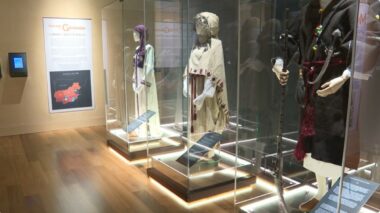
Article : À l’Alhambra, la Fondation Docteur Leïla Mezian donne une vitrine mondiale au patrimoine amazigh
Le Carmen de los Porcel accueille depuis samedi 13 juin une exposition permanente de 200 m² consacrée aux objets, aux gestes et aux récits amazighs, enrichie notamment par la donation de bijoux de Jorge Dezcallar, ancien ambassadeur d’Espagne au Maroc.
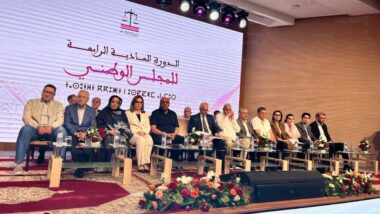
Article : Législatives 2026 : le Conseil national de l’Istiqlal pose les bases de son programme électoral
À quelques mois du scrutin de septembre, Nizar Baraka veut installer son parti sur des thèmes concrets et populaires : sécurité hydrique, production locale, industrialisation, moralisation de la vie publique et pouvoir d’achat. Une manière de préparer la bataille des urnes en tentant de répondre aux attentes des citoyens. Si les thèmes sont bien choisis, il reste à connaitre les mesures concrètes que propose le parti.
Article : Océans : le rapport de 1.300 pages de l’ONU qui documente un désastre en cours
Ils ont longtemps servi d’amortisseur silencieux à la planète, absorbant plus de 90% de l’excès de chaleur et près d’un tiers du CO2 rejeté par les activités humaines. Mais la machine se dérègle : niveau de la mer en accélération, coraux menacés, plastiques présents dans tous les écosystèmes, stocks de poissons sous pression et littoraux exposés. Publiée le 5 juin par l’ONU, la nouvelle Évaluation mondiale de l'océan dresse le portrait d’un système vital qui protège encore l’humanité, tout en montrant des signes de rupture de plus en plus visibles.
Article : ENQUÊTE. Manuels scolaires : derrière les pénuries de livres, la fin d’un modèle vieux de 20 ans
Affiché à seulement 4,05 DH, un manuel scolaire a fini par coûter près de 200 DH à certains parents, contraints de multiplier les déplacements et les tournées de librairies pour parvenir à le trouver lors de la rentrée 2025-2026. Derrière cette situation se joue une réforme qui bouleverse l’ensemble de la filière du livre scolaire. Pendant plusieurs semaines, Médias24 a interrogé les professionnels du secteur et reconstitué les effets de cette réforme sur un marché de plusieurs centaines de millions de dirhams.