
Demagogues vs. Dictators
AUSTIN – Throughout Donald Trump’s single term as president of the United States, his opponents in both the Democratic and Republican parties frequently portrayed him as a would-be fascist dictator. But with Trump ousted from the White House, this analogy has become untenable. The Italian leader Trump resembles most is not the fascist dictator Benito Mussolini but rather Silvio Berlusconi, the scandal-prone former prime minister.
Figures like Trump and Berlusconi – tycoons or media celebrities who ran for office as anti-establishment populist demagogues – are not uncommon in contemporary Western democracies. In Europe, the list includes elected leaders like Czech Prime Minister Andrej Babiš, one of the country’s wealthiest men; former Ukrainian President Petro Poroshenko, previously his country’s “Chocolate King”; and his successor, Volodymyr Zelensky, a comic actor who had previously played a Ukrainian president on television.
Although Trump is the first true demagogue to be elected to the American presidency, the entertainer or plutocrat who wins office by posing as a champion of the common people has been a staple of mayoral and gubernatorial races for generations. Media celebrity, in particular, has become an increasingly common basis for electoral success in America.
In the 1930s, the country music radio star W. Lee “Pappy” O’Daniel became governor of Texas and then a US senator. In the 1960s-80s, Ronald Reagan famously made the transition from Hollywood actor to California governor and then to the White House. Similarly, Jesse Helms, the late US senator from North Carolina, started out as a right-wing radio star. Then, in 1999, the TV wrestling celebrity Jesse Ventura (who, along with Trump, had attempted to take over Ross Perot’s Reform Party) was elected to a single term as Minnesota’s governor, and in 2003, the movie star Arnold Schwarzenegger became governor of California with no prior political experience. (Ventura had previously served as mayor of a Minneapolis suburb.)
Populist demagogues in democratic countries generally do not intend to create police states, and they could not even if they tried. Whereas interwar fascist dictators were backed by their countries’ military, police, bureaucratic, and business establishments, populists rely on the support of alienated non-elite groups and are typically opposed by most of the other power centers in society.
Hence, many flamboyant demagogues in the American South – such as Louisiana Governor (and then US Senator) Huey P. Long or the husband-and-wife team of populist Texas governors, James “Pa” and Miriam “Ma” Ferguson – represented small farmers and the white working class against the rich gentry who monopolized wealth and political office in their states.
Some demagogues exploit minority ethnic groups’ bitterness over their own exclusion from wealth and power. In the first half of the twentieth century, James Michael Curley, the corrupt four-term mayor of Boston and one-term governor of Massachusetts, won and held power by representing working-class Irish-Americans against the Anglo-American Protestant elite – the so-called Boston Brahmins.
But while populist demagogues can identify legitimate grievances among some voters, they almost never deliver on their promises to followers. Some, like O’Daniel in Texas, become fronts for establishment interests, whereas others merely create personal patronage machines, using their official powers to reward family members or cronies. Very rarely do demagogues create new institutional structures that can carry out reforms long after they leave office.
In Curley’s case, his Harvard-educated son-in-law, Edward Donnelly, played a role similar to that of Trump’s Harvard-educated son-in-law, Jared Kushner. In Louisiana, Long created a family dynasty that included his brother Earl, who followed him as governor, and Russell Long, who became a long-serving US senator from Louisiana.
In any case, demagogic populists’ political careers tend to be rich in scandal and corruption. Whereas Berlusconi had his infamous “bunga bunga” parties, Trump had the “Access Hollywood” tape, where he boasted about sexually assaulting women.
And then there are the instances of graft and outright crime. Like Curley, Berlusconi was sentenced to prison. As Louisiana’s political boss in the 1930s, Long made a deal with the New York gangster Frank Costello to share gambling profits in the state, even as his minions “dee-ducted” money from state government payrolls to benefit a campaign slush fund that became known as the “deduct box.” In Texas, Pa and Ma Ferguson financed their political machine by selling pardons to the families of convicted criminals. Recent reports that Trump allies were paid to lobby the outgoing president for pardons reek of corruption, not dictatorship.
Of course, the storming of the US Capitol by Trump supporters has inevitably led to facile comparisons to Nazi Storm Troopers and Italian Fascist Blackshirts. But America’s own history offers more accurate analogies for understanding the MAGA mob. It is no accident that in Tennessee Williams’s 1959 play Sweet Bird of Youth, the character of Boss Finley, the demagogic leader of a Southern state, has his own criminal gang (“Youth for Tom Finley”) whom he unleashes against his political opponents.
To be sure, demagogues in modern democracies can do a lot of harm, even if they cannot (and do not intend to) abolish elections, establish police states, and put their opponents in concentration camps. But opposing demagogic populists when they appear is not enough. We also need to understand the conditions that allow this species of politician to flourish.
When major groups in society have adequate representation through electoral politics and institutions like trade unions, religious organizations, and community groups, populist demagogues seldom find significant public support. It is only when large groups in a given city, state, province, or country feel disfranchised and ignored by conventional leaders that they are tempted to turn to flamboyant outsiders who claim to represent them, even though they usually represent only themselves.
Unfortunately, while wealth and status are becoming increasingly concentrated in modern Western societies, intermediate institutions and local communities have decayed, and traditional political parties have declined to the point of being mere labels that billionaires and media celebrities can easily co-opt. That means the conditions will remain ripe for more Berlusconis – and for more Trumps.
à lire aussi

Article : Pour près de 395 MDH, ce sera Urbagec/Separator qui construira la future gare LGV de l’aéroport de Casablanca
Le marché porte sur le lot 4 du projet, dédié à la construction de la gare ferroviaire de l’aéroport Mohammed V. Cinq candidats étaient en lice, dont SGTM, Sogea Maroc et Construction Management Services, pour une estimation initiale fixée à 380 millions de DH hors taxes.
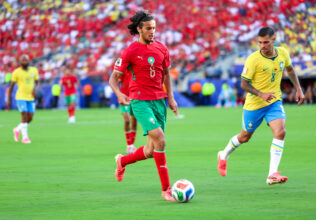
Article : Mondial 2026. Analyse de la masterclass d’Ayyoub Bouaddi
Le milieu de terrain a éclairé le jeu de l’équipe nationale face au Brésil, en match d’ouverture du groupe C. Mais il a aussi apporté un précieux équilibre grâce à son activité défensive. Sa permutation avec Neil El Aynaoui à la mi-temps y a grandement contribué.

Article : Grain Vision Morocco, le think tank qui veut mieux anticiper les chocs céréaliers
Derrière le prix du pain, les importations et les stocks, la filière veut imposer une approche plus technique de la sécurité alimentaire. Porté par la FNCL, ce nouveau laboratoire d’idées entend fournir aux pouvoirs publics des données sur les récoltes, la qualité des blés, les capacités de stockage et les besoins du marché.
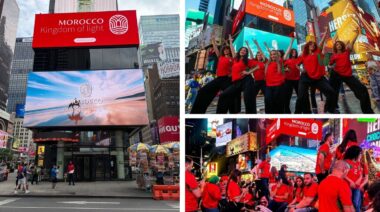
Article : Mondial 2026 : de Times Square aux taxis jaunes, le Maroc pousse sa destination à New York
À un an de la compétition nord-américaine, l’ONMT déploie "Morocco, Kingdom of Light" sur écrans géants, en animations de rue et sur plusieurs dizaines de véhicules, avec un objectif clair : transformer l’exposition du football en levier de notoriété touristique auprès des visiteurs, des habitants et des réseaux sociaux.
Article : Maroc-Chine : un accord de libre-échange est-il vraiment dans notre intérêt ?
Pékin a déjà supprimé ses droits de douane sur les produits marocains jusqu’en 2028. En retour, Rabat est désormais invité à ouvrir davantage son propre marché. Mais derrière la promesse de prix plus bas et d’intrants moins chers, les chiffres imposent la prudence : en 2025, le Royaume a importé 114,1 MMDH de produits chinois, contre seulement 3,8 MMDH exportés vers ce marché. Analyse.
Article : Accord États-Unis-Iran : le Maroc soutient l’accord et appelle au respect de ses engagements
Le ministère marocain des Affaires étrangères a qualifié l’accord entre les États-Unis et l’Iran d’étape importante pour la stabilité régionale, appelant à la prompte mise en œuvre et au plein respect de cet accord.