
Regions: a reform set to accelerate public projects in Morocco
The organic bill 031.26, amending and supplementing organic law 111.14 on regions, was adopted in its first reading on May 11, 2026. Introduced by the Ministry of the Interior, the text brings several major changes affecting regional powers, financial resources, and the governance model of the AREP. Here’s what we know so far.
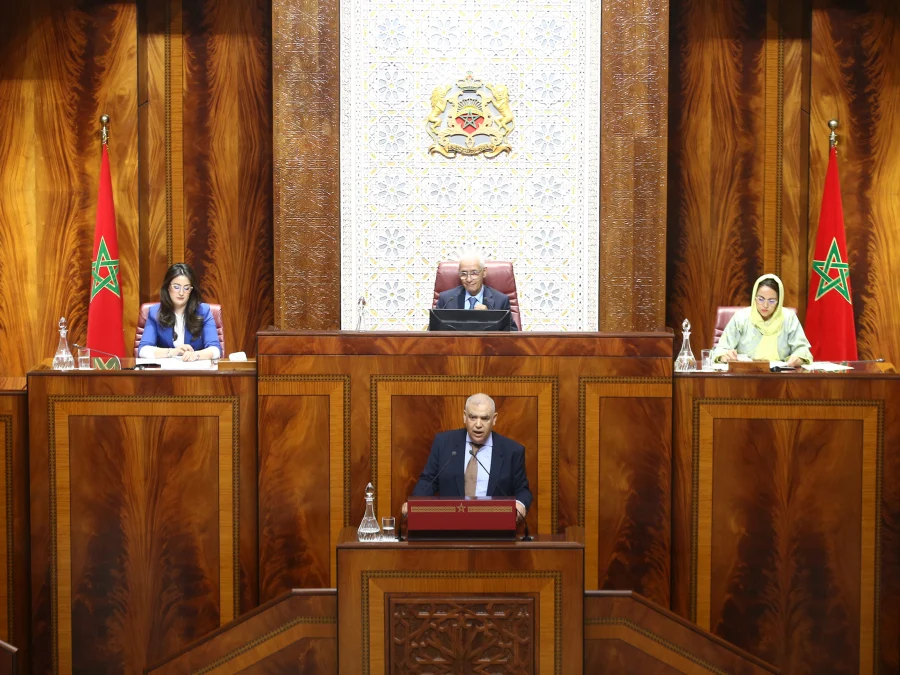
More flexibility, efficiency, and speed in implementing regional development projects and programs — that is the stated objective of organic bill No. 031.26, which amends and supplements organic law 111.14 on regions.
Presenting the text to parliamentarians on April 28, 2026, Minister of the Interior Abdelouafi Laftit explained that the reform comes in a national context marked by accelerating economic, social, and digital transformations. In line with royal directives, it calls for a profound renewal of public action tools.
Clarifying competencies and strengthening the role of regions
Organic bill 031.26 was adopted in the first reading during a plenary session held on May 11, 2026. Generally welcomed by parliamentarians, the text raised only a few reservations concerning specific provisions, for which several elected officials requested revisions. Of the 69 amendments submitted during its review, only nine were accepted, 35 rejected, and 25 withdrawn.
In the Interior Committee of the House of Representatives, Minister Abdelouafi Laftit explained that advanced regionalization has now entered a phase of "institutional maturity." The aim of this reform is to move from a logic of centralized decision‑making to territorial governance based on "proximity" and "efficiency," making the region a genuine space for the development and implementation of public policies.
"Organic law 111.14 granted regions broad prerogatives and significant administrative and financial autonomy. However, evaluations conducted over the past ten years have highlighted several limitations," he emphasized.
These include "overlapping competencies among institutional actors, lack of clarity in the distribution of responsibilities, multiple interlocutors, and cumbersome administrative procedures." Such factors have "slowed down the implementation of certain projects and reduced the expected impact on territorial development."
"These findings have fueled numerous debates in Parliament," he recalled, "as well as during national conferences dedicated to advanced regionalization. The recommendations arising from these meetings converged on the need to adopt a new vision — one focused on rationalization and clarification of competencies rather than their mere extension."
Three main reform axes
The text is based on three structuring axes, according to the Minister of the Interior. The first aims to reorganize the architecture of regional competencies by clarifying their content and eliminating overlaps with the State, other local authorities, or public establishments. Similar competencies will be grouped within coherent sectors, while certain attributions with limited or difficult applicability will be removed.
The second axis focuses on a profound reform of Regional Project Execution Agencies (AREP), which will be transformed into joint-stock companies (SA). The ministry believes that this evolution will introduce more flexibility and efficiency in project management, while preserving their mission of public interest. The ambition is to shift from an administrative logic to a more entrepreneurial management model to accelerate project execution, improve the quality of achievements, mobilize innovative funding, and attract specialized skills.
On this point, the minister explained that evaluations have shown that AREPs have not fully achieved their assigned objectives. Their transformation into SAs should provide them with a greater margin of action.
Finally, the third axis concerns strengthening the financial resources of regions. The bill provides for a significant increase in financial transfers from the State, with an annual amount of at least 12 billion DH starting from the 2027 budget year, compared to the current 10 billion DH, to finance structuring projects and support balanced territorial development.
Some competencies assigned to regions have proven difficult to exercise, such as those related to transportation and vocational training
The minister also emphasized that some competencies assigned to regions by law 111.14 have proven particularly difficult to exercise, especially in the areas of transportation and vocational training, where regions struggle to develop a comprehensive vision. “This is why a revision of competencies has been initiated after consultation with the regional presidents.”
He stressed that this reform does not reduce the prerogatives of elected officials or the principle of free administration. Advanced regionalization remains, according to him, “an endless process,” capable of evolving through the future addition of new competencies to meet the real needs of citizens and territories, even after the adoption of this new law.
Creation of economic activity zones, 18 months to prepare the PDR
As adopted in first reading, this bill amends or supplements several provisions of the current organic law, notably articles 82, 83, 91, 98, 115, 145, 146, and 194. It introduces new provisions concerning the transformation of AREPs into SAs, their organization and governance, the modalities for appointing their general managers, their legal status, and the composition of their management bodies.
Article 82, relating to the specific competencies of the region, expands and clarifies several areas of intervention. In terms of economic development, regions will be responsible for supporting productive investment and encouraging entrepreneurial initiatives, according to modalities defined by regulation. They will also be tasked with creating economic activity zones and mobilizing the necessary land for this purpose. In addition, they will be required to establish and manage regional groups dedicated to the marketing of agricultural and food products, in the form of agri‑food platforms.
Digital development now falls within regional competencies, through the design and implementation of a regional master plan for digital development. In rural development, regions will also be responsible for the construction, development, and maintenance of unclassified roads.
Article 83 modifies the deadlines for preparing the Regional Development Plan (PDR). Regional councils will have, upon the entry into force of this new law, 18 months instead of one year to prepare the document. However, several elected officials have argued that the real challenge lies more in project implementation than in the plan’s preparation timeframe.
Article 91 strengthens the role of regions in investment and economic development. They will be able to support productive investments and encourage entrepreneurial initiatives.
In the field of water and energy resources, regions will contribute to protecting water resources, developing and managing regional gardens, preparing a regional master plan for energy and water, and supporting initiatives related to renewable energies.
Tourism is also among the reinforced sectors. Regions will be able to develop tourist routes and circuits in rural areas, promote tourist activities, and enhance regional tourism potential.
Another significant development, Article 93 has been repealed and replaced. In its current version, it allows the region, “at its initiative and using its own resources, to finance or participate in the financing of a service, facility, or public service that is not part of its specific competencies, within a contractual framework with the State, if such financing contributes to achieving its objectives.”
The new system reverses this logic. From now on, the region may participate, at the initiative of the State, in financing national projects or programs carried out on its territory, even when they do not directly fall within its competencies.
AREPs transformed into joint-stock companies
However, the most structuring measure of the project concerns the transformation of AREPs into joint-stock companies, governed both by the organic law on regions and by law 17.95 on joint-stock companies.
These new structures will provide the regional council with all the technical assistance necessary for the study and implementation of development projects and programs. They will also be tasked with executing regional programs and certain State projects for remuneration, according to modalities to be determined by order of the Minister of the Interior.
The majority of the capital of these companies will be held by the region. Their statutes will be approved by regulatory means and will specify, among other things, the composition of the board of directors and the amount of the initial capital.
These companies are prohibited from taking stakes in other enterprises. The general manager of these companies shall not be a member of any municipality or hold elective office.
To ensure financial transparency, regions must distinguish between accounting and financial operations related to their own programs and those carried out on behalf of the State or other local authorities. The company’s budget and work program must be approved by the region’s wali.
During the transitional phase, current AREPs will continue to carry out their missions until the effective creation of the new joint-stock companies and the appointment of their directors.
This bill also provides that the general managers of the future joint-stock companies will be appointed by the Ministry of the Interior to ensure the recruitment of highly qualified profiles capable of effectively leading development programs and projects.
Enhanced financial resources
In addition to the annual subsidy of 12 billion DH provided by the State to the regions starting in 2027, this bill also provides for a substantial strengthening of regional financial resources. Under the finance law, the State will transfer to them:
- 5% of corporate tax revenue;
- 5% of income tax revenue;
- 20% of insurance contract tax revenue.
Reservations of elected officials
Parliamentary debates have highlighted several points of convergence, but also some reservations.
Many elected officials have pointed out a significant overlap between the competencies of regions, those of other local authorities, ministerial departments, and public establishments. They consider that clarification is essential to enable regions to fully play their role in development.
Some parliamentarians have argued that regions should retain only the competencies on which they can have a concrete and measurable impact. Others, on the contrary, have warned against abandoning certain missions deemed strategic and have emphasized the need to preserve the constitutional principle of free administration.
The transformation of AREPs into joint-stock companies has generally been well received. However, several elected officials have contested the modalities for appointing general managers and proposed that they be designated based on proposals from regional presidents.
Regarding financial resources, parliamentarians have mostly expressed support for the increase in the State’s contribution, rising from 10 billion DH to 12 billion DH per year.
Several interventions have also called for a revision of implementation decrees related to regions, as well as an update of the organic laws governing prefectures, provinces, and municipalities, to better clarify the distribution of competencies among the different territorial levels.
Elected officials have also emphasized the need to take into account the specificities of each territory when preparing the PDR.
Next step: the second reading
The project continues its legislative process for a second reading in Parliament before its final adoption.
The debates are therefore not closed, and this bill may undergo further modifications.
To be continued...

à lire aussi

Article : Mondial 2026 : l’Écosse récupère Scott McKenna avant son match contre le Maroc
Forfait lors de la victoire écossaise face à Haïti, le défenseur central a repris l’entraînement collectif.
Article : La Chambre des conseillers rejette le plafonnement des carburants et la nationalisation de la Samir
14 textes de loi ont été soumis au vote en plénière mardi 16 juin 2026 à la Chambre des Conseillers.

Article : Les prévisions météorologiques pour le jeudi 18 juin 2026
Voici les prévisions météorologiques pour le jeudi 18 juin 2026, établies par la Direction générale de la météorologie : - Temps assez chaud à chaud […]

Article : Christian Dior Couture Morocco recompose sa gouvernance
Après le départ de Nicolas Baretzki, la filiale marocaine de la maison de luxe du groupe LVMH a acté l’arrivée à son conseil d’un dirigeant venu de l’état-major international de Dior, passé auparavant par Givenchy.

Article : Laprophan finalise sa première acquisition en Europe et prend le contrôle du suisse Rivopharm
RÉVÉLATION. Le groupe pharmaceutique marocain Laprophan a finalisé, ce 17 juin, l’acquisition d’une participation majoritaire dans Rivopharm, société suisse spécialisée dans les médicaments de spécialité et les solutions pharmaceutiques à forte valeur ajoutée. Dr Farid Bennis la qualifie de "première historique : le médicament marocain est reconnu à l’international et en Suisse, pays de l’industrie pharmaceutique mondiale".
Article : “Je ne remettrai pas les clés à quelqu’un qui n’exporte pas” : avant le scrutin de l'ASMEX, Hassan Sentissi fixe sa ligne rouge
RENCONTRE. À quelques jours de l’élection qui doit désigner le prochain président de l’ASMEX, Hassan Sentissi affirme qu’il ne briguera pas un nouveau mandat. Mais il refuse de transmettre l’organisation à un dirigeant qui, selon lui, ne serait pas un exportateur. Volubile, volontiers digressif et d’un calme parfois trompeur, le président sortant livre sa version d’une succession devenue une bataille de statuts, de légitimité et d’interprétation du droit.