

Your Driver Is Waiting – for a Raise
TORONTO – Last May, just before Uber’s $82.4 billion initial public offering, the company’s drivers, together with those for its fellow ride-hailing platform Lyft (many drive for both), participated in an international day of industrial action, holding demonstrations in 24 cities – from London to Melbourne to New York City – to demand higher pay and better working conditions. But grievances with ride-hailing companies that charge riders low fares and extract hefty commissions from drivers are not limited to rich economies.
In July, driver associations in Nairobi, Kenya, urged stoppages by those working for digital-based ride-hailing services – including Uber, the Estonian company Bolt (formerly Taxify), and the locally owned Little Cab – over precisely such complaints. Although key players agreed to a set of payment principles last year, little changed in practice.
The rise of platform labor – digitally mediated service work – creates a policy conundrum. On one hand, it benefits consumers by providing low-cost on-demand services, and can benefit workers by giving them access to those consumers. In Kenya, at least 6,000 people work as drivers for ride-hailing platforms.
On the other hand, the quality of these new work opportunities remains unclear. While workers value the scheduling flexibility often offered by platforms, prices are set by opaque algorithms and corporate strategies. Companies are not accountable to their workers. It’s difficult to know precisely how many drivers there are, let alone what they are actually earning – though our early research in Kenya suggests there is reason to believe that it is not enough.
When ride-hailing companies first emerged, they attracted drivers with high fares. But, in an effort to increase ridership, they slashed prices over time. Because the additional rides were insufficient to offset the drop in per-mile rates, drivers’ hourly earnings plummeted.
This practice was apparent everywhere, but it was particularly painful for drivers in low-income markets, where, unlike in the United States or Canada, they typically acquire a vehicle specifically for the job, using their savings or taking out loans. They may also lease vehicles from car owners, called “partners,” on fixed weekly terms.
As their earnings fell, drivers struggled to cover their fixed costs. Forced to work longer hours, some ended up in fatigue-related accidents, according to both drivers and local insurers. In response, Uber imposed new limits on drivers: they could work for no more than 12 hours at a time, with at least a six-hour break in between.
For many drivers in Kenya, simply leaving the industry is not an option, owing to outstanding debts, depreciation of productive assets, and a lack of alternative income-generating options in a country where only 16% of workers have formal jobs. Desperate to make ends meet, many have been forced to maximize work hours by using multiple apps. Our early research in Kenya suggests that a typical driver in Kenya works 12-hour days, six days per week.
Still, not all drivers support the strikes. Some – particularly those who purchased their own cars or have some offline clients – are relatively satisfied with the platforms. While they would prefer fairer rate-setting practices, they say the frequent strikes are not worth the lost revenue. These drivers report feeling pessimistic that government will intervene on their behalf. Some drivers we interviewed believe that driver-association leaders organize strikes for self-serving reasons.
But choosing not to participate in a strike carries significant risks. During the May strikes, participants used WhatsApp to divide themselves into groups, with each covering a geographic zone. Their job was to intercept drivers who, in their view, were undermining the cause. Sometimes, they damaged the spoilers’ vehicles or confiscated their mobile phones. As Benson, an early entrant into the online taxi business, told us, “Most drivers don’t work during strikes for their own safety and that of their cars, not because they are also striking.”
There is only one way to ensure that ride-hailing platforms deliver for both riders and drivers: better government regulation. To this end, governments must first clarify who has the relevant regulatory authority.
In Kenya, drivers are given permits by the National Transport Safety Administration. But platforms like Uber, which are registered as technology firms, are not under the NTSA’s jurisdiction. The Cabinet Secretary for Labor and Director General of the Competition Authority of Kenya also stated that intervening in platform pay was out of their respective remits. This leaves drivers with nowhere to turn when their interests are disregarded, and puts platforms at risk of more radical state intervention in the future.
Once a regulatory authority is designated, it will need to design effective policies, which requires data. As it stands, platforms not only control pricing, but also hold troves of rider and driver data, creating significant information asymmetries between platforms and drivers, and between platforms and policymakers. Regulators should insist on access to the information they need to make sound policy judgments.
Platforms that claim to be marketplaces should function more like competitive markets, and less like monopolies. Strikes can draw attention to the problem. But only well-crafted regulations can fix it.
à lire aussi

Article : Censure de la loi 16.22 : ce qu'en pense l'ordre des adouls
Saisie par 93 députés avant la promulgation du texte, la Cour constitutionnelle a écarté plusieurs dispositions portant sur les incompatibilités professionnelles, les actes impliquant des personnes en situation de handicap, le témoignage collectif “lafif” et l’organisation des instances représentatives. Pour Maître Driss Trali, membre du bureau exécutif de l’ordre national, cette décision confirme les alertes formulées depuis des mois par la profession, tout en laissant encore ouverts plusieurs dossiers jugés essentiels, dont le dépôt des fonds, l’officialité pleine de l’acte et l’indépendance réelle de l’instance professionnelle.

Article : Bourse de Casablanca : le MASI termine encore dans le vert
Au lendemain de sa progression de 4,63%, l'une des plus fortes hausses de son histoire récente, le MASI poursuit son redressement le mardi 16 juin. L'indice a gagné 0,15% à 18.782,58 points, porté notamment par les valeurs immobilières et minières, dans un marché qui conserve une partie de l'élan né du regain d'optimisme sur le front géopolitique.
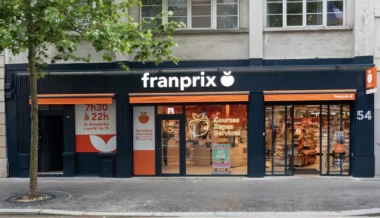
Article : Un premier magasin Franprix en test à Casablanca dès le 3 juillet
Le groupe H&S Invest Holding de Moncef Belkhayat concrétise son accord avec le groupe Casino avec l’ouverture, en test, d’un premier magasin Franprix à Casablanca.

Article : 20 ans de la Charte RSE : la CGEM distingue 21 entreprises et porte à 152 le nombre de sociétés labellisées
Lancé en 2006, le dispositif patronal a récompensé cette année dix nouvelles entreprises, dont Crédit Agricole du Maroc, Pharma 5 et Rabat Région Mobilité. Onze autres ont vu leur distinction renouvelée.

Article : Céréales : les minotiers s’engagent à collecter 15 à 20 millions de quintaux de blé marocain
D’ici au 15 juillet 2026, les minotiers se sont engagés à collecter entre 15 et 20 millions de quintaux de blé tendre issu de la production nationale. Un volume proche du record historique au Maroc et dont dépendra, selon eux, la réouverture des importations. Détails.

Article : Santé : la FM6SS et ABA Life s’allient pour développer des infrastructures médicales intelligentes
Dès octobre 2026, les premières solutions devront être déployées au Maroc, avec des objectifs chiffrés à l’horizon 2030 : 100.000 professionnels formés à l’IA, 25 millions de téléconsultations et plus de 100 start-up HealthTech accompagnées.