

Mohamed A. El-Erian
Chief economic adviser at AllianzVaccines and the West’s Credibility Crisis
With the world trying to recover from the massive economic shock brought by COVID-19, the mishandling of the global vaccine rollout has weakened trust in the international system that emerged after World War II. Combined with memories of the 2008 global financial crisis, which originated in the advanced economies, today’s failures are reinforcing suspicions among some countries that the international order may no longer be fit for purpose. The West, in particular, must take these concerns seriously. With no other multilateral system to replace the current one, the only alternative is a scenario of global fragmentation and rising economic, social, and political tensions. Although the United Kingdom has been ahead of most other countries in vaccinating its population, its struggle to hold down infections associated with the new B.1.617.2 variant from India serves as a timely reminder that no one is safe until everyone is. As former British Prime Minister Gordon Brown notes, whereas “nearly half of US and UK citizens have now received at least one” dose of a COVID-19 vaccine, that figure drops to 11% India. In Sub-Saharan Africa, barely 1% of the population has received a single dose. While country-specific problems have contributed to mismanaged and inefficient vaccine deployment in some developing economies, the real issue has been insufficient supplies. As the United Nations pointed out in March, just “ten rich countries … possess nearly 80% of all COVID-19 vaccines.” That has allowed them to start vaccinating even low-vulnerability segments of their population – including children as young as 12 – while billions of people in the developing world remain totally unprotected. The International Monetary Fund estimates that countries with large vaccine inventories could donate one billion doses in 2021 without undermining their domestic vaccination priorities. Moreover, several advanced economies have accumulated massive vaccine surpluses as they plan for a round of boosters in the fall. And insufficient funding for COVAX, the international community’s facility to ensure equitable global access to vaccines, further underscores their hesitancy in helping the rest of the world. But this is not just a moral and ethical failure; it is also a practical one. According to IMF research, an additional $50 billion in funding for global vaccination efforts would yield $9 trillion in economic benefits. The longer the global vaccine rollout stumbles, the greater the long-term damage to an already-stressed international system. Designed nearly 80 years ago, that system is centered on advanced economies that historically have provided key “public goods,” such as a stable international reserve currency (the US dollar) and significant funding for multilateral institutions. In exchange for these contributions, advanced economies have enjoyed enormous privileges, including a de facto veto in matters of global governance, currency seigniorage, and lower everyday funding costs (by serving as a destination for others’ savings). Yet while the postwar international system grants the advanced economies disproportionate influence in global affairs, its credibility and basic functioning ultimately depend on whether its stewards conduct themselves responsibly. The 2008 financial crisis suggested that they had not done so, and the rich world’s prolonged and excessive reliance on a policy mix over-dependent on monetary policy has since compounded the damage to their credibility. Against this backdrop, the unbalanced, unfair, and inefficient vaccine rollout could strike a huge blow to the system’s long-term viability. That would certainly suit China. With its growing economic power and global reach, it has eagerly been challenging the legitimacy and appeal of the Western-dominated order, which it describes as unreliable and dependent on asymmetrical relations vis-à-vis developing countries. But because one cannot replace something with nothing, the result has been the slow but consistent evolution of a kind of hybrid system. The postwar system remains in place, but its dominance is being gradually eroded by the proliferation of arrangements that bypass its core. Examples include new multilateral institutions (such as the Asian Infrastructure Investment Bank and the New Development Bank), new regional plans (notably China’s Belt and Road Initiative), and new bilateral trade and investment deals. Owing to these developments, the overall operation of the global economy has been weakened, with significant consequences for all. And the longer that vaccination lags in many parts of the developing world, the more pressure vaccinated countries will feel to adopt a bunker mindset. As the international system fragments, the less stable it will become, reducing the prospects for the kind of synchronized global growth needed to enhance individual countries’ performance. Moreover, as trust in the system continues to erode, advanced economies will face additional national-security challenges. Trust is a precious commodity: it is hard to establish, easily eroded, and exceedingly difficult to regain. While far from perfect, the current international order is better than any of the alternatives, and still eminently reformable. Advanced economies must not jeopardize it by dragging their feet in the global vaccination effort.
© Project Syndicate 1995–2021
à lire aussi
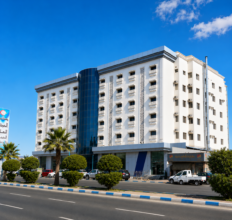
Article : Santé : Akdital poursuit son offensive saoudienne avec un nouvel hôpital à Djeddah
En reprenant un établissement déjà bâti de 120 lits, dont l’ouverture est visée au premier trimestre 2027, le groupe coté à Casablanca porte à quatre ses projets dans le Royaume et avance vers son objectif de 2.000 lits à l’international d’ici 2030.
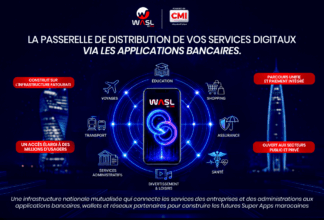
Article : WaSL by CMI : vers des “Super Apps” marocaines pour payer, réserver et accéder aux services
Après avoir habitué les Marocains à régler factures, taxes et créances depuis leurs canaux bancaires ou partenaires, le CMI veut franchir une nouvelle étape : intégrer les services eux-mêmes dans ces parcours. Avec WaSL, administrations, entreprises, fintechs et établissements de paiement pourront brancher leurs offres sur une infrastructure déjà utilisée par plus de 100 organismes et 32 banques, avec l’ambition de rapprocher les démarches du quotidien des usages numériques existants.
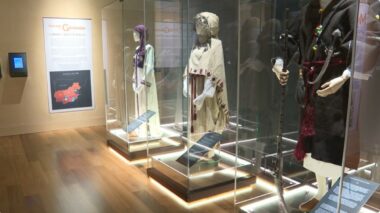
Article : À l’Alhambra, la Fondation Docteur Leïla Mezian donne une vitrine mondiale au patrimoine amazigh
Le Carmen de los Porcel accueille depuis samedi 13 juin une exposition permanente de 200 m² consacrée aux objets, aux gestes et aux récits amazighs, enrichie notamment par la donation de bijoux de Jorge Dezcallar, ancien ambassadeur d’Espagne au Maroc.
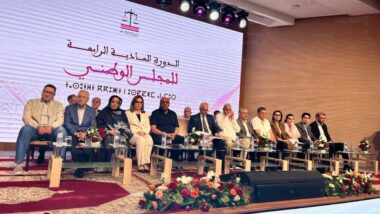
Article : Législatives 2026 : le Conseil national de l’Istiqlal pose les bases de son programme électoral
À quelques mois du scrutin de septembre, Nizar Baraka veut installer son parti sur des thèmes concrets et populaires : sécurité hydrique, production locale, industrialisation, moralisation de la vie publique et pouvoir d’achat. Une manière de préparer la bataille des urnes en tentant de répondre aux attentes des citoyens. Si les thèmes sont bien choisis, il reste à connaitre les mesures concrètes que propose le parti.

Article : Océans : le rapport de 1.300 pages de l’ONU qui documente un désastre en cours
Ils ont longtemps servi d’amortisseur silencieux à la planète, absorbant plus de 90% de l’excès de chaleur et près d’un tiers du CO2 rejeté par les activités humaines. Mais la machine se dérègle : niveau de la mer en accélération, coraux menacés, plastiques présents dans tous les écosystèmes, stocks de poissons sous pression et littoraux exposés. Publiée le 5 juin par l’ONU, la nouvelle Évaluation mondiale de l'océan dresse le portrait d’un système vital qui protège encore l’humanité, tout en montrant des signes de rupture de plus en plus visibles.
Article : ENQUÊTE. Manuels scolaires : derrière les pénuries de livres, la fin d’un modèle vieux de 20 ans
Affiché à seulement 4,05 DH, un manuel scolaire a fini par coûter près de 200 DH à certains parents, contraints de multiplier les déplacements et les tournées de librairies pour parvenir à le trouver lors de la rentrée 2025-2026. Derrière cette situation se joue une réforme qui bouleverse l’ensemble de la filière du livre scolaire. Pendant plusieurs semaines, Médias24 a interrogé les professionnels du secteur et reconstitué les effets de cette réforme sur un marché de plusieurs centaines de millions de dirhams.