
A Marshall Plan for the Planet
LONDON – In a year dominated by COVID-19, it’s perhaps understandable that we’ve neglected the most profound, existential crisis we face: runaway climate change. But we must quickly make up for lost time, before it’s too late.
Fortunately, the prospects for effective international climate action in 2021 already look much better than they did a few months ago. For starters, as soon as President-elect Joe Biden takes office in January, the United States will rejoin the 2015 Paris climate agreement – the historic protocol that aims to limit global warming to well below 2°C, and preferably to 1.5°C, relative to pre-industrial levels.
This will send an unmistakable signal that the world’s biggest economy is again serious about accelerating its transition to net-zero carbon-dioxide emissions, and will build on China’s recent commitment to become carbon neutral before 2060. These two superpowers will define the twenty-first century, so the prospect of their enhanced climate collaboration provides real cause for optimism.
Likewise, the European Union is pressing ahead with its ambitious European Green Deal and aims to be climate neutral by 2050. And UK Prime Minister Boris Johnson’s ten-point plan for a Green Industrial Revolution also points the way ahead. Energy efficiency and diversification, sustainable infrastructure and housing, renewable power generation, green technologies, carbon capture and storage, and nature-based solutions all provide a clear pathway to a net-zero future. This is the “Marshall Plan for the Planet” we urgently need, and we must now double down on achieving a true green recovery.
It is encouraging to see the international community mobilizing. Next year, China will play a pivotal role in helping to protect and restore nature as the host of the United Nations Biodiversity Conference (COP15). The meeting comes at a critical time: one million species are threatened with extinction, and the destruction of our oceans, forests, peatlands, and mangroves – which all act as essential carbon sinks – has regrettably become routine business.
Valued at $125 trillion a year, our natural capital and biodiversity are the real source of our wealth. Or, as the economist Herman Daly argues, “the economy is a wholly owned subsidiary of the environment, not the reverse.” That’s why Business for Nature – a diverse group of more than 600 firms and 50 partner organizations – is advocating more ambitious government and corporate action to provide nature with the safety net it needs to flourish.
Next year’s UN Food Systems and Nutrition for Growth summits will also be important opportunities to raise collective ambition. We urgently need to repurpose agricultural subsidies to deliver better outcomes for people, climate, and nature. In addition, we must shift public food procurement toward plant-based diets and away from highly processed foods, deploy more productive and regenerative agricultural practices, support rural livelihoods, and commit to ambitious targets for reducing food loss and waste. Given that 25% of global CO2 emissions are linked to land use, we should not underestimate the contribution that transforming food systems can make in the fight against climate change.
But perhaps the most critical international meeting in 2021 will be November’s UN climate conference (COP26) in Glasgow. Governments must boost their carbon-cutting measures in a race to the top that helps the world achieve net-zero emissions by 2050 – at the latest. Crucially, COP26 must also uphold rich countries’ commitment to provide poorer economies with the climate finance they need to manage extreme weather hazards – storms, droughts, and wildfires – which are increasing in prevalence and holding back their development and growth.
That said, decisive climate action cannot be the responsibility of governments alone. Business must also play its part by setting science-based emission-reduction targets, improving energy efficiency, enhancing climate reporting and disclosures, and eliminating deforestation from supply chains.
The We Mean Business coalition is a great example of joint private-sector action. Companies with a combined market capitalization of over $24 trillion are working together to drive more ambitious climate policies and accelerate the transition to a zero-carbon economy. Similarly, the Task Force on Climate-related Financial Disclosures is helping firms better calculate the risks and opportunities of climate change, thereby making it easier for investors to support sustainable businesses. This is creating a domino effect that is helping to move financial markets in a greener direction.
The pandemic has led to a temporary decrease in greenhouse-gas emissions and a resurgence of nature. But a brief reprieve for the planet is no substitute for a coherent global climate strategy. All told, 2021 promises to be a super-year for climate action, with the stars aligning for a cleaner and more sustainable future. We must seize the opportunity while we still can.
à lire aussi

Article : Adouls : la Cour constitutionnelle valide l’essentiel de la réforme, mais écarte plusieurs dispositions
Saisie par 93 députés avant la promulgation du texte, la Cour a déclaré non conformes des articles touchant aux incompatibilités professionnelles, aux personnes en situation de handicap, au témoignage collectif dit “lafif” et à l’organisation des instances représentatives. Le texte devra donc être corrigé sur ces points, sans remettre en cause le cœur de la nouvelle loi 16.22.

Article : Parlement : deux textes sensibles sur la Samir et les carburants passent en commission
Deux propositions de loi portant sur les hydrocarbures et la Samir ont été récemment adoptées en commission à la Chambre des conseillers. Un vote "surprise" rendu possible par un rapport de forces numérique défavorable à la majorité, lors d’une séance où l’opposition était majoritaire en nombre. Si ces textes ont franchi l’étape de la commission, leurs promoteurs sont conscients qu’ils ont peu de chances d’être adoptés en plénière.

Article : Retail : la guerre silencieuse pour conquérir le panier des Marocains
Pendant longtemps, les courses du quotidien se sont surtout jouées entre l’épicier du quartier, le grossiste et quelques grandes surfaces. Ce modèle commence à se fissurer. Entre fusion capitalistique, rachats d’enseignes, master-franchises, centrales d’achat, logistique commune et formats de proximité, les grands opérateurs installent peu à peu des réseaux capables d’accompagner le consommateur du café du matin aux achats du week-end. Non sans bousculer les équilibres.

Article : Crédit du Maroc : ce que cache l’augmentation de capital à 699 MDH
Depuis son passage sous le contrôle de Holmarcom, Crédit du Maroc a changé de rythme. La banque affiche des bénéfices en hausse, prépare son plan CDM Boost 2028, et propose désormais à ses actionnaires de suivre le mouvement via une opération ouverte du 26 juin au 16 juillet. Derrière le prix fixé à 938 DH par action, le marché devra surtout juger si cette nouvelle étape confirme une trajectoire ou ouvre un pari plus large. Décryptage.
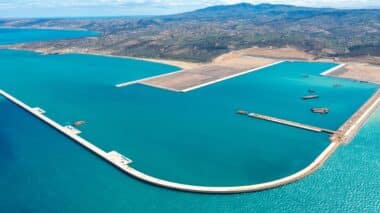
Article : Nador West Med : derrière le port, le pari industriel de l’Oriental
ROUND UP. Prévu pour entrer en service fin 2026, Nador West Med se construit déjà au-delà de ses quais : routes dédoublées, future autoroute vers Guercif, projets chinois dans l’éolien, les pneus et les alliages, ambition énergétique autour du GNL et de l’hydrogène vert. L’enjeu est désormais de transformer cette infrastructure en véritable moteur économique régional.

Article : Pour près de 395 MDH, ce sera Urbagec/Separator qui construira la future gare LGV de l’aéroport de Casablanca
Le marché porte sur le lot 4 du projet, dédié à la construction de la gare ferroviaire de l’aéroport Mohammed V. Cinq candidats étaient en lice, dont SGTM, Sogea Maroc et Construction Management Services, pour une estimation initiale fixée à 380 millions de DH hors taxes.