
Killing a Silent Killer of Women
DHAKA – In public health, discussions relating to women typically focus on maternal mortality, malnutrition, and more recently, sexual and reproductive health. But one facet of malnutrition – and a major killer of women – is often ignored: anemia.
Anemia is the world’s most common nutritional disorder, affecting more than 1.6 billion people. Broadly defined as an excessively low concentration of hemoglobin (an iron-rich protein that carries oxygen to tissues throughout the body) in the blood, anemia occurs either when there are too few red blood cells or when their oxygen-carrying capacity is compromised. It is caused by a deficiency in essential nutrients, most often iron, but also folic acid, vitamin B12, or vitamin A.
Although anemia can affect anyone, the majority of those affected are women of child-bearing age: in 2011, 29% of non-pregnant women worldwide (496 million people) and 38% of pregnant women (32.4 million people) aged 15-49 were anemic. The disorder was most prevalent in South Asia and Central and West Africa.
Anemia often goes undiagnosed, particularly in its earlier stages, but its consequences are serious. Iron-deficiency anemia alone, representing about half of all cases, causes about a million deaths per year, some three-quarters of which occur in Africa and Southeast Asia. Moreover, anemia contributes significantly to maternal and perinatal mortality: in Asia, it is the second leading cause of maternal death. About one-third of all anemia-related maternal deaths occur in South Asian countries.
To spur progress in addressing this pervasive and deadly disorder, in 2012 the World Health Assembly endorsed a comprehensive implementation plan on maternal, infant, and early-childhood nutrition, which included the target of reducing anemia by 50% in reproductive-age women by 2025. To that end, the World Health Organization recommends strategies such as improving dietary diversity; fortifying foods with iron, folic acid, and other micronutrients; and distributing iron supplements.
That is a good start. The question is how to implement these recommendations, particularly in developing countries.
In a country like Bangladesh, daily consumption of micronutrient-rich foods, such as red meat, green leafy vegetables, and some nuts or seeds, is often not an option, owing to household financial constraints. Even if it were, lack of education about nutrition would hamper the necessary behavioral change.
But employers, especially those that provide lunch to workers, have the power to boost micronutrient consumption significantly among their labor forces, thereby reducing the incidence of anemia. That is the conclusion of a recent study conducted by my colleagues and I at icddr,b, an international public-health research institute based in Dhaka, Bangladesh.
We began by developing several intervention packages, each involving some combination of nutritionally sufficient lunch meals, iron-folic acid (IFA) supplements, and nutrition-based behavior-change counseling (BCC). We then tested these solutions over a ten-month period on 1,310 women aged 18-42 working in four ready-made garment factories (eight in ten female garment workers in Bangladesh suffer from anemia.)
The first set of women received a nutritionally enhanced lunch (with fortified rice) every day, one IFA supplement each week, and an “enhanced” BCC module (including information on anemia and dietary diversity) each month. The second set received their usual lunch, no supplements, and a “regular” BCC module (including information about nutrition, but not specifically about anemia or dietary diversity). The third set of women – working at a factory with no lunch program – received twice-weekly IFA supplements (daily for pregnant women) and the enhanced BCC module, whereas the fourth received no lunch or supplements, and the regular BCC module.
The results were promising, to say the least. The implementation of a full nutrition package in the first factory reduced the prevalence of anemia by 32%. Even just the inclusion of IFA supplements and enhanced BCC sessions (in the third factory) brought a 12% decline. Hemoglobin concentrations increased in both of these groups.
This reinforces the findings of separate studies, in which fortified foods caused the anemia rate among participants to drop by 46% over 6-11 months. Intermittent doses of IFA supplements reduced the prevalence of anemia in menstruating women by 27%.
In the icddr,b study, women from all four factories also reported a significant increase in knowledge of the main food groups, iron-containing foods, and the benefits of different vitamins and minerals as a result of the BCC sessions. But the actual results – including the regularity with which IFA supplements were taken – varied depending on the information relayed. Among the second set of women, who received the regular BCC module and no other interventions, anemia actually increased by 6%. This indicates that dietary and nutritional adjustments – not social or demographic factors – make all the difference.
If the clinical evidence is not enough to convince companies to invest in combating anemia among their workers, perhaps the productivity benefits will be. In our study, provision of a nutritionally enhanced lunch was associated with an increase in productivity: participants in the first factory were able to work more hours, and there were significantly fewer reports of common colds, urinary tract infections, and joint pain.
Nonetheless, we cannot count on companies to make the needed changes themselves. That is why icddr,b plans to engage Bangladeshi policymakers and other stakeholders who can effectively advocate for a comprehensive nutritional program to be introduced at all garment factories in Bangladesh.
We also plan to test the same packages in different settings – such as in schools or among domestic workers – in the hope that successful strategies can be rolled out more widely, especially in women-dominated workplaces. Such initiatives can serve as a model for other developing countries, where anemia continues to damage – and even end – women’s lives.
à lire aussi

Article : Loi 16.22 sur les adouls : l’ordre réagit à la décision de la Cour constitutionnelle
L’invalidation partielle du texte par la Cour constitutionnelle est accueillie avec soulagement par une partie de la profession, qui y voit la confirmation de réserves exprimées depuis plusieurs mois. Mais pour Maître Driss Trali, membre du bureau exécutif de l’ordre national, la réforme reste incomplète tant que le dépôt des fonds, l’officialité pleine de l’acte et l’indépendance de l’instance professionnelle ne sont pas consacrés par la loi.

Article : Bourse de Casablanca : le MASI termine encore dans le vert
Au lendemain de sa progression de 4,63%, l'une des plus fortes hausses de son histoire récente, le MASI poursuit son redressement le mardi 16 juin. L'indice a gagné 0,15% à 18.782,58 points, porté notamment par les valeurs immobilières et minières, dans un marché qui conserve une partie de l'élan né du regain d'optimisme sur le front géopolitique.

Article : Un premier magasin Franprix en test à Casablanca dès le 3 juillet
Le groupe H&S Invest Holding de Moncef Belkhayat concrétise son accord avec le groupe Casino avec l’ouverture, en test, d’un premier magasin Franprix à Casablanca.
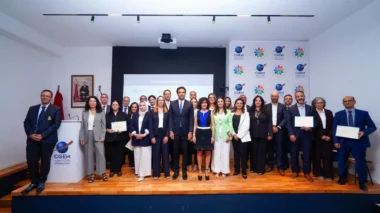
Article : 20 ans de la Charte RSE : la CGEM distingue 21 entreprises et porte à 152 le nombre de sociétés labellisées
Lancé en 2006, le dispositif patronal a récompensé cette année dix nouvelles entreprises, dont Crédit Agricole du Maroc, Pharma 5 et Rabat Région Mobilité. Onze autres ont vu leur distinction renouvelée.
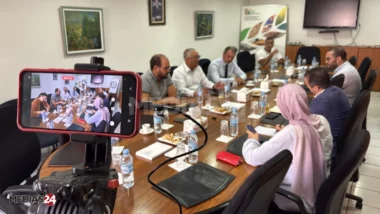
Article : Céréales : les minotiers s’engagent à collecter 15 à 20 millions de quintaux de blé marocain
D’ici au 15 juillet 2026, les minotiers se sont engagés à collecter entre 15 et 20 millions de quintaux de blé tendre issu de la production nationale. Un volume proche du record historique au Maroc et dont dépendra, selon eux, la réouverture des importations. Détails.

Article : Santé : la FM6SS et ABA Life s’allient pour développer des infrastructures médicales intelligentes
Dès octobre 2026, les premières solutions devront être déployées au Maroc, avec des objectifs chiffrés à l’horizon 2030 : 100.000 professionnels formés à l’IA, 25 millions de téléconsultations et plus de 100 start-up HealthTech accompagnées.