

Building Back Together
BERLIN – Human beings are creatures of habit. We tend to envisage a future much the same as the past, so we cling to familiar tools, approaches, and perspectives, even as the world changes. But, at this moment of profound social, political, and economic transformation, we must take care not to permit our habits to lead us astray.
Historically, major transformations – such as that following the collapse of the Soviet Union and the Warsaw Pact at the beginning of the 1990s – have not made societies collectively wiser, or even more skeptical. Instead, they have generally been met with the expectation that everyday life will remain largely the same – or at least return to “normal.”
This tendency has been apparent during the COVID-19 crisis, which is often regarded as a temporary, if dramatic, disruption. In fact, the pandemic is a watershed moment – and it is not the only one we are facing today: the digital revolution and the imperative of rapid decarbonization are similarly consequential.
In the face of these three great ruptures, can we really expect a return to the “old normal”? Or should we expect something only slightly different? What if the future looks nothing like the past? Are we equipped to manage the challenges it brings?
There is good reason to doubt that we are. Already, traditional political institutions – first and foremost, the nation-state – are faltering. They have struggled to address the pitfalls of digitization, such as by reining in tech giants. And they have proved ill-equipped to cope with both the pandemic’s global scope and its psychological dimension, particularly many people’s experience of it as an abstraction.
COVID-19 is invisible to the human eye. Unless one is sick, caring for the sick, or grieving the loss of a loved one, it can be difficult to grasp the threat fully – and to accept the lifestyle changes that the response has demanded.
Of course, from the Black Death of 1347 to the influenza pandemic of 1918-20, the world is no stranger to disease outbreaks. But never before has the state derived so much of its legitimacy from the expectation that it will protect people’s well-being, by technological and scientific means, regardless of what nature throws at them.
The disruptions caused by the COVID-19 crisis, together with ever-increasing infections and deaths, thus strike at the heart of the state’s legitimacy. This is a crisis of trust, and it is shaking societies to their core.
The only way to rebuild trust and stabilize societies is with an effective crisis response. And, given the global nature of the challenges we face, that will be impossible without extensive cooperation, facilitated by effective institutions.
Yet, so far, the world has clung to its old ways, indulging parochial national rivalries rather than pursuing forward-looking solutions. Nowhere is this more apparent than in the race for vaccine doses.
Using the nation-state to address the pandemic is tantamount to aiming an antiquated muzzleloader at an F-16. And if the COVID-19 crisis is a modern warplane, climate change is a nuclear missile. By failing to build systems capable of defending against such large-scale threats – including inevitable future pandemics – humanity is jeopardizing its very existence.
To be sure, calls to “build back better” from the pandemic imply some awareness of the need for systemic change. But the transformation we need extends beyond constructing modern infrastructure or unlocking private investment in any one country. We need to re-orient – indeed, re-invent – global politics, so that countries can cooperate far more effectively in creating a better world.
The 2015 Paris climate agreement was an important step in that direction. Nation-states are integral to the process: they negotiated the deal and are responsible for determining their own contributions to achieving its objectives. But they must also operate within a single shared framework, in order to achieve goals that have nothing to do with boosting their relative geopolitical or economic power.
Under former President Donald Trump, the United States abandoned the Paris agreement, in a backward-looking attempt to assert its dominance. Fortunately, the US has now rejoined the accord under President Joe Biden. Given that the US remains the world’s most influential and technologically advanced economy, Biden’s move is vital to the agreement’s successful implementation – and thus to humanity’s future.
Despite the Paris climate agreement, however, the world has not really come to grips with the political transformation today’s great ruptures demand. It remains far from clear, for example, that the US is prepared to curb its strategic competition with China. In the twenty-first century, hegemony cannot be the goal. Instead, countries should be seeking to lead the pursuit of a world in which life is worth living for all people.
Preservation – not domination – is the new imperative of global leadership.
à lire aussi
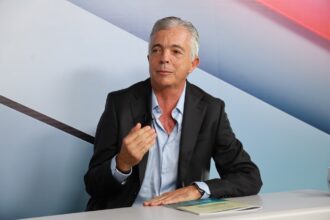
Article : Kacem Bennani Smires : “Dans la transmission des entreprises, il y a un fossé entre ce qu'il faudrait faire et la réalité”
93% du tissu entrepreneurial, 65% des emplois, 60% de la valeur ajoutée nationale, les entreprises familiales sont l'épine dorsale de l'économie marocaine. Pourtant, une sur quatre seulement réussit sa première transmission. Kacem Bennani Smires, président de l'Institut de l'entreprise familiale Maroc, décrypte les raisons de cette fragilité et les leviers pour y remédier.
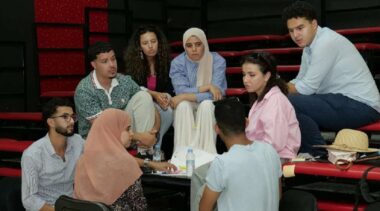
Article : Élections 2026 : derrière l’abstention, une demande de transparence et de résultats
À moins de quatre mois du scrutin, une étude de l’association Les Citoyens met au jour un paradoxe politique : 66,6% des répondants jugent le vote important, mais seuls 13,6% font confiance aux dernières élections. Signe d’un électorat qui ne tourne pas le dos aux urnes, mais réclame des preuves concrètes avant d’y retourner. Détails.
Article : Bourse de Casablanca : les minières flambent, le MASI réalise l'une de ses meilleures séances de l'année 2026
Portée par un puissant rebond des valeurs minières et par l'optimisme suscité par l'annonce d'un accord de paix au Moyen-Orient, la Bourse de Casablanca a signé l'une de ses plus fortes progressions de l'année ce lundi 15 juin. Le MASI a bondi de 4,46%, dans un marché marqué par un regain d'appétit pour le risque et des échanges dépassant les 540 MDH.

Article : Prévisions météorologiques pour le mardi 16 juin
Voici les prévisions pour le mardi 16 juin 2026, établies par la Direction générale de la météorologie : - Temps assez chaud sur le Sud-Est, […]
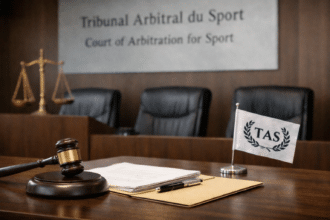
Article : CAN 2025 : en exclusivité, voici les arbitres du TAS appelés à trancher le litige Maroc-Sénégal
Qui tranchera le recours du Sénégal contre la décision ayant attribué la CAN 2025 au Maroc ? Médias24 révèle l'identité des trois arbitres du TAS et les derniers développements d'une procédure désormais entrée dans sa phase d'instruction, mais dont le calendrier repousse toute échéance importante à l'après-Mondial 2026.

Article : Météo du 15 au 21 juin : chaleur, orages locaux et brouillards côtiers au menu de la semaine
Sous l’effet de la dépression thermique saharienne, les températures pourraient atteindre 39 °C à 46 °C dans le Sud-Est, l’Oriental et les provinces sahariennes, tandis que l’influence maritime continuera de tempérer les zones proches de l’Atlantique et de la Méditerranée.