
Build Back Equal
QUITO – The COVID-19 pandemic has exposed and exacerbated a wide range of inequalities. If leaders are serious about “building back better,” policies to overcome the systemic forces that underlie them must form the heart of their agendas.
One such divide is the gender gap. Since the pandemic began, women have suffered job losses at a higher rate than men – not least because they are overrepresented in many of the hardest-hit industries, such as food service and retail – and faced higher levels of social precarity and food insecurity. The pandemic is set to increase the gender gap in extreme poverty as well.
Moreover, as feminist thinkers like Silvia Federici have pointed out, the burden of domestic labor – already disproportionately borne by women – became far heavier during pandemic lockdowns. At the same time, women are usually the victims of domestic violence, which has become more frequent and severe since the pandemic began.
Not surprisingly, women’s mental health has suffered disproportionately over the last year. The burden of the pandemic has been particularly heavy for women who are also subject to other forms of marginalization, based on race, age, or immigration status.
More broadly, the pandemic has expanded the divide between rich and poor. A handful of billionaires have seen their wealth skyrocket over the last year, while lower-skill workers have faced far larger employment and earnings losses than higher-skill workers. The top income decile, largely comprising workers who have been able to work remotely during the pandemic, have been able to expand their savings, whereas many laid-off workers have borrowed to stay afloat, driving up the number of people who are over-indebted or have minimal savings.
At the global level, there have been vast differences between the capacity of developed and developing countries to respond to the COVID-19 crisis. Advanced economies have mobilized, on average, 25% of their GDP to mitigate its effects, compared to 7% in developing countries and just 1.5% in the poorest countries. And whereas wealthy countries may have their entire populations vaccinated by mid-2022, more than 85 poor countries will not have widespread access to vaccines before 2023.
In this context, “building back better” must mean creating an economy that works for everyone – what in 2013 then-US President Barack Obama called the “defining challenge of our time.” But this is not just a matter of empowering those who have been “left behind” by globalization, by providing more resources for education, training, and capacity building. That widely endorsed “solution” is based on rosy but deeply flawed assumptions about the contemporary world order.
In fact, addressing today’s inequities demands a far more comprehensive – and critical – assessment of underlying systemic forces. The pandemic’s disproportionate impact on women, for example, is a direct result of deeply entrenched patriarchal rules and norms that perpetuate segmented structures in the home, the labor market, and the workplace.
It is because of these rules and norms that, when care infrastructure deteriorates, women pick up the slack, and when jobs are scarce, women lose out the most. Many women are then forced into precarious employment, where they are vulnerable to physical and sexual violence. So, even as a few women shatter glass ceilings, the majority of women remain on the floor, sweeping up the shards.
Initiatives intended to empower women within the current system – such as by encouraging female entrepreneurship or ensuring equal legal rights – are certainly vital. But anything close to true equality will require us to address the insidious effects of patriarchal power dynamics – and that means challenging and reforming the system in which they are embedded.
The same goes for closing the gaps between the haves and have-nots, both within and across countries. As the Nobel laureate economist Joseph E. Stiglitz has argued, the rules of the game are designed to strengthen the position of those already at the top of the development ladder, while holding back the less advantaged.
Those rules have benefited creditors over debtors, and fueled speculation rather than productive investment. Intellectual property rights and other restrictive business practices have increased the market power of large international firms, including the tech giants, over smaller suppliers and consumers, thereby undermining innovation.
The rules of the game have also enabled large firms to hide their profits in tax havens, instead of paying their fair share or pursuing employment-generating investment. And the effect on government revenues has weakened the state’s capacity to supply public goods, correct market failures, and even to meet the immediate needs of citizens during a crisis.
Perhaps most insidious of all, the growing realization that the game is rigged has eroded public confidence in institutions, fueled political fragmentation and social discontent, and spurred deepening mistrust among countries. From vaccine skepticism to lack of international coordination, the COVID-19 crisis reflects the consequences of these trends.
Seventy-five years ago, the United Nations Charter issued a clarion call for collective action to meet the new challenges of an interdependent world. Today, our world is more interconnected than ever, and yet rampant inequality is diminishing our receptiveness to the collective action we need. To reverse this tendency requires addressing the unfair power dynamics that are embedded in the global economic system.
“Don’t gamble on the future,” warned Simone de Beauvoir. “Act now, without delay.”
à lire aussi

Article : Pour près de 395 MDH, ce sera Urbagec/Separator qui construira la future gare LGV de l’aéroport de Casablanca
Le marché porte sur le lot 4 du projet, dédié à la construction de la gare ferroviaire de l’aéroport Mohammed V. Cinq candidats étaient en lice, dont SGTM, Sogea Maroc et Construction Management Services, pour une estimation initiale fixée à 380 millions de DH hors taxes.
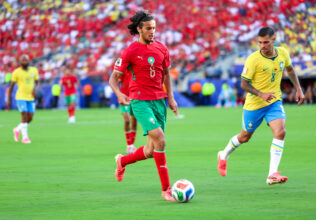
Article : Mondial 2026. Analyse de la masterclass d’Ayyoub Bouaddi
Le milieu de terrain a éclairé le jeu de l’équipe nationale face au Brésil, en match d’ouverture du groupe C. Mais il a aussi apporté un précieux équilibre grâce à son activité défensive. Sa permutation avec Neil El Aynaoui à la mi-temps y a grandement contribué.
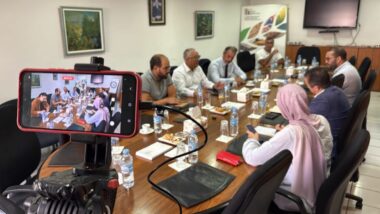
Article : Grain Vision Morocco, le think tank qui veut mieux anticiper les chocs céréaliers
Derrière le prix du pain, les importations et les stocks, la filière veut imposer une approche plus technique de la sécurité alimentaire. Porté par la FNCL, ce nouveau laboratoire d’idées entend fournir aux pouvoirs publics des données sur les récoltes, la qualité des blés, les capacités de stockage et les besoins du marché.

Article : Mondial 2026 : de Times Square aux taxis jaunes, le Maroc pousse sa destination à New York
À un an de la compétition nord-américaine, l’ONMT déploie "Morocco, Kingdom of Light" sur écrans géants, en animations de rue et sur plusieurs dizaines de véhicules, avec un objectif clair : transformer l’exposition du football en levier de notoriété touristique auprès des visiteurs, des habitants et des réseaux sociaux.
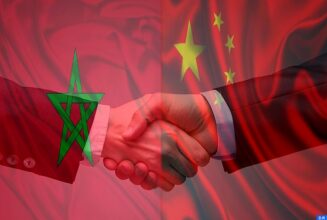
Article : Maroc-Chine : un accord de libre-échange est-il vraiment dans notre intérêt ?
Pékin a déjà supprimé ses droits de douane sur les produits marocains jusqu’en 2028. En retour, Rabat est désormais invité à ouvrir davantage son propre marché. Mais derrière la promesse de prix plus bas et d’intrants moins chers, les chiffres imposent la prudence : en 2025, le Royaume a importé 114,1 MMDH de produits chinois, contre seulement 3,8 MMDH exportés vers ce marché. Analyse.
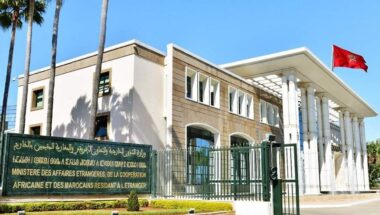
Article : Accord États-Unis-Iran : le Maroc soutient l’accord et appelle au respect de ses engagements
Le ministère marocain des Affaires étrangères a qualifié l’accord entre les États-Unis et l’Iran d’étape importante pour la stabilité régionale, appelant à la prompte mise en œuvre et au plein respect de cet accord.