

Let the Great Transition Begin
NEW YORK – With COVID-19 vaccinations underway in some countries and efforts to expand access still ongoing, world leaders will soon shift their attention from crisis response to pandemic recovery. Governments have already committed $12 trillion to the COVID-19 response, and there will be strong pressure to keep investing in a return to the pre-pandemic “normal.” But that would be a mistake.
Putting aside budget constraints, we have just seen that the pre-pandemic normal had dire implications for the world. Our strained interactions with the environment helped introduce the coronavirus to humans, our hyperconnected global economy allowed it to spread like wildfire, and its especially deadly effects on the most vulnerable populations has highlighted the consequences of deep-seated social and economic inequalities within and between countries.
Instead of aiming to restore that pre-2020 way of life, our leaders should set their sights on creating a different, better world. Fortunately, they already have a roadmap in the Sustainable Development Goals (SDGs), which embody economic, social, and environmental targets that all countries have committed to achieve by 2030.
When originally adopted in 2015, the SDGs aimed to double down on a previous generation’s progress by eradicating extreme poverty, reversing the scourge of environmental degradation, and decisively reducing inequality. By the time COVID-19 began devastating the world, targets like ending preventable child deaths were coming within sight, even if problems like climate change and social inequality were looming ever larger. And although the virus has impeded progress, it hasn’t changed the essential outcomes.
Moreover, the pandemic has shone a spotlight on problems like food insecurity, gender inequity, racism, and biodiversity loss, alongside longstanding gaps in access to education, jobs, and life-saving technologies. These are all problems that the SDGs seek to address.
Looking ahead, the immediate challenge is to adapt to our new conditions while charting a course toward a better destination. Through our own work with 17 Rooms, a global community of experts collaborating to identify practical next steps for each SDG, we have identified four “transitions”to help guide us. Each reflects a major shift in attitudes and decision-making that requires more sustained support to match the scale of the global issues we face.
The first such transition concerns equal justice. Developments in 2020 shed new light on longstanding social and economic inequities faced by women, minorities, low-income workers, and victims of state-sponsored violence, among many other groups. Tackling the roots of inequality requires deep and persistent commitments to economic and social progress for every segment of society. This can start with everything from “last mile” alliances to solve the toughest problems of exclusion to “just recovery” campaigns to ensure that policy responses to the crisis are transparently supporting those who need help the most.
The second major shift is toward “blue-green” replenishment. For too long, natural capital (the environment) has been valued only at the margins. But the pandemic has shown that an imbalance between nature and humans in one part of the world can upend systems everywhere. The planet’s “blue” skies, oceans, and natural waterways and “green” land-based ecosystems exist within absolute physical boundaries that we ignore at our peril. We must do more to protect these crucial assets at scale.
To that end, at the Convention on Biological Diversity in May, all countries must adopt the “30x30” framework, which seeks to protect 30% of the world’s land and sea (through permanent measures) by 2030. The world also needs to reallocate roughly $5 trillion in explicit and implicit annual fossil-fuel subsidies toward green jobs, renewable energy, and other technologies to preserve the natural assets humanity needs to survive and thrive.
The third transition is toward inclusive systems for technological innovation. In recent decades, sleek, shiny consumer electronics have typically garnered the most attention. But the crises of 2020 have underscored the need for both equitable access to technology and public trust in new solutions. From skepticism about vaccines to concerns over data privacy and low-carbon energy incentives, we now face an imperative to establish a technology infrastructure that solves immediate problems while also fostering confidence in the longer-term trajectory of innovation.
Here, welcome changes can start with everything from coordinating epidemic sentinel (monitoring) networks across regions to piloting independent digital platforms within fast-growing emerging economies.
Finally, none of these political, economic, environmental, and technological shifts can succeed without an equally large-scale generational transition. The COVID-19 crisis hasn’t just exposed the shortcomings of current leaders; it has also jeopardized the life prospects of hundreds of millions of young people.
A generational transition can start with many small-scale initiatives. For example, government ministers can set joint investment strategies with kids who have been shut out of school, and universities can deploy their newly implemented online learning systems to help communities develop new skills for local jobs.
As the world begins to recover from the deep strains of 2020, many will be tempted to pick up where everything left off before crisis hit. But doing so would miss the point. We need to match the new awareness of our global fragility with renewed support for the approaches that will make us less susceptible to crisis in the first place. We need 2021 to mark the start of a great transition.
à lire aussi
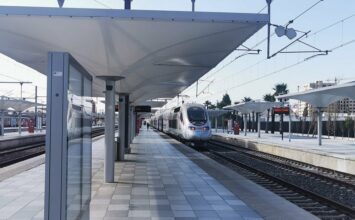
Article : Pour près de 395 MDH, ce sera Urbagec/Separator qui construira la future gare LGV de l’aéroport de Casablanca
Le marché porte sur le lot 4 du projet, dédié à la construction de la gare ferroviaire de l’aéroport Mohammed V. Cinq candidats étaient en lice, dont SGTM, Sogea Maroc et Construction Management Services, pour une estimation initiale fixée à 380 millions de DH hors taxes.
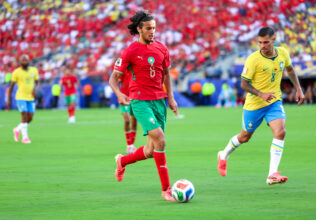
Article : Mondial 2026. Analyse de la masterclass d’Ayyoub Bouaddi
Le milieu de terrain a éclairé le jeu de l’équipe nationale face au Brésil, en match d’ouverture du groupe C. Mais il a aussi apporté un précieux équilibre grâce à son activité défensive. Sa permutation avec Neil El Aynaoui à la mi-temps y a grandement contribué.
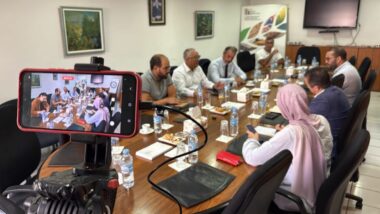
Article : Grain Vision Morocco, le think tank qui veut mieux anticiper les chocs céréaliers
Derrière le prix du pain, les importations et les stocks, la filière veut imposer une approche plus technique de la sécurité alimentaire. Porté par la FNCL, ce nouveau laboratoire d’idées entend fournir aux pouvoirs publics des données sur les récoltes, la qualité des blés, les capacités de stockage et les besoins du marché.
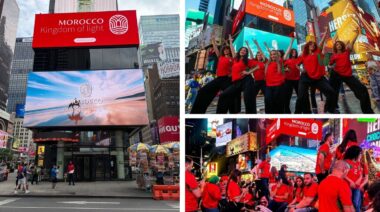
Article : Mondial 2026 : de Times Square aux taxis jaunes, le Maroc pousse sa destination à New York
À un an de la compétition nord-américaine, l’ONMT déploie "Morocco, Kingdom of Light" sur écrans géants, en animations de rue et sur plusieurs dizaines de véhicules, avec un objectif clair : transformer l’exposition du football en levier de notoriété touristique auprès des visiteurs, des habitants et des réseaux sociaux.
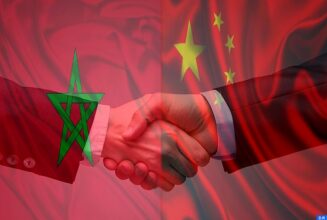
Article : Maroc-Chine : un accord de libre-échange est-il vraiment dans notre intérêt ?
Pékin a déjà supprimé ses droits de douane sur les produits marocains jusqu’en 2028. En retour, Rabat est désormais invité à ouvrir davantage son propre marché. Mais derrière la promesse de prix plus bas et d’intrants moins chers, les chiffres imposent la prudence : en 2025, le Royaume a importé 114,1 MMDH de produits chinois, contre seulement 3,8 MMDH exportés vers ce marché. Analyse.
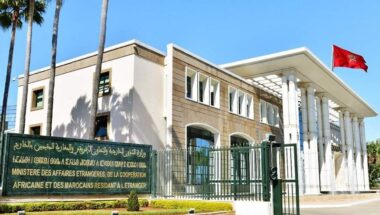
Article : Accord États-Unis-Iran : le Maroc soutient l’accord et appelle au respect de ses engagements
Le ministère marocain des Affaires étrangères a qualifié l’accord entre les États-Unis et l’Iran d’étape importante pour la stabilité régionale, appelant à la prompte mise en œuvre et au plein respect de cet accord.