

Mohamed A. El-Erian
Chief economic adviser at AllianzNo One Is Safe Until Everyone Is Safe
LAGUNA BEACH – Recognizing that “no one is safe until everyone is safe,” the G7 recently announced additional steps to facilitate globally more “affordable and equitable access to vaccines, therapeutics, and diagnostics” to combat COVID-19. But translating stated intent into effective action will require both bold political leadership at home and support for developing countries that goes well beyond financial aid. Getting it right won’t be easy, but the effort is essential if rich countries wish to avoid living in a fortress with the mentality to match.
The current inequality in vaccine availability and deployment is stark. According to United Nations Secretary-General António Guterres, just ten countries account for 75% of all COVID-19 vaccination so far. More than 130 countries have not administered a single dose.
In the face of such inequality, the G7 agreed to increase pandemic-related aid to $7.5 billion and urged others, including G20 countries and multilateral organizations, to enhance their support for developing countries, be it through the COVAX facility or the Access to COVID-19 Tools Accelerator initiative.
These actions are not just the right thing to do, given the considerable risks facing developing countries; they are also in the interest of developed countries. Unless the rest of the world is successful in combating the virus, new variants will multiply and confront advanced economies with a seemingly never-ending series of potential lose-lose scenarios.
The first stems from the risk of “importing” new variants that overcome existing vaccines and renew awful cycles of infection, hospitalization, death, and lockdown. Already, the battle against COVID-19 has been made harder by the emergence of new virus variants, like the Kent (England) and South African strains. Fortunately, although these variants have increased the speed of transmission, they appear not to have derailed the effectiveness of therapeutics and vaccines.
Minimizing the risk of yet more destabilizing variants is crucial if countries are to turn the corner on a shock that has wrecked lives and livelihoods. The alternative is to adopt a bunker-like approach to borders.
This is no longer a two-horse race. We are now all cheering for immunization to outrace not only the original virus, but also the new variants. If this does not occur, many countries – and particularly those that have made considerable progress in reducing infections and administering vaccines – will repeatedly face a difficult choice: either risk being disrupted by a new variant from abroad or sharply curtail the inward and outward flow of citizens, residents, and visitors. And neither option would be easily sustainable.
There are other ways in which helping others in their battle against COVID-19 is a national priority, particularly for Western countries and their allies. Already, China has enhanced its influence and standing in the developing world, both directly, through “mask diplomacy” (providing free face masks to reduce virus transmission), and indirectly, by showing that its governance model is more effective than Western countries’ in overcoming unanticipated adversity.
Now, China is busy offering vaccines, as is Russia. The Africa Medical Supplies Platform, for example, recently announced that the African Union had been offered 300 million doses of the Russian Sputnik V vaccine, together with funding for countries that need it.
An effective G7 approach to making vaccination more accessible to developing countries would help counter the view that it has abandoned the global stage. It is also consistent with the Biden administration objective of global re-engagement.
The G7’s effectiveness in this domain will entail more than delivering fully on its latest set of important promises. Time is of the essence, be it in making the financial aid available to developing countries or donating to them developed countries’ anticipated and already-secured excess doses.
The G7 must also go beyond such aid in at least two ways. First, where needed and when asked, member countries should provide technical assistance and logistical support to overcome micro failures that disrupt local supply chains (an “imperfection” that undermined earlier vaccination efforts, such as against malaria, for too long, and can now be overcome more easily). Second, the G7 should press vaccine manufacturers to share their knowledge with local producers and facilitate their legal and operational ability to do so.
The road ahead is difficult. There will be opposition at many levels, including from those wishing to spend money and effort only at home and those seeking to protect the current profit opportunities from COVID-19 vaccines and future profit opportunities from the scientific breakthroughs that the vaccines incorporate. But as hard as all this, the alternative is even harder: living with virus disruptions, living in national bunkers, or both.
à lire aussi
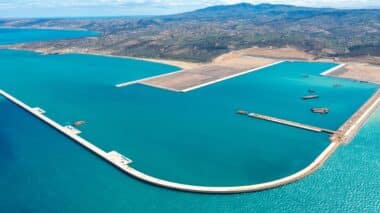
Article : Nador West Med : derrière le port, le pari industriel de l’Oriental
ROUND UP. Prévu pour entrer en service fin 2026, Nador West Med se construit déjà au-delà de ses quais : routes dédoublées, future autoroute vers Guercif, projets chinois dans l’éolien, les pneus et les alliages, ambition énergétique autour du GNL et de l’hydrogène vert. L’enjeu est désormais de transformer cette infrastructure en véritable moteur économique régional.
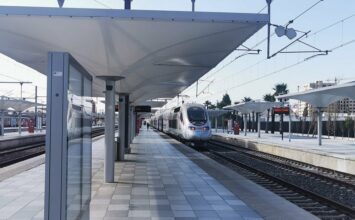
Article : Pour près de 395 MDH, ce sera Urbagec/Separator qui construira la future gare LGV de l’aéroport de Casablanca
Le marché porte sur le lot 4 du projet, dédié à la construction de la gare ferroviaire de l’aéroport Mohammed V. Cinq candidats étaient en lice, dont SGTM, Sogea Maroc et Construction Management Services, pour une estimation initiale fixée à 380 millions de DH hors taxes.
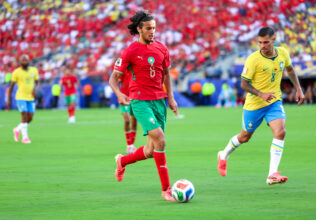
Article : Mondial 2026. Analyse de la masterclass d’Ayyoub Bouaddi
Le milieu de terrain a éclairé le jeu de l’équipe nationale face au Brésil, en match d’ouverture du groupe C. Mais il a aussi apporté un précieux équilibre grâce à son activité défensive. Sa permutation avec Neil El Aynaoui à la mi-temps y a grandement contribué.
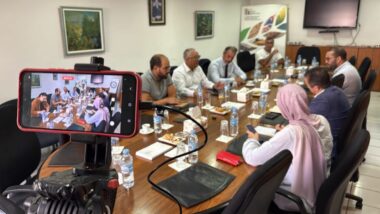
Article : Grain Vision Morocco, le think tank qui veut mieux anticiper les chocs céréaliers
Derrière le prix du pain, les importations et les stocks, la filière veut imposer une approche plus technique de la sécurité alimentaire. Porté par la FNCL, ce nouveau laboratoire d’idées entend fournir aux pouvoirs publics des données sur les récoltes, la qualité des blés, les capacités de stockage et les besoins du marché.

Article : Mondial 2026 : de Times Square aux taxis jaunes, le Maroc pousse sa destination à New York
À un an de la compétition nord-américaine, l’ONMT déploie "Morocco, Kingdom of Light" sur écrans géants, en animations de rue et sur plusieurs dizaines de véhicules, avec un objectif clair : transformer l’exposition du football en levier de notoriété touristique auprès des visiteurs, des habitants et des réseaux sociaux.
Article : Maroc-Chine : un accord de libre-échange est-il vraiment dans notre intérêt ?
Pékin a déjà supprimé ses droits de douane sur les produits marocains jusqu’en 2028. En retour, Rabat est désormais invité à ouvrir davantage son propre marché. Mais derrière la promesse de prix plus bas et d’intrants moins chers, les chiffres imposent la prudence : en 2025, le Royaume a importé 114,1 MMDH de produits chinois, contre seulement 3,8 MMDH exportés vers ce marché. Analyse.