
How – and How Not – to Restore Trust in Media
OXFORD – In most industries, a quality product is easy to identify, thanks to markers like price, brand, and reviews. But in journalism, discerning quality is becoming increasingly complicated, not least because, in the digital age, trusted brands like the BBC or The New York Times, which can be expected to adhere to long-established journalistic standards, are vastly outnumbered by upstart publications, blogs, and community reports.
Not surprisingly, therefore, as claims of “fake news” have proliferated in recent years, trust in news media – established and otherwise – has plummeted. According to the Reuters Institute’s Digital News Report 2017, those who regularly consume news do so with significant skepticism. Only about 50% of users trust the media brands they choose to consume; far fewer trust outlets that they do not use. With too many options and too little confidence in media, nearly one-third of people have given up following the news altogether.
But news journalism is not an expendable luxury. It is a critical public good, enabling citizens to make informed decisions, while helping to hold those in power accountable. It can serve that function only if it is a quality product – and people know that. Delivering such a product, however, is no straightforward task.
The first problem is that there is no clear definition of what constitutes quality journalism, which raises the risk that the standard of “quality” will become a tool of censorship. When Adolf Hitler wanted a book burned, he would assert that it did not meet the “standards” of Nazi ideology. Similarly, a government today could cite quality issues to attack critics’ credibility or to justify denying them journalistic credentials.
Some organizations concerned with the future of the media are trying to circumvent this danger by developing trust indicators. Most notably, theJournalism Trust Initiative, led by Reporters Without Borders, is creating voluntary guidelines and a best-practice framework that will evolve into an official certification process. Some organizations champion traffic-light indicators, like those used in food labeling, while others argue for an ISO 9000 system reminiscent of industrial quality management.
But what, exactly, would these systems be certifying? The most logical answer might seem to be media organizations. But even first-class newsrooms produce plenty of second-class content, owing to factors ranging from a lack of available sources to simple human error. This implies that not all content from a given organization can be trusted equally.
Of course, some organizations have a proven track record of following certain procedures to minimize mistakes and respond to errors that do slip through. But these are likely to be the same organizations that already enjoy significant public trust. Whatever trust they have lost in recent years will not be offset by a new label affirming their quality.
As for the publications that would benefit from such a label, they are more likely to be smaller, newer, and thus poorly equipped to deal with the extra layer of bureaucracy that a certification procedure would entail. Organization-level quality certifications could thus hurt new entrants, while helping incumbents.
The alternative to organization-level certification would be to focus on individual pieces of content. But this would be a herculean task in terms of volume; worse, it could create perverse incentives, as journalists chase certifications in much the same way they now may chase awards, sometimes to the detriment of the work. The German reporter Claas Relotius won multiple awards for his brilliant storytelling before it was revealed that the stories he was telling were not true.
In any case, the question remains what exactly constitutes a quality piece of content. Does it simply have to be fact-based? Does it apply only to serious political and business news, or does it include lifestyle, entertainment, or human-interest stories? These questions are complicated further in the digital ecosystem: some blog posts may count as journalism, but that certainly isn’t the case for all of them.
Journalism will never be like, say, the airline industry, where strict standards and procedures apply to every action and product. But, until recently, it didn’t need to be: journalists adhered to codes of professional and ethical conduct, and were overseen by bodies that took action in the event of a breach. Doing it right was the default – even though the concept of “right” has always been open to interpretation.
That is how societies work. An individual does not need a “trust certification” to participate in a family or community (though China’s government would like to change that). The social contract establishes certain behavioral norms with which people generally comply; labels are needed only when trust is broken.
This is the status quo to which journalism must return. That means, first and foremost, individual organizations taking responsibility for the quality of their content and adhering to a set of rules, including oversight and editing, to ensure it. When this cannot be done within the organization itself – say, when a citizen journalist is operating in an anti-democratic environment – external bodies could do the job.
In establishing such systems, lessons could be learned from collaborative reporting projects like the one that covered the Panama Papers, in which researchers enjoyed individual freedom – ensuring a plurality of voices and healthy competition – but had to meet certain standards. As technology advances, automated fact-checking could also be introduced, especially in less-resourced newsrooms.
In an age of unprecedented access to information, true and otherwise, people of all ages must improve their media literacy. But that does not let media organizations off the hook. With the help of an aware and critical audience, they must monitor themselves and one another, as they have done in the past.
à lire aussi
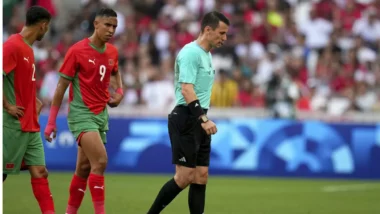
Article : Maroc-Écosse : l'Ouzbek Tantashev au sifflet, deux ans après la demi-finale olympique mouvementée contre l’Espagne
Désigné par la FIFA pour la rencontre du 19 juin au Boston Stadium, celui qui est arbitre international depuis 2013 avait quitté le terrain dès la 15e minute aux JO de Paris après une collision avec Marc Pubill.

Article : Mr. Bricolage vise 45 magasins au Maroc d'ici 2032 et un plan d'investissement de 700 MDH
Mr. Bricolage Maroc prévoit le déploiement de 45 magasins d’ici 2032, au rythme d’une ouverture toutes les huit semaines, dans le cadre d’un plan porté par un investissement de 700 millions de DH.

Article : Loi 16.22 sur les adouls : l’Ordre réagit à la décision de la Cour constitutionnelle
L’invalidation partielle du texte par la Cour constitutionnelle est accueillie avec soulagement par une partie de la profession, qui y voit la confirmation de réserves exprimées depuis plusieurs mois. Mais pour Maître Driss Trali, membre du bureau exécutif de l’Ordre national, la réforme reste incomplète tant que le dépôt des fonds, l’officialité pleine de l’acte et l’indépendance de l’instance professionnelle ne sont pas consacrés par la loi.

Article : Bourse de Casablanca : le MASI termine encore dans le vert
Au lendemain de sa progression de 4,63%, l'une des plus fortes hausses de son histoire récente, le MASI poursuit son redressement le mardi 16 juin. L'indice a gagné 0,15% à 18.782,58 points, porté notamment par les valeurs immobilières et minières, dans un marché qui conserve une partie de l'élan né du regain d'optimisme sur le front géopolitique.
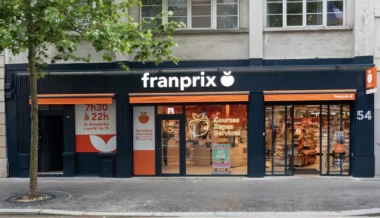
Article : Un premier magasin Franprix en test à Casablanca dès le 3 juillet
Le groupe H&S Invest Holding de Moncef Belkhayat concrétise son accord avec le groupe Casino avec l’ouverture, en test, d’un premier magasin Franprix à Casablanca.

Article : 20 ans de la Charte RSE : la CGEM distingue 21 entreprises et porte à 152 le nombre de sociétés labellisées
Lancé en 2006, le dispositif patronal a récompensé cette année dix nouvelles entreprises, dont Crédit Agricole du Maroc, Pharma 5 et Rabat Région Mobilité. Onze autres ont vu leur distinction renouvelée.