
The Real Consequences of Fake Medicines
LONDON – Niger’s government is sounding the alarm about bogus meningitis vaccines – and it is not the first time. Five years ago, hundreds of Nigerien people died after receiving fake vaccines. The problem, of course, is not vaccines. It is the widespread distribution of substandard and falsified medical products. And it is a problem that disproportionately affects Africa.
The global market for medicines that are substandard (failing to meet quality specifications) or falsified (with the composition, identity, or source deliberately misrepresented) is estimated to be worth up to $200 billion, or 10-15% of the total pharmaceutical market. But it could be much bigger: according to the World Health Organization, which relies largely on voluntary reporting by health-care professionals, we may know about “just a small fraction” of all cases.
What we do know is that the problem is particularly acute in Africa. In 2013-2017, 42% of substandard and falsified medicines found were on the continent. This is undermining Africa’s hard-won progress on health, not least by eroding trust in nascent health-care systems.
Needless to say, the use of substandard or falsified medicines – which range from ineffective to poisonous – can have devastating consequences, with the poorest and most vulnerable being hit the hardest. After all, it is those with limited funds and poor access to medical professionals and quality health care who are most likely to buy discounted medicines on the streets, where there is no guarantee that they are real, let alone of high quality.
Ultimately, this can result in much higher costs for victims, who must pay more to treat the original illness once it has progressed further, as well as for any side effects from the fake medication, if they survive at all. A 2015 study estimated that, in Sub-Saharan Africa, 122,000 children under the age of five had died in just one year as a result of substandard or falsified antimalarial medications. Moreover, since people don’t know what they are taking, let alone the proper dose, falsified and substandard medicines contribute to rising antimicrobial resistance – a trend that doesn’t discriminate between rich and poor.
Yet fake-medicine traffickers have little incentive to stop. It is estimated that every $1,000 traffickers “invest” in counterfeit medicines can yield as much as $450,000 in profit. That margin is 10-25 times larger than that enjoyed by sellers of illicit narcotics. And those massive rewards are not counterbalanced by significant risk. Even when caught, fake-medicine traffickers often avoid prison time. They merely pay a fine and get back to business.
Like narcotics trafficking, however, it is a business that depends on – and reinforces – broader criminal activity, including that of terrorist groups. In fact, fake medicines are trafficked through the same organized-crime networks as illicit drugs and weapons. These networks destabilize communities and countries, particularly in already-fragile regions like the Sahel.
Fortunately, seven African countries – The Gambia, Ghana, Niger, the Republic of Congo, Senegal, Togo, and Uganda – are set to take action to address the scourge of fake medicine. This month, the Brazzaville Foundation, of which I am Chief Executive, will bring together the heads of these states in Lomé, Togo, to sign a political declaration and a legally binding agreement committing them to introduce legislation to this end.
The agreement will include a clear timetable, and demand tough new criminal penalties. Furthermore, recognizing the critical importance of rigorous enforcement, it will include provisions on capacity building, including community engagement, and on coordination among government agencies. As such, it will lay the groundwork for a broader campaign to ensure that all citizens have access to quality health care, including safe and effective medicines.
The Lomé Initiative represents an historic opportunity to step up the fight against the trade in substandard and fake medicines. But to subdue this deadly business, which claims hundreds of thousands of African lives every year, more of the continent’s leaders must join the fight. And the international community must support them.
Some international actors have embraced this imperative. Beyond the WHO, the Council of Europe has created the MEDICRIME Convention, the first international treaty against counterfeit medical products and similar crimes involving threats to public health. And the United Nations Office on Drugs and Crime has produced a guide to good legislative practices for combating falsified medical product-related crime.
But more must be done, and the Lomé Initiative can go a long way toward ensuring that it is. To minimize the risks that fake medicines pose to us all, the world must offer its support.
à lire aussi
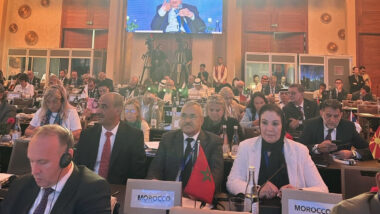
Article : Marrakech accueille les 19 et 20 juin la 4e édition du Forum parlementaire économique euro-méditerranéen et du Golfe
Parlementaires, responsables publics, CGEM et institutions financières y débattront d’intégration régionale, d’intelligence artificielle, d’emplois durables et de chaînes de valeur euro-africaines.

Article : Alerte météo : averses orageuses et grêle attendues ce mardi 16 juin dans plusieurs provinces du Royaume
La DGM a placé Ifrane, Boulemane, Khénifra et Midelt en vigilance orange, avec des cumuls de 25 à 30 mm prévus entre 14h et 22h.
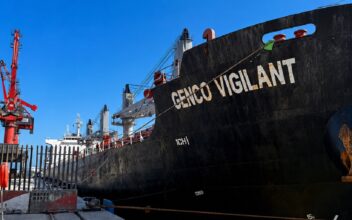
Article : Au port de Casablanca, un premier navire Supramax de 55.000 tonnes pour Cosumar
Un premier navire vraquier sucrier d'une capacité avoisinant 55.000 tonnes, affrété par le groupe Cosumar, a été accueilli au terminal polyvalent de Marsa Maroc au port de Casablanca. Ce navire est le premier à bénéficier de l’approfondissement des quais à 12 mètres de tirant d’eau.

Article : Épisode 3. « Nous ne sommes pas venus regarder un match »
Après avoir découvert la diversité des profils présents à Santiago, une autre réalité apparaît au fil des entretiens. Les centaines de Marocains qui ont traversé la planète pour assister à la finale de la Coupe du monde U20 ne se considèrent pas comme de simples spectateurs. Pour beaucoup d’entre eux, leur présence constitue une contribution à la performance de l’équipe nationale. Entre soutien moral, devoir patriotique et sentiment de participation, ils développent une conception particulière du supportérisme qui brouille la frontière entre les tribunes et le terrain.
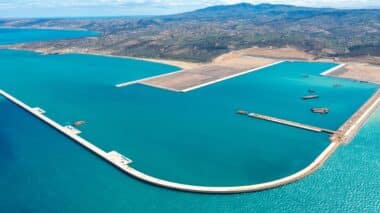
Article : Marsa Maroc : Mohammed Bendahmane aux commandes du terminal Ouest de Nador West Med
Passé par le Togo, l’Irak, le Canada et la Guadeloupe, le dirigeant rejoint un projet porté avec CMA CGM et présenté comme une étape majeure pour l’industrie maritime marocaine.
Article : L’Office des Changes lance “SARF”, sa nouvelle plateforme digitale de gestion des devises
Déployé après un programme de formation mené dans toutes les régions, l’outil doit permettre aux sociétés de change de traiter les achats et ventes de devises, d’éditer les bordereaux et de renforcer leur conformité LBC/FT.