

The West’s Final Countdown?
BERLIN – The year is still young, but its historical significance is already clear. At least as far as the West is concerned, foreseeable events in the coming months will have an overwhelming and decisive impact on the future. The moment of truth will come on November 3, 2020, when voters in the United States elect the country’s next president.
To be sure, US presidential elections have always been globally important, because they determine who will lead the world’s most powerful country for the next four years. But the stakes are much higher this time. The re-election of President Donald Trump could spell the end of the liberal world order and the system of alliances that America has fostered since the 1940s.
Departing from America’s tradition of global leadership, Trump favors a narrow-minded nationalism, and has shown little restraint in undermining US democracy itself, not least by challenging the separation of powers and other core institutions. Should Trump win in November, he will have a mandate to wreak havoc for another four years. The result will fit the description he offered in his first inaugural address: American carnage.
Make no mistake: it makes a big difference whether Trump is in office for eight years rather than just four. In addition to Americans, Europeans would be the first to feel the consequences of a second Trump term. The fact is that Europe remains almost existentially dependent on the US, both economically and for its security. This dependence is a legacy of the twentieth century, with its two world wars and its long Cold War. Such deeply rooted historical realities cannot be easily or quickly reversed. Already, Trump has forced Europe to pursue its own sovereignty; but achieving that end will not come easily or cheaply.
When Trump was elected in 2016, almost everyone both inside and outside the US was caught by surprise. In 2020, no one will make the same mistake again. But nor can anyone claim not to know what they are getting with Trump. He may be a stranger to the truth, but he has stayed mostly true to his campaign promises.
That said, it would be wrong to expect merely four more years of the same. If Trump is re-elected, he will most likely behave even more radically and without restraint. He will be fully convinced that he is the “chosen one,” having successfully withstood perfidious attacks by the opposition, the old establishment, the media, and the “deep state.” Who would be left to stop him, or at least to chasten him?
For all of its disastrous implications, the idea of a “second Trump term” has not shaken the European Union from its frustrating habit of pursuing business as usual. EU officials are currently negotiating the terms of the bloc’s next seven-year €1 trillion ($1.1 trillion) budget. Part of this involves a new battle over the allocation of regional and Common Agricultural Policy (CAP) funds following Brexit. The Trump presidency has been a negligible factor in the proceedings. And although a strategy for achieving European sovereignty necessarily would require new financial commitments, that particular issue has scarcely come up.
Instead, within the European Council, short-term national interests have prevailed. It is as if the world has not fundamentally changed over the past three years. One might think European leaders’ priorities would adjust to the Trump presidency, the emergence of China as a global power, Russia’s bet on military strength and rearmament, and the rise of the digital economy. But no: self-interested haggling dominates the agenda in Brussels and in Europe’s national capitals (which have always played a fundamental role in EU governance). Strategic thinking and a sense of historical responsibility are, at best, an afterthought.
Worse, this state of affairs prevails despite the fact that there is no more important issue to Europe than the US presidential election. Europeans should be preparing for the worst. The key question, both for Europe and the West more broadly, is whether NATO could survive a second Trump term. If NATO were to unravel, Europe and the North Atlantic region would suddenly face an enormous security crisis. In fact, without the transatlantic bond that the Alliance provides, one could hardly speak of “the West” at all. And Europe certainly wouldn’t be able to manage its own security.
In Brussels, but particularly at the European Council, the top-line agenda should reflect the fact that the strategic groundwork for the twenty-first century is being laid now – at this very moment. There is far more at stake than the outcome of the next national election in any one European country.
This is not to discount the importance of regional and CAP funds. But with all due respect to the frugal net contributors and the poorer recipient countries that depend on EU disbursements, there simply are bigger issues that need to be addressed. Europe’s very security and sovereignty are now at risk. The EU must ask itself if it is prepared to do what is necessary to remain an independent player, united in the common interest of all Europeans. Otherwise, Europe’s viability as a democratic, sovereign entity in control of its own destiny will be called into question – and therefore tested by adversaries – like never before.
à lire aussi
Article : L’Office des Changes lance “SARF”, sa nouvelle plateforme digitale de gestion des devises
Déployé après un programme de formation mené dans toutes les régions, l’outil doit permettre aux sociétés de change de traiter les achats et ventes de devises, d’éditer les bordereaux et de renforcer leur conformité LBC/FT.
Article : Marchés publics : le gouvernement prêt à revoir le quota de 30% réservé aux TPME
Devant les députés, Younes Sekkouri a reconnu les limites du dispositif censé ouvrir la commande publique aux petites entreprises, encore freinées par les délais de paiement et les difficultés d’accès aux appels d’offres.
Article : AXA Crédit Maroc change de dénomination et devient Stellantis Salaf Maroc
Rachetée majoritairement par FIDIS en septembre 2025, la société déploie désormais une offre de financement automobile pour les marques du groupe, tout en maintenant son activité historique de prêt personnel.
Article : Avant sa fusion avec Allianz, Sanlam Maroc obtient le visa de l’AMMC pour son augmentation de capital
À quelques semaines des assemblées générales du 2 juillet, le rapprochement entre les deux assureurs entre dans sa phase décisive, avec une opération valorisée à 2,56 MMDH et une date d’échange des titres fixée au 7 juillet.
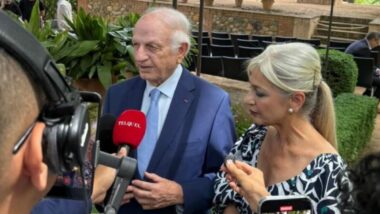
Article : André Azoulay : l’Espace Amazigh donne à l’Alhambra “une nouvelle vocation”
Inauguré samedi 14 juin à Grenade à l’initiative de la Fondation Docteur Leïla Mezian, le nouveau parcours met en lumière, dans un cloître du 11e siècle, le rôle des dynasties almoravide et almohade dans l’histoire d’Al-Andalus.
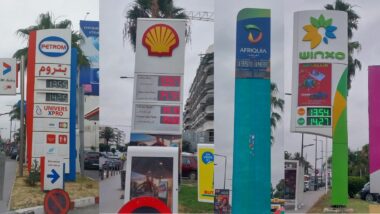
Article : Nouvelle baisse du prix du gasoil et de l'essence ce mardi 16 juin
Les prix à la pompe enregistrent un nouveau recul ce mardi 16 juin 2026. Une bouffée d'oxygène pour les consommateurs, alors que le marché tente de stabiliser les contrecoups de la crise régionale en Iran.