

Will the Fourth Industrial Revolution Serve Sustainability?
STOCKHOLM – Silicon Valley leaders tell us that the Fourth Industrial Revolution will bring untold benefits. They say it is already underway and accelerating, powered by artificial intelligence and other technologies, and warn that we will be left eating dust if we don’t get with the program.
This upheaval – which also reflects the impact of robotics, bio- and nanotechnology, 5G, and the Internet of Things (IoT) – is a general-purpose revolution. Its leaders and their boosters promise that it will help societies to tackle climate change, address poverty and inequality, and stem the dramatic loss of biodiversity. The revolution might play out like that. Or it might not. Consider the most recent digital revolution, which brought us Google, Facebook, and Twitter, and changed the way information flows around the world. At first, the ability to connect to others online, and to create and share digital content seamlessly through ever-growing virtual social networks, seemed straightforwardly beneficial. But today, the global flood of misinformation enabled by these platforms is making it more difficult to manage the COVID-19 pandemic and tackle climate change. Few realized what was happening until it was too late, and now we are dealing with the fallout. So, how can societies minimize the risk of inadvertent, ignorant, or willfully malicious use of the next generation of technology? My work has increasingly focused on the collision of two worlds. The technosphere comprises the stuff that humans have created, which amounts to an estimated 30 trillion tons, or 50 kilograms (110 pounds) per square meter of the Earth’s surface. The biosphere is the thin layer clinging to the Earth’s surface where life thrives, and where humans have enjoyed a 10,000-year stretch of relatively stable climate. I first became interested in the relationship between these worlds while exploring the growth of semi-automated global early-warning systems for disease control. This made me appreciate how deeply technology alters human, organizational, and machine behavior. Sometimes that influence is linear, simple, and direct. But more often than not, the effects of technological change are indirect; they move through complex webs of causation and become visible to us only after a long time. Social media are a good example of this. The technosphere is all around us. It is on track to become so-called “cognitive infrastructure,” with the ability to process information, reason, remember, learn, solve problems, and at times even make decisions with minimal human intervention through increased automation and machine learning. In evolutionary terms, this may prove to be a giant leap. But decisions regarding the technosphere’s design and direction must reflect social goals and the state of the planet. Building a more sustainable future therefore requires us to rethink some deeply held assumptions about the role of technology, and artificial intelligence in particular. The biggest imperative may be to broaden the dominant “AI for climate change” narrative. In its simplest form, this narrative focuses on using AI to predict climate, or to optimize energy systems or traffic flows. But the climate system is fundamentally connected to the biosphere, with its biodiversity, forests, oceans, and agricultural ecosystems. Developing and deploying AI responsibly to tackle urgent sustainability challenges requires embracing this connection with the living planet, and our role in it. Moreover, framing AI’s contribution in terms of optimization and efficiency is the wrong way to think about bolstering the long-term resilience of people and the planet. Resilience – the ability to rebound from shocks and adapt to changing conditions – requires diversity and redundancy. A city with one huge freeway through its center is vulnerable to gridlock if hit by a flash flood or terrorist attack. One that has many routes from one place to another is more resilient. Systems that are optimized to maximize output (say, of a particular crop) are prone to shocks and changing circumstances. Optimizing agricultural land for maximum yields using predictive analytics and automation is a tempting strategy, but it could accelerate loss of local ecological knowledge, amplify existing inequalities, and increase reliance on monoculture in response to commercial pressures. AI’s potential to help address the climate challenge lies not in optimizing systems, but in augmenting people’s capacities to become stewards of the biosphere. Such a broader view is urgently needed today. But there are two big risks in striving to direct intelligent machines to foster biosphere stewardship. The first is hype. As the pressures on our planet and the climate system increase, so will the hope that AI solutions can help “solve” deeply complex social, economic, and environmental challenges. Our knowledge about whether AI actually offers large climate benefits (and to whom) is limited, and existing assessments are often wildly optimistic, given what we know of technological evolution. All claims must be rigorously and independently tested as AI technologies evolve and diffuse over time. The second risk is acceleration. The deployment of AI systems and related technologies like IoT, 5G, and robotics may well lead to more rapid loss of biosphere resilience and increased extraction of fossil fuels and the raw materials that underpin these technologies. For example, oil and gas firms are increasingly seeking to cut costs through digitization. According to one estimate, the market for digital services in the fossil-fuel sector could grow 500% in the next five years, saving oil producers about $150 billion annually. Digitization, automation, and AI have untapped potential both to strengthen sustainability and to optimize exploitation. To harness the Fourth Industrial Revolution to sustainability, we need to start directing its technologies better and stronger now.
© Project Syndicate 1995–2021
à lire aussi

Article : Santé : Akdital poursuit son offensive saoudienne avec un nouvel hôpital à Djeddah
En reprenant un établissement déjà bâti de 120 lits, dont l’ouverture est visée au premier trimestre 2027, le groupe coté à Casablanca porte à quatre ses projets dans le Royaume et avance vers son objectif de 2.000 lits à l’international d’ici 2030.
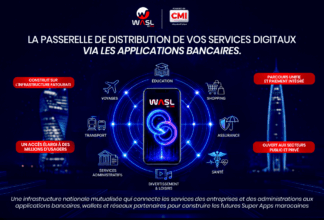
Article : WaSL by CMI : vers des “Super Apps” marocaines pour payer, réserver et accéder aux services
Après avoir habitué les Marocains à régler factures, taxes et créances depuis leurs canaux bancaires ou partenaires, le CMI veut franchir une nouvelle étape : intégrer les services eux-mêmes dans ces parcours. Avec WaSL, administrations, entreprises, fintechs et établissements de paiement pourront brancher leurs offres sur une infrastructure déjà utilisée par plus de 100 organismes et 32 banques, avec l’ambition de rapprocher les démarches du quotidien des usages numériques existants.
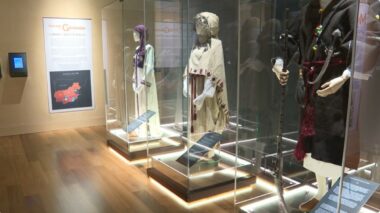
Article : À l’Alhambra, la Fondation Docteur Leïla Mezian donne une vitrine mondiale au patrimoine amazigh
Le Carmen de los Porcel accueille depuis samedi 13 juin une exposition permanente de 200 m² consacrée aux objets, aux gestes et aux récits amazighs, enrichie notamment par la donation de bijoux de Jorge Dezcallar, ancien ambassadeur d’Espagne au Maroc.

Article : Législatives 2026 : le Conseil national de l’Istiqlal pose les bases de son programme électoral
À quelques mois du scrutin de septembre, Nizar Baraka veut installer son parti sur des thèmes concrets et populaires : sécurité hydrique, production locale, industrialisation, moralisation de la vie publique et pouvoir d’achat. Une manière de préparer la bataille des urnes en tentant de répondre aux attentes des citoyens. Si les thèmes sont bien choisis, il reste à connaitre les mesures concrètes que propose le parti.
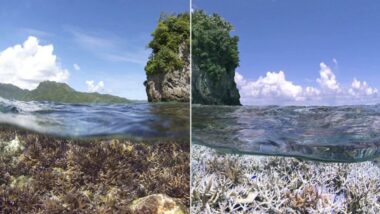
Article : Océans : le rapport de 1.300 pages de l’ONU qui documente un désastre en cours
Ils ont longtemps servi d’amortisseur silencieux à la planète, absorbant plus de 90% de l’excès de chaleur et près d’un tiers du CO2 rejeté par les activités humaines. Mais la machine se dérègle : niveau de la mer en accélération, coraux menacés, plastiques présents dans tous les écosystèmes, stocks de poissons sous pression et littoraux exposés. Publiée le 5 juin par l’ONU, la nouvelle Évaluation mondiale de l'océan dresse le portrait d’un système vital qui protège encore l’humanité, tout en montrant des signes de rupture de plus en plus visibles.
Article : ENQUÊTE. Manuels scolaires : derrière les pénuries de livres, la fin d’un modèle vieux de 20 ans
Affiché à seulement 4,05 DH, un manuel scolaire a fini par coûter près de 200 DH à certains parents, contraints de multiplier les déplacements et les tournées de librairies pour parvenir à le trouver lors de la rentrée 2025-2026. Derrière cette situation se joue une réforme qui bouleverse l’ensemble de la filière du livre scolaire. Pendant plusieurs semaines, Médias24 a interrogé les professionnels du secteur et reconstitué les effets de cette réforme sur un marché de plusieurs centaines de millions de dirhams.