
Crises and Contraception
MAPUTO – In Mozambique’s Cabo Delgado province, a perfect storm of conflict, cyclones, COVID-19, and cholera has erupted, creating a severe – and escalating – humanitarian crisis. September estimates show that more than 250,000 of an estimated 2.5 million people – 10% of the province’s population – are now internally displaced. More than half of children under the age of five are chronically malnourished. And Cabo Delgado province has recorded the country’s third-highest number of COVID-19 cases in October.
As humanitarian organizations work to provide adequate food, water, and shelter – in the midst of a pandemic, no less – delivering condoms and other contraceptives may seem to be of secondary importance. But failure to ensure the accessibility of family-planning tools will not only deepen the crisis today; it will prevent Mozambique from reaching its potential tomorrow.
Even before the current crisis, Cabo Delgado’s women and girls were highly vulnerable, owing to factors ranging from poverty to highly patriarchal social norms. Such norms – and the gender-based violence (GBV) they enable – inhibit their ability to exercise their agency and rights, and can directly threaten access to and use of contraception.
In 2015, Cabo Delgado had a contraceptive prevalence rate of just 20% – one of the lowest in Mozambique. Not surprisingly, it also had the highest pregnancy rate among adolescents aged 15-19 years (24%).
Now, growing insecurity in northern districts is forcing some health facilities that were once providing sexual and reproductive health services to close, while others lack essential medical supplies, equipment, and personnel. For the more than 125,000 displaced women and girls of Cabo Delgado, the challenge is particularly formidable. Some important innovations have been implemented to help overcome it: for example, mobile-health teams have delivered emergency family planning and reproductive health services to some 60,000 women and girls across multiple provinces, including in Cabo Delgado’s most remote areas. But many displaced women and girls are still left out.
Lack of access to well-equipped health facilities – and, thus, family-planning tools – heightens the risk of unintended pregnancies in dangerous conditions, potentially leading to life-threatening obstetric complications. It also leaves GBV survivors without the life-saving care, information, and support – such as woman-only safe spaces, hotlines with trained counselors, or “one-stop centers” that integrate health, social action, police, and justice services – that they need.
Access to safe and effective family planning is clearly crucial to uphold human rights, facilitate progress on gender equality and women’s empowerment, and break the cycle of poverty. It is also one of the smartest, most lucrative investments a developing country can make.
In Mozambique, the World Bank estimates that reducing the fertility rate by just one child per woman of childbearing age could lead to a 31% increase in real per capita GDP growth by 2050. This could be achieved simply by fulfilling the unmet need for voluntary family planning. According to the most recent Demographic and Health Survey, Mozambican women, on average, say that their ideal number of children is almost one child fewer than the current fertility rate.
But GDP growth is only one part of the story. The Institute for Economics & Peace’s latest Ecological Threat Register rates Mozambique as the country with the second-highest exposure to such hazards. One factor contributing to this rating is rapid population growth: Mozambique’s population is currently on track to double, from 30 million today to 60 million in 2050.
Mozambique has significant assets. Cabo Delgado alone may eventually host some of Africa’s largest natural-gas projects, potentially worth more than $50 billion. This amounts to a powerful potential engine of broad-based growth.
But in order to fulfill the country’s potential – as well as to protect girls and women, reduce poverty, and much more – building and supporting human capital is essential. That requires investment in education, training, and health, including safe and reliable access to family-planning tools.
The United Nations Population Fund estimates that the total investment needed to fulfill the unmet need for family planning globally from now to 2030 is approximately $68.5 billion. This is a significant sum, but it is far less than what would otherwise need to be spent on maternal and child health care and other social services for women and girls who never wished to be pregnant.
Funding family planning has far-reaching positive multiplier effects on communities and societies, including in humanitarian crises, not least by enabling women and girls to exercise their right to decide whether, when, and with whom to have a child. Such agency, enjoyed by all, forms the foundation of an equitable and productive society. The people of Cabo Delgado and Mozambique deserve no less.
à lire aussi
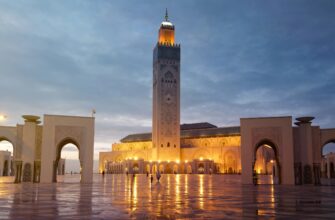
Article : Le Nouvel an de l'hégire (1er Moharram) sera célébré ce mercredi 17 juin au Maroc
Le 1er Moharram de la nouvelle année de l’Hégire 1448 correspondra au mercredi 17 juin 2026, a annoncé le ministère des Habous et des affaires islamiques.
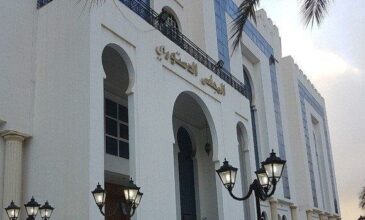
Article : Adouls : la Cour constitutionnelle valide l’essentiel de la réforme, mais écarte plusieurs dispositions
Saisie par 93 députés avant la promulgation du texte, la Cour a déclaré non conformes des articles touchant aux incompatibilités professionnelles, aux personnes en situation de handicap, au témoignage collectif dit “lafif” et à l’organisation des instances représentatives. Le texte devra donc être corrigé sur ces points, sans remettre en cause le cœur de la nouvelle loi 16.22.
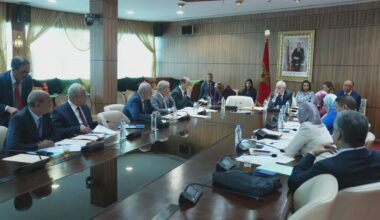
Article : En commission, les conseillers votent la nationalisation de la Samir et le plafonnement des hydrocarbures
Deux propositions de loi portant sur les hydrocarbures et la Samir ont été récemment adoptées en commission à la Chambre des conseillers. Un vote "surprise" rendu possible par un rapport de forces numérique défavorable à la majorité, lors d’une séance où l’opposition était majoritaire en nombre. Si ces textes ont franchi l’étape de la commission, leurs promoteurs sont conscients qu’ils ont peu de chances d’être adoptés en plénière.
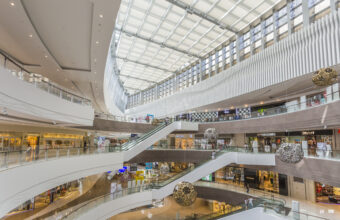
Article : Retail : la guerre silencieuse pour conquérir le panier des Marocains
Pendant longtemps, les courses du quotidien se sont surtout jouées entre l’épicier du quartier, le grossiste et quelques grandes surfaces. Ce modèle commence à se fissurer. Entre fusion capitalistique, rachats d’enseignes, master-franchises, centrales d’achat, logistique commune et formats de proximité, les grands opérateurs installent peu à peu des réseaux capables d’accompagner le consommateur du café du matin aux achats du week-end. Non sans bousculer les équilibres.
Article : Crédit du Maroc : ce que cache l’augmentation de capital à 699 MDH
Depuis son passage sous le contrôle de Holmarcom, Crédit du Maroc a changé de rythme. La banque affiche des bénéfices en hausse, prépare son plan CDM Boost 2028, et propose désormais à ses actionnaires de suivre le mouvement via une opération ouverte du 26 juin au 16 juillet. Derrière le prix fixé à 938 DH par action, le marché devra surtout juger si cette nouvelle étape confirme une trajectoire ou ouvre un pari plus large. Décryptage.
Article : Nador West Med : derrière le port, le pari industriel de l’Oriental
ROUND UP. Prévu pour entrer en service fin 2026, Nador West Med se construit déjà au-delà de ses quais : routes dédoublées, future autoroute vers Guercif, projets chinois dans l’éolien, les pneus et les alliages, ambition énergétique autour du GNL et de l’hydrogène vert. L’enjeu est désormais de transformer cette infrastructure en véritable moteur économique régional.