
Globalizing the COVID Vaccine
LAGOS – The development and approval of safe and effective COVID-19 vaccines less than a year after the start of the pandemic is a truly remarkable achievement, offering hope that the end of this devastating crisis may be in sight. What will follow in the coming months – or even weeks – will be equally remarkable: COVID-19 vaccines will be made available to people around the world – not just in the wealthiest countries – at roughly the same time.
Vaccines will reach the majority of rich-country citizens in the first quarter of this year, and citizens of low- and lower-middle-income countries will also begin to access them. The speed and scale at which vaccines are being provided is both extraordinary and necessary to end the pandemic, and is possible only thanks to an unprecedented show of global solidarity and multilateral support for COVAX, the central mechanism in the global COVID-19 vaccination effort, launched last year by the World Health Organization and Gavi, the Vaccine Alliance (which I led).
COVAX will facilitate the rollout of two billion vaccine doses over the next year, reaching people in 190 participating countries and economies, regardless of their ability to pay. In fact, there should be enough doses to protect all health- and social-care workers worldwide by mid-2021. And despite meeting with its share of naysayers, the program has continued to attract more governments, economic policymakers, and vaccine manufacturers. These participants are signing on because they recognize that COVAX is the only viable global solution to the COVID-19 crisis.
Now that we have reached this critical juncture, speculation about whether COVAX will fail must stop. It is time to start providing the support needed to ensure that it succeeds in doing what it was designed to do. The development and approval of vaccines is merely the first step. As long as the coronavirus can be transmitted between people, many will continue to be infected, and some will die. The hope of returning to normal trade, commerce, and travel will remain elusive.
To end the cycle, we cannot vaccinate only some people in some countries; we must protect all people everywhere. Yet as vaccines have been rolled out, demand has predictably outpaced the still-limited supply. Under these conditions, even if doses are promised for the rest of the world further down the line, allocating vaccines to the highest bidder will merely prolong the crisis. Vaccine nationalism is precisely the problem that COVAX was created to solve.
In tackling COVID-19, we must avoid a repeat of 2009, when a small number of rich countries bought up most of global supply of H1N1 flu vaccine, leaving the rest of the world with none. Because every national government has a first-order duty to protect its own citizens, it is no surprise that some 35 countries have already concluded bilateral deals with pharmaceutical manufacturers for COVID-19 vaccines.
These arrangements are not ideal when it comes to the global vaccination effort. Although COVAX is flexible enough to work around this particular problem, it can do so only as long as manufacturers provide it with the same access to vaccines as national governments receive. Unfortunately, we are already seeing some governments buy far more doses than they need, adding to the pressure on global supply during this critical initial phase.
Some of these countries have indicated that they will donate their surplus orders, in which case these additional doses will need to be redirected as quickly and as equitably as possible. The best way to ensure that they are is for donor governments to go through the Gavi/COVAX Advance Market Commitment (AMC) mechanism, which was created to ensure that COVID-19 vaccines are made available to people living in the world’s 92 low- and middle-income countries.
So far, COVAX has secured around one billion doses for people in these countries, by striking deals with manufacturers of several of the most-promising vaccine candidates. But many more doses are needed. All manufacturers must step up and make their vaccines available and affordable to COVAX, so that there can be a timely global rollout. Some manufacturers have already done this; and international donors have contributed the $2 billion that the COVAX AMC needed for 2020. But the program needed an additional $5 billion for 2021, and in December, the United States allocated $4 billion for Gavi in its second COVID-19 relief package.
Back in February, few imagined that by year’s end we would have more than one approved vaccine and be in a position to deliver doses to high- and lower-income countries simultaneously. But the global community rallied and created a platform for doing precisely that. All COVAX needs now is enough international support to finish the job.
à lire aussi
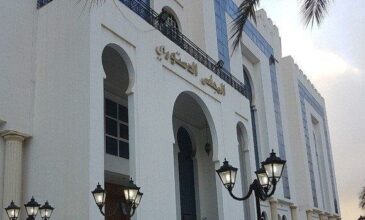
Article : Adouls : la Cour constitutionnelle valide l’essentiel de la réforme, mais écarte plusieurs dispositions
Saisie par 93 députés avant la promulgation du texte, la Cour a déclaré non conformes des articles touchant aux incompatibilités professionnelles, aux personnes en situation de handicap, au témoignage collectif dit “lafif” et à l’organisation des instances représentatives. Le texte devra donc être corrigé sur ces points, sans remettre en cause le cœur de la nouvelle loi 16.22.
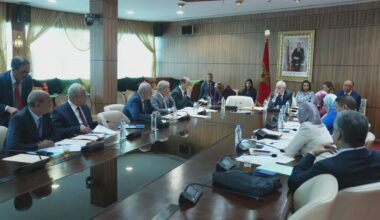
Article : Parlement : deux textes sensibles sur la Samir et les carburants passent en commission
Deux propositions de loi portant sur les hydrocarbures et la Samir ont été récemment adoptées en commission à la Chambre des conseillers. Un vote "surprise" rendu possible par un rapport de forces numérique défavorable à la majorité, lors d’une séance où l’opposition était majoritaire en nombre. Si ces textes ont franchi l’étape de la commission, leurs promoteurs sont conscients qu’ils ont peu de chances d’être adoptés en plénière.
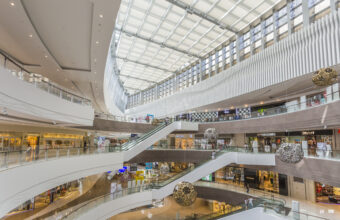
Article : Retail : la guerre silencieuse pour conquérir le panier des Marocains
Pendant longtemps, les courses du quotidien se sont surtout jouées entre l’épicier du quartier, le grossiste et quelques grandes surfaces. Ce modèle commence à se fissurer. Entre fusion capitalistique, rachats d’enseignes, master-franchises, centrales d’achat, logistique commune et formats de proximité, les grands opérateurs installent peu à peu des réseaux capables d’accompagner le consommateur du café du matin aux achats du week-end. Non sans bousculer les équilibres.
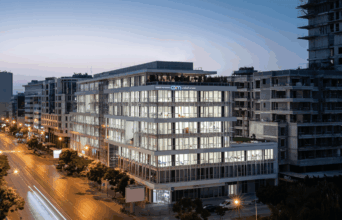
Article : Crédit du Maroc : ce que cache l’augmentation de capital à 699 MDH
Depuis son passage sous le contrôle de Holmarcom, Crédit du Maroc a changé de rythme. La banque affiche des bénéfices en hausse, prépare son plan CDM Boost 2028, et propose désormais à ses actionnaires de suivre le mouvement via une opération ouverte du 26 juin au 16 juillet. Derrière le prix fixé à 938 DH par action, le marché devra surtout juger si cette nouvelle étape confirme une trajectoire ou ouvre un pari plus large. Décryptage.
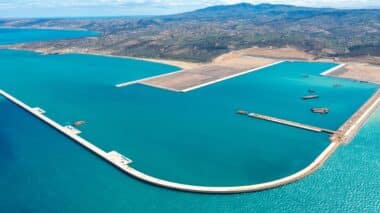
Article : Nador West Med : derrière le port, le pari industriel de l’Oriental
ROUND UP. Prévu pour entrer en service fin 2026, Nador West Med se construit déjà au-delà de ses quais : routes dédoublées, future autoroute vers Guercif, projets chinois dans l’éolien, les pneus et les alliages, ambition énergétique autour du GNL et de l’hydrogène vert. L’enjeu est désormais de transformer cette infrastructure en véritable moteur économique régional.

Article : Pour près de 395 MDH, ce sera Urbagec/Separator qui construira la future gare LGV de l’aéroport de Casablanca
Le marché porte sur le lot 4 du projet, dédié à la construction de la gare ferroviaire de l’aéroport Mohammed V. Cinq candidats étaient en lice, dont SGTM, Sogea Maroc et Construction Management Services, pour une estimation initiale fixée à 380 millions de DH hors taxes.