
Casablanca Stock Exchange. Despite Strait of Hormuz jitters, the MASI wipes out its losses
After falling 12% in just a few sessions in late February and early March, the Casablanca index gradually erased its losses and is now trading near key technical levels.

Since the beginning of the year, the Casablanca Stock Exchange has undergone a sharp correction before stabilizing. As of April 16, the MASI has nearly erased its losses and is now down just 0.5% year-to-date. Meanwhile, the MASI20 remains significantly behind, with a decline of about 7% over the same period.
The low point was reached in early March, in a particularly sharp sell-off. Between February 20 and March 3, the MASI fell by about 12% in just a few sessions, deepening the losses recorded since the start of the year.
This correction is primarily driven by domestic factors, in a context of profit-taking after a particularly strong 2025. The outbreak of war in the Middle East further amplified the move, reinforcing risk aversion among investors.
The announcement of the reopening of the Strait of Hormuz was enough to ease market tensions on April 17. The MASI immediately reacted, gaining nearly 3% and moving back above the 19,000-point mark. The reopening of the Strait of Hormuz briefly eased market pressure on April 17
Iranian Foreign Minister Abbas Araghchi announced on Friday, April 17, 2026 the full reopening of the strait during the ceasefire period, triggering an immediate rebound in global markets.
The following Saturday, April 18, the strait was closed again after new statements confirmed the continuation of the blockade. On Monday, April 20, the market reaction reversed. By 11 a.m., the MASI was already down about 1.8%, giving back part of Friday’s gains.
MASI: a market in transition, with key levels to watch
BKGR analysts say the capitulation phase observed in early March is now behind us. The MASI has regained some ground over the period, rising 1.14% between February 27 and April 14, 2026.
However, the market has yet to enter a clear uptrend. The index remains in an intermediate phase, still about 9.8% below its all-time high reached in late August 2025.
The starting point remains the early March stress episode—a rapid phase marked by an intraday drop of 5.6% and the sharpest weekly decline since April 2025. This move acted as a reset, with excesses flushed out and the market repositioning at more sustainable technical levels.
Since that low, the price structure has gradually improved. The April 8 move, with a 4% gain, marked a turning point in recent dynamics.
The market is now testing the 200-day moving average, a key level. The RSI, around 59, points to renewed positive momentum, with room for further upside before overheating.
Technical levels remain clearly defined. The 17,228–17,916-point range provides solid support, while the 18,400–18,850 range concentrates selling pressure. The next phase will depend on whether this resistance is broken: a breakout could pave the way for further gains, while failure would likely extend the consolidation.
At the same time, the market continues to draw support from solid fundamentals. 2025 was a particularly strong year, with the MASI gaining more than 27%. The earnings capacity of listed companies now exceeds 50 billion dirhams, up nearly 40%.
The launch of futures on the MASI20 has also introduced new tools for hedging and flow analysis, with adoption appearing gradual but tangible.
Regarding trading activity, volumes remain solid. Average daily turnover stands at 463.5 million dirhams since the start of the year through April 16, compared with 536.2 million a year earlier—a decline largely explained by a high comparison base in 2025 following the tax amnesty.
Valuations becoming more attractive
The recent correction has reshaped the market outlook. Levels reached at the end of February pointed to stretched valuations, with a 2025E PER around 21.7x and a dividend yield of 2.8%.
By mid-April, the PER stands around 21.9x, with a dividend yield close to 2.6%. While aggregate multiples have changed little, lower prices have improved entry points across several stocks.
"On paper, the market does not look significantly cheaper. But the reality lies elsewhere. The correction has mainly improved entry levels, with several stocks returning to more attractive price points," said a market analyst.
In detail, some segments remain demanding, particularly industrials, where multiples still exceed 28x on average.
By contrast, financials trade at more moderate levels, around 14x, with yields ranging between 3.3% and 3.7%, continuing to attract investor flows.
The market is no longer moving in unison. Flows are increasingly directed toward segments offering greater visibility and more compelling valuations.
The mining sector stands apart
The mining sector stands out in the current environment. It has directly benefited from the rise in precious metals, notably gold and silver, amid global uncertainty and a flight to safe-haven assets.
Managem exemplifies this trend. The group has become the largest market capitalization on the Casablanca Stock Exchange, supported by rising metal prices and improved visibility on its strategy and projects.
Beyond cyclical effects, the group’s repositioning—through structuring projects and more diversified exposure—is increasingly being priced in by the market, helping drive the stock’s revaluation in recent months.
à lire aussi
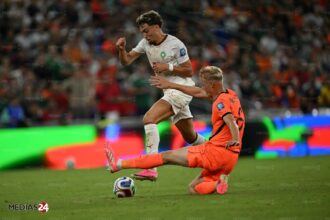
Article : Coupe du monde 2026. Qualification héroïque du Maroc face aux Pays-Bas (1-1, 3 t.a.b. à 2)
Menés à un quart d’heure du terme, les Lions de l’Atlas ont trouvé les ressources mentales nécessaires pour égaliser grâce à Issa Diop, puis éliminer les Oranjes lors de la séance des tirs au but, dans la nuit du lundi 29 au mardi 30 juin, à Monterrey, au Mexique. Yassine Bounou et Ismaïl Saibari ont propulsé le Maroc en huitièmes de finale face au Canada, samedi 4 juillet à Houston.
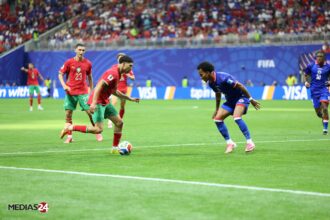
Article : Coupe du monde 2026. Centième sélection pour Achraf Hakimi face aux Pays-Bas
Le capitaine des Lions de l’Atlas portera le maillot du Maroc pour la 100e fois de sa carrière, dans la nuit du lundi 29 au mardi 30 juin, face aux Pays-Bas, en seizième de finale de la Coupe du monde 2026. Titularisé par Mohamed Ouahbi, Hakimi n’est plus qu’à 15 sélections d’égaler le record de Noureddine Naybet.

Article : GMT, interdiction du démarchage, IA : la triple peine de l’offshoring marocain
Longtemps porté par les donneurs d’ordre européens et les centres d’appels, le secteur de l’offshoring au Maroc doit désormais composer avec des horaires à réorganiser, des appels commerciaux de plus en plus encadrés en France et des tâches que les logiciels commencent déjà à automatiser. Les grands opérateurs invoquent l’adaptation et la montée en gamme, tandis que les syndicats redoutent moins d’embauches et davantage de postes supprimés.
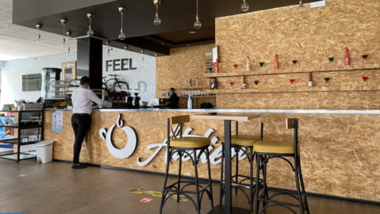
Article : Maroc-Pays-Bas : les cafés pourront rester ouverts pour diffuser le match
Selon Ahmed Bifergane, coordinateur de la Fédération nationale des propriétaires de cafés et restaurants, aucune interdiction n’a été émise par les autorités pour la nuit du lundi 29 au mardi 30 juin.
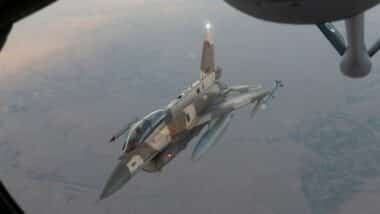
Article : Défense : les F-16 marocains concernés par un nouveau contrat américain sur les missiles AMRAAM
Attribuée à Raytheon pour 398,6 millions de dollars, l’enveloppe porte sur des travaux liés au système D4/C9, avec une échéance fixée à décembre 2027. Le Maroc figure parmi les pays partenaires du dispositif FMS, aux côtés notamment des Émirats arabes unis, de l’Arabie saoudite, du Japon, d’Israël et du Royaume-Uni.

Article : My Education lance “MY WAY”, un programme dédié aux compétences du XXIe siècle
Destiné aux jeunes de 9 à 16 ans, le dispositif combine des activités régulières, des bootcamps, des stages immersifs et des interventions en milieu scolaire.