

The Second Jacksonian Age
PROVIDENCE – Many people have compared Donald Trump’s presidency to that of Andrew Jackson in the first half of the nineteenth century. Trump himself hung a portrait of Jackson in the Oval Office. And though Trump is hardly the military hero that Jackson was, the periods in which their presidencies occurred have some striking similarities.
The Jacksonian era, like our own, was a time of extreme democratization and rampant anti-elitism. The Jacksonians insisted that anyone (by which they meant any white adult male) could serve in any political office. No longer would education, social status, and respectability matter. Such egalitarian claims alarmed the Harvard- and Yale-educated elites of the 1820s and 1830s, just as they do today.
Moreover, we, too, are living in an era when weakened traditional authorities are being challenged. Following the 2020 presidential election, one Democratic pollster concluded that Trump supporters “don’t trust the news media. They don’t trust elites. They don’t trust scientists. They don’t trust academics. They don’t trust experts.” In antebellum America, Jackson’s supporters were likewise suspicious and mistrustful of authority.
While the Jacksonians regarded the common man as the ultimate source of all authority, they could only have dreamed of the role that social media has enabled ordinary people to play. The penny press of the 1830s couldn’t hold a candle to Twitter, Facebook, and other platforms that enable everyone to participate in the creation of popular opinion.
Nonetheless, the Jacksonian era offers lessons that can help us comprehend our own age. The early nineteenth century is when Americans started increasingly describing their society in non-pejorative terms as a “mass” of “almost innumerable wills.” Individuals were weak and blind, the historian George Bancroft observed, but the mass was strong and wise.
From this insight followed a new appreciation of statistics (or “statisticks,” as it was spelled in 1803, when it first appeared in American dictionaries). Taken alone, a fact might not mean much; but once it has been collected together with others, it could reveal a whole world. “In composing a work like the present,” wrote the physician James Mease in The Picture of Philadelphia (1811), “the author is of opinion that the chief object ought to be the multiplication of facts, and the reflections arising out of them should be left to the reader.”
Witnessing this push toward mass culture, Charles Nisbet, the Scottish clergyman who became president of Dickinson College in Pennsylvania, feared as early as 1789 that Americans were carrying their reliance on individual judgment to ridiculous extremes. Accordingly, he fully expected to see the publication of books with titles like Every Man his own Lawyer, Every Man his own Physician, and Every Man his own Clergyman and Confessor.
At any rate, the assaults on elite opinion by those championing ordinary judgment resulted in a dispersion of authority and, ultimately, of truth itself. With everyone being told that their ideas about medicine, art, and government were as valid as those of the so-called “connoisseurs” and college-educated “speculative men,” truth and knowledge became elusive and difficult to pin down. Ordinary Americans, confident of their ability to determine the truth for themselves, became deeply mistrustful of anything beyond what the writer George Tucker called “the narrow limits of their own observation.” This made them easy prey to hucksters, confidence men, and tricksters, who soon popped up everywhere. Edgar Allen Poe called his time the “epoch of the hoax,” a description that echoes clearly in our own age of fake news and alternative facts.
Poe delighted in creating hoaxes and cons – some of them quite elaborate and convincing – in the newspapers. Similarly, P.T. Barnum capitalized on people’s confidence in their own judgment by placing ads questioning whether the woman in his museum was really a mermaid, suggesting that they should come see for themselves. Like the sailors of the Pequod in Herman Melville’s Moby-Dick, “nothing but their own eyes could persuade such ignorance as theirs.”
Like today’s elites and mainstream media, the nineteenth-century college-educated and traditionally-minded gentry protested in vain against this democratization of truth. Having come to believe that “the unalienable right of private judgment involves the liberty of thinking as we please on every subject,” most ordinary people in Jacksonian America were no longer willing to defer to the knowledge and judgments of those who had once been their superiors.
Although plain people perhaps lacked the education, travel, and manners of their aristocratic neighbors, their spokesmen were quick to point out that they had eyes and ears, and thus knew their own truth better than some “commanding genius” or “learned sage.” Why should they trust what such gentlemen told them?
As we are discovering again, democracy and elite expertise do not always go well together. Now, too, the democratization of knowledge and truth can produce an odd mixture of credulity and skepticism among many ordinary Americans. Where everything is believable, everything is doubtable. And when all claims to expert knowledge become suspect, people will tend to mistrust anything that they have not seen, felt, heard, tasted, or smelled.
The problem, of course, is that when people pride themselves on becoming shrewd empiricists, things that they perceive but do not comprehend can easily impress them. A few strange words spoken by a preacher or an anonymous internet personality can carry great credibility, as can hieroglyphics displayed on a document, or anything written in highfalutin or cryptic language. Joseph Smith, the recipient of the tablets that became the Book of Mormon, knew this all too well.
Such was the popular culture of Jackson’s America, a distant democratic world that eerily resembles our own.
à lire aussi

Article : Kacem Bennani Smires : “Dans la transmission des entreprises, il y a un fossé entre ce qu'il faudrait faire et la réalité”
93% du tissu entrepreneurial, 65% des emplois, 60% de la valeur ajoutée nationale, les entreprises familiales sont l'épine dorsale de l'économie marocaine. Pourtant, une sur quatre seulement réussit sa première transmission. Kacem Bennani Smires, président de l'Institut de l'entreprise familiale Maroc, décrypte les raisons de cette fragilité et les leviers pour y remédier.
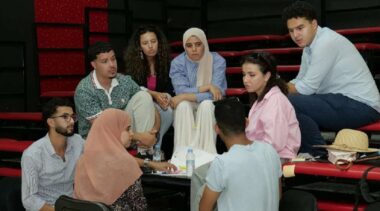
Article : Élections 2026 : derrière l’abstention, une demande de transparence et de résultats
À moins de quatre mois du scrutin, une étude de l’association Les Citoyens met au jour un paradoxe politique : 66,6% des répondants jugent le vote important, mais seuls 13,6% font confiance aux dernières élections. Signe d’un électorat qui ne tourne pas le dos aux urnes, mais réclame des preuves concrètes avant d’y retourner. Détails.
Article : Bourse de Casablanca : les minières flambent, le MASI réalise l'une de ses meilleures séances de l'année 2026
Portée par un puissant rebond des valeurs minières et par l'optimisme suscité par l'annonce d'un accord de paix au Moyen-Orient, la Bourse de Casablanca a signé l'une de ses plus fortes progressions de l'année ce lundi 15 juin. Le MASI a bondi de 4,46%, dans un marché marqué par un regain d'appétit pour le risque et des échanges dépassant les 540 MDH.

Article : Prévisions météorologiques pour le mardi 16 juin
Voici les prévisions pour le mardi 16 juin 2026, établies par la Direction générale de la météorologie : - Temps assez chaud sur le Sud-Est, […]

Article : CAN 2025 : en exclusivité, voici les arbitres du TAS appelés à trancher le litige Maroc-Sénégal
Qui tranchera le recours du Sénégal contre la décision ayant attribué la CAN 2025 au Maroc ? Médias24 révèle l'identité des trois arbitres du TAS et les derniers développements d'une procédure désormais entrée dans sa phase d'instruction, mais dont le calendrier repousse toute échéance importante à l'après-Mondial 2026.

Article : Météo du 15 au 21 juin : chaleur, orages locaux et brouillards côtiers au menu de la semaine
Sous l’effet de la dépression thermique saharienne, les températures pourraient atteindre 39 °C à 46 °C dans le Sud-Est, l’Oriental et les provinces sahariennes, tandis que l’influence maritime continuera de tempérer les zones proches de l’Atlantique et de la Méditerranée.