

The Middle East’s Dangerous New Hegemonic Confrontation
BERLIN – In the old Middle East, a single overarching conflict – between Israel and the Arab countries – had many fronts, and it was the West’s prerogative to protect the flow of oil to the global economy. In the new Middle East, the defining conflict is a broader struggle among multiple players seeking regional primacy.
This new struggle began when former US President Barack Obama initiated America’s broader withdrawal from the region, but it has intensified under Donald Trump. Obama, at least, had a political vision for the region. With the 2015 Iran nuclear deal having forestalled a nuclear-arms race, he hoped that an easing of sanctions and faster economic growth would permit Iran’s gradual reintegration into the international community over the following decade. Trump, by contrast, has no strategy, and wants to disguise America’s retreat from the region, currently demonstrated in Syria by the open betrayal of the Kurds, with militant rhetoric and massive arms exports to US partners and allies in the Gulf.
For its part, Saudi Arabia, the region’s wealthy, predominantly Sunni power (if one doesn’t count Turkey), has long harbored ambitions for regional hegemony – at least in the Persian Gulf and on the Arabian Peninsula – and views predominantly Shia Iran as its main rival. For the past few years, Iran and Saudi Arabia have been waging a disastrous proxy war in Yemen, resulting in a massive toll of civilian casualties and a humanitarian catastrophe.
But the situation changed last month, when a nighttime attack targeting the heart of the Saudi oil industry sent shockwaves through the global economy. Several drones managed to cross into Saudi airspace undetected, where they launched precise attacks on key oil installations. The Saudi air defenses – if there were any – seem to have been fast asleep, suggesting that the attackers had intimate knowledge of local conditions.
A midnight attack without warning raises obvious questions. Who did it, and how did they pull it off? The Iran-backed Houthi rebels in Yemen claimed responsibility, but they are in no position to carry out such an attack. Given the technology used and the logistics involved, the only plausible suspect is Iran, despite the Iranian government’s vehement denials. And in terms of motive and interest, it is clear that Iran has profited the most from the strike.
Saudi Arabia, after all, has been humiliated in the eyes of the world and exposed as a loud-mouthed paper tiger. In addition to the undeniable failure of Saudi counterintelligence to detect or avert the attack is the equally obvious fact that Saudi Arabia will lose the war in Yemen sooner or later. At that point, its hegemonic aspirations will become an even greater source of derision.
And so, in the final analysis, responsibility for the attack on Saudi Arabia almost certainly lies with Qassem Suleimani, the general who commands the Islamic Revolutionary Guard Corps’ foreign operations unit. With this attack, Iran has proven itself to be a major regional power with impressive technical and logistical capabilities that cannot be easily thwarted. That could fundamentally change the strategic calculus in the region. All the oil monarchies on the Arabian side of the Persian Gulf are doubtless already reassessing their foreign-policy outlook, interests, and loyalties.
Iran has also left Trump looking weak. Following his refusal to respond militarily to an attack on a cherished regional ally, Trump fired his national security adviser, John Bolton, an archenemy of the Iranian regime. No one should shed any tears for Bolton. But nor can one rule out the possibility that his ouster has invited this attack.
Trump’s foreign-policy dilettantism – his use of militant bombast to mask his lack of plausible options and strategy– seems to have played a crucial role in bringing about the current situation. His decision to abandon the Iran nuclear deal with no thought for what would come afterward has proven to be the height of folly and will be very dangerous.
But there is one other dynamic to consider. Following the G7 summit in Biarritz, France, in late August, there was talk of a possible meeting between Trump and Iranian President Hassan Rouhani. The attack on Saudi oil facilities came just weeks later, shortly before both leaders were in New York City for the United Nations General Assembly, where they could have met. The question, then, is whether the attack was an outgrowth of a broader internal power struggle between Iranian radicals and moderates.
Whatever the case may be, with Saudi Arabia’s position already eroding, the region’s two real remaining military powers are Israel and Iran. Already, the two countries appear to be moving toward a dangerous confrontation. Israel is deeply worried about Iran’s apparent capacity to launch precise long-distance attacks with drones or ballistic/cruise missiles. And if that were not already a significant threat to Israel’s national security, Iran could try to supply Hezbollah or its other regional proxies with similar capabilities.
Were Israel to be attacked with the same precision and sophistication as the strike on Saudi Arabia, the Middle East would be plunged into war on a scale beyond anything it has experienced so far. Sadly (but happily for Russian President Vladimir Putin), that is the reality of a world in which the US has abandoned any pretense of global leadership.
à lire aussi
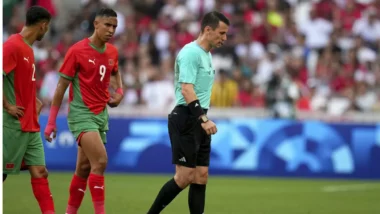
Article : Maroc-Écosse : l'Ouzbek Tantashev au sifflet, deux ans après la demi-finale olympique mouvementée contre l’Espagne
Désigné par la FIFA pour la rencontre du 19 juin au Boston Stadium, celui qui est arbitre international depuis 2013 avait quitté le terrain dès la 15e minute aux JO de Paris après une collision avec Marc Pubill.

Article : Mr. Bricolage vise 45 magasins au Maroc d'ici 2032 et un plan d'investissement de 700 MDH
Mr. Bricolage Maroc prévoit le déploiement de 45 magasins d’ici 2032, au rythme d’une ouverture toutes les huit semaines, dans le cadre d’un plan porté par un investissement de 700 millions de DH.

Article : Loi 16.22 sur les adouls : l’Ordre réagit à la décision de la Cour constitutionnelle
L’invalidation partielle du texte par la Cour constitutionnelle est accueillie avec soulagement par une partie de la profession, qui y voit la confirmation de réserves exprimées depuis plusieurs mois. Mais pour Maître Driss Trali, membre du bureau exécutif de l’Ordre national, la réforme reste incomplète tant que le dépôt des fonds, l’officialité pleine de l’acte et l’indépendance de l’instance professionnelle ne sont pas consacrés par la loi.
Article : Bourse de Casablanca : le MASI termine encore dans le vert
Au lendemain de sa progression de 4,63%, l'une des plus fortes hausses de son histoire récente, le MASI poursuit son redressement le mardi 16 juin. L'indice a gagné 0,15% à 18.782,58 points, porté notamment par les valeurs immobilières et minières, dans un marché qui conserve une partie de l'élan né du regain d'optimisme sur le front géopolitique.
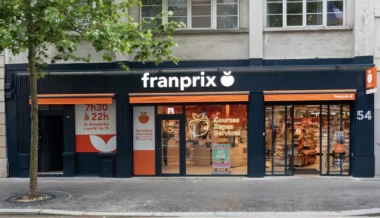
Article : Un premier magasin Franprix en test à Casablanca dès le 3 juillet
Le groupe H&S Invest Holding de Moncef Belkhayat concrétise son accord avec le groupe Casino avec l’ouverture, en test, d’un premier magasin Franprix à Casablanca.
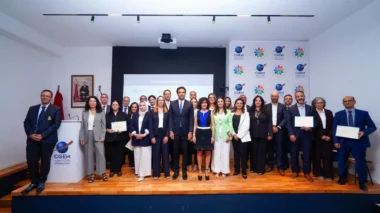
Article : 20 ans de la Charte RSE : la CGEM distingue 21 entreprises et porte à 152 le nombre de sociétés labellisées
Lancé en 2006, le dispositif patronal a récompensé cette année dix nouvelles entreprises, dont Crédit Agricole du Maroc, Pharma 5 et Rabat Région Mobilité. Onze autres ont vu leur distinction renouvelée.