
Making Murder Great Again
ATLANTA – The recent film Joker tells the story of Arthur Fleck, a lonely psychopath and party clown who tries to build a career as a stand-up comedian but is rejected and humiliated. He then takes revenge on society by becoming a murderer and provoking riots “against the rich.”
Although Joker won the prestigious Golden Lion award for best film at this year’s Venice International Film Festival, it has divided opinion. Many reviewers praised the movie, arguing (predictably) that its violent protagonist is leading a revolt against a cruel, unjust order. The Joker, they say, is a downtrodden hero whose violence constitutes a courageous act of self-expression.
Others take a dimmer view of the main character, pointing to his madness, cruelty, and vicious intent. Unlike the conflicted murderer Raskolnikov in Dostoevsky’s Crime and Punishment, the Joker is a vengeful maniac who commits his crimes in cold blood, feeling no responsibility, much less remorse.
Todd Phillips, Joker’s director, is perplexed by the “double standards” applied to his movie. “I just saw John Wick 3. He’s a white male, he kills 300 people, and everybody’s laughing and hooting and hollering,” Phillips said. “Why does this movie get held to different standards? It honestly does not make sense to me.”
The bigger question is whether a murderous psychopath should be the protagonist in a film critiquing the existing social order. True, the United States, with a highly uneven distribution of wealth mirroring that in Russia under President Vladimir Putin, rather than most other developed countries, certainly needs social change. But are the Joker and his ilk, and films that indulge in murderous monsters and unrestrained violence, really the best vehicles for promoting social justice?
Both Phillips and the actor Joaquin Phoenix, who plays the title character, have sought to rebuff such criticism by relying on the mainstream trope of viewing monsters as victims of injustice. Their crimes, Phillips says, stem from “a lack of love, childhood trauma, lack of compassion in the world.”
Moreover, as David Sims pointed out in The Atlantic, “Joker is hardly the first movie in history to focus on a disturbing antihero.” Numerous films depicting brain-eating zombies, bloodsucking vampires, or serial killers have been praised as critiques of capitalist exploitation, American imperialism, gender oppression, human speciesism, and so on. In fact, has any monster not yet been considered as a potential conveyor of revolutionary ideas?
The idea that a murderous monster may symbolize a protester or an outcast, and therefore deserve sympathy, originated with the French philosophers Gilles Deleuze and Pierre-Félix Guattari. Challenging René Girard’s explanation of the origins of irrational violence and hatred against the Other – ethnic or religious minorities who were demonized and victimized – Deleuze and Guattari extended the concept of Otherness to the vampire.
That set the stage for a paradigmatic shift in the understanding of homicidal monsters as the Other. Increasingly, such protagonists became a focus of academic attention, cultural criticism, and popular culture itself.
This fixation on “empathy” toward perpetrators of extreme violence is rooted in an ideological shift in attitudes toward humans. This shift reflects the influence of the radical critique of humanism and the rejection of anthropocentrism, voiced especially by the animal-rights movement and advocates of transhumanism and posthumanism in popular culture since the 1990s (which I discuss in my book The Celebration of Death in Contemporary Culture). By legitimizing what was otherwise perceived as low entertainment, stories aestheticizing violence by idealized monsters against human characters quickly became a much sought-after commodity.
What are the social and political implications of this normalization of mayhem in popular culture? Writing in Time magazine, Stephanie Zacharek called Joker an exercise in “glamorized nihilism” in which the lead character “inspires chaos and anarchy.” And the film has certainly sparked fresh debate about the relationship between fictional and real-life violence.
Prior to Joker’s release, the families of the victims of the 2012 mass shooting at a cinema in Aurora, Colorado, issued a letter expressing their concern about the atrocities depicted in the film. Because the Aurora shooting happened during a screening of another Warner Bros. film (The Dark Knight Rises), the letter forced the studio, Phillips, and Phoenix to address the families’ objections.
Whereas the Warner Bros. statement unabashedly advised the public not to confuse fiction with reality, Phoenix’s response summed up the changes in popular culture in recent decades: “I don’t think it’s the responsibility of a filmmaker to teach the audience morality or the difference between right [and] wrong.”
Yet, if Joker is a call for social change, then the film is ultimately about knowing right from wrong – in moral terms and from the point of view of social justice.
Time’s Zacharek spotted the seminal contradiction in the image of the Joker. “Is he a villain or a spokesperson for the downtrodden?” she asked. “The movie wants it both ways. Its doublespeak feels dishonest.” In The Atlantic, Sims agreed, saying that Phillips “positions Joker as an antihero, an evil figure who nonetheless becomes an avatar of vigilante justice within the film.”
Neither critic, however, explained the nature of this dishonesty. The Joker is a madman whose gratuitously violent acts are understood and performed as entertainment, not as a call for revolution or social change. Rather than inspiring its audience to protest against social injustice, the movie sells a commodified antihumanism that radically refutes the exceptional value of human life and democratic freedom.
Although Zacharek is certainly right that “movies don’t cause violence,” they may shape our ideas about what is permissible. After all, how could on-screen violence against humans not influence the perceived value of human life and human dignity?
Furthermore, if culture is inseparable from politics, as Phoenix believes, then the normalization of mayhem in popular culture could fuel widespread indifference to distinguishing between right and wrong in public life. We certainly should ask to what extent this indifference, advocated as a professional credo in the entertainment industry, has influenced the behavior of the showman currently occupying the White House.
à lire aussi
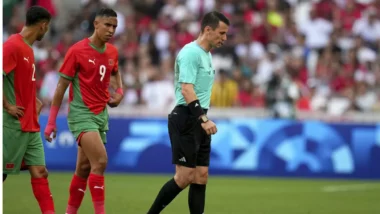
Article : Maroc-Écosse : l'Ouzbek Tantashev au sifflet, deux ans après la demi-finale olympique mouvementée contre l’Espagne
Désigné par la FIFA pour la rencontre du 19 juin au Boston Stadium, celui qui est arbitre international depuis 2013 avait quitté le terrain dès la 15e minute aux JO de Paris après une collision avec Marc Pubill.

Article : Mr. Bricolage vise 45 magasins au Maroc d'ici 2032 et un plan d'investissement de 700 MDH
Mr. Bricolage Maroc prévoit le déploiement de 45 magasins d’ici 2032, au rythme d’une ouverture toutes les huit semaines, dans le cadre d’un plan porté par un investissement de 700 millions de DH.

Article : Loi 16.22 sur les adouls : l’Ordre réagit à la décision de la Cour constitutionnelle
L’invalidation partielle du texte par la Cour constitutionnelle est accueillie avec soulagement par une partie de la profession, qui y voit la confirmation de réserves exprimées depuis plusieurs mois. Mais pour Maître Driss Trali, membre du bureau exécutif de l’Ordre national, la réforme reste incomplète tant que le dépôt des fonds, l’officialité pleine de l’acte et l’indépendance de l’instance professionnelle ne sont pas consacrés par la loi.

Article : Bourse de Casablanca : le MASI termine encore dans le vert
Au lendemain de sa progression de 4,63%, l'une des plus fortes hausses de son histoire récente, le MASI poursuit son redressement le mardi 16 juin. L'indice a gagné 0,15% à 18.782,58 points, porté notamment par les valeurs immobilières et minières, dans un marché qui conserve une partie de l'élan né du regain d'optimisme sur le front géopolitique.

Article : Un premier magasin Franprix en test à Casablanca dès le 3 juillet
Le groupe H&S Invest Holding de Moncef Belkhayat concrétise son accord avec le groupe Casino avec l’ouverture, en test, d’un premier magasin Franprix à Casablanca.

Article : 20 ans de la Charte RSE : la CGEM distingue 21 entreprises et porte à 152 le nombre de sociétés labellisées
Lancé en 2006, le dispositif patronal a récompensé cette année dix nouvelles entreprises, dont Crédit Agricole du Maroc, Pharma 5 et Rabat Région Mobilité. Onze autres ont vu leur distinction renouvelée.