
Why Freedom of Assembly Still Matters
PRINCETON – It is now common knowledge that many democracies around the world are under pressure. But mounting threats to a particularly important democratic right have not received nearly enough attention. Through various means, governments are making it harder for citizens to assemble and protest.
New restrictions on the right to assemble often come with innocuous-sounding justifications such as “public safety.” In the United States, the Trump administration has asserted a prerogative to recover cleaning fees after demonstrations, effectively allowing the government to charge protesters for exercising their constitutional right. And in an even more blatant effort to curtail public dissent, the administration has tried to bar assemblies from 80% of the sidewalks around the White House.
Similarly, in Hungary, Prime Minister Viktor Orbán recently had legislation passed which makes it more difficult to demonstrate near private residences and national monuments, citing the potential of protests to “disturb the ordinary flow of traffic.” The authorities also want to ban demonstrations on state occasions. With vague justifications, the government can now make street demonstrations virtually impossible.
Some might not think that hollowing out the right of assembly is as serious as other threats to democracy, not least partisan gerrymandering and voter suppression. After all, given the seemingly boundless possibilities to assemble virtually, the availability of physical space can appear less important.
In fact, protests in streets and public squares are essential to democratic life. The right to assemble freely emerged from the right to petition kings. Historically, it has always been subject to more prior restraints than has speech. Even in many well-functioning democracies, public authorities try to keep crowds away from official government buildings.
In the US, for example, demonstrators could not assemble close to Congress until the early 1970s, when the Supreme Court finally rejected the argument that Capitol Hill was an especially dignified space deserving of refuge from the unwashed masses. Yet, to this day, politically vocal crowds are routinely portrayed as uncontrollable mobs. For a recent example of this, consider how Bernard Kerik, a former New York City police commissioner , accused those protesting against Brett Kavanaugh’s confirmation to the Supreme Court of hindering “the orderly functioning of public institutions.”
Still, is protesting outside particular public buildings really necessary? The Internet may not be the unalloyed democratizing force that many first thought it was, but it nevertheless opens up vast possibilities for “assembly” and expressing dissent online. Consider Emma González, a previously unknown Florida teenager who “assembled” two times more Twitter followers than the National Rifle Association almost overnight. By following an eloquent survivor of the Parkland massacre, 1.66 million Twitter users have signaled their support for stronger gun-control regulations, and their opposition to the US gun lobby.
Nonetheless, assembly in physical space fulfills functions for democracy that online activity, however permanent or passionate, simply cannot. In 2011, when then-US Representative Barney Frank asked why Occupy Wall Street protesters “think that simply being in a physical place does much,” an appropriate answer would have been: “Actually, occupying public spaces can accomplish a great deal, depending on who the occupiers are and how many they number.”
Hence, the civil rights marchers in the US during the 1950s and 1960s often evoked the “meaning of our numbers.” The sheer “mass” of citizens who were willing to come out – often at the risk of physical harm – lent credence to the cause. This may sound very basic, but, as Trump’s obsession with his relatively small inauguration crowd shows, size still matters.
“The meaning of our numbers” also applies in virtual space. But, given the prevalence of bots and troll farms, one can never be sure of what the numbers on social media actually signify. Moreover, an agglomeration of people online is not visible in the way that an assembly of individual citizens is. True, Trump and other populists often try to discredit bona fide protests by claiming that they are stocked with “crisis actors” or “paid activists.” But there is no evidence of this; and once protests reach a certain size, such claims are likely to become highly implausible in the eyes of most citizens.
To be sure, elections empirically demonstrate support for particular politicians, parties, and even policies. But, usually, elections do not register the intensity of that support. Mobilizing on streets and squares can send an important signal about a constituency’s commitment to a specific cause. While González’s Twitter followership is impressive, what really matters is that more than one million citizens actually spent time, energy, and money to participate in the “March for Our Lives” that she and other students organized earlier this year.
Joining a rally can be risky in countries like Turkey, where democracy is already under severe threat. In physical space, one puts one’s body on the line. And given the power and widespread use of modern surveillance technology, one also makes oneself identifiable to the government.
Yet it is precisely these dangers that make public protest more powerful than, say, anonymous online activism. Being together in physical space can create a sense of collective capacity. Talking and acting in concert with others in a visible, mutually reinforcing way is central to the democratic experience. Thus, in addition to signaling a movement’s goals to the wider public, physical gatherings can have a transformative effect on the participants themselves.
Lastly, in physical space, action can speak as loudly as words in demonstrating new political and social possibilities. As the social scientist Zeynep Tufekci has shown, demonstrations and occupations today often include pop-up public libraries to celebrate an idea of voluntary cooperation based on equality.
Freedom of assembly is not reducible to free speech or freedom of association. It is a distinct and powerful form of democratic action. Those concerned about threats to democracy today should pay heed to the threat against physical gatherings. The right of assembly deserves more consideration – and more protection – than it has been getting.
à lire aussi

Article : Maroc-Écosse : l'Ouzbek Tantashev au sifflet, deux ans après la demi-finale olympique mouvementée contre l’Espagne
Désigné par la FIFA pour la rencontre du 19 juin au Boston Stadium, celui qui est arbitre international depuis 2013 avait quitté le terrain dès la 15e minute aux JO de Paris après une collision avec Marc Pubill.

Article : Mr. Bricolage vise 45 magasins au Maroc d'ici 2032 et un plan d'investissement de 700 MDH
Mr. Bricolage Maroc prévoit le déploiement de 45 magasins d’ici 2032, au rythme d’une ouverture toutes les huit semaines, dans le cadre d’un plan porté par un investissement de 700 millions de DH.

Article : Loi 16.22 sur les adouls : l’Ordre réagit à la décision de la Cour constitutionnelle
L’invalidation partielle du texte par la Cour constitutionnelle est accueillie avec soulagement par une partie de la profession, qui y voit la confirmation de réserves exprimées depuis plusieurs mois. Mais pour Maître Driss Trali, membre du bureau exécutif de l’Ordre national, la réforme reste incomplète tant que le dépôt des fonds, l’officialité pleine de l’acte et l’indépendance de l’instance professionnelle ne sont pas consacrés par la loi.

Article : Bourse de Casablanca : le MASI termine encore dans le vert
Au lendemain de sa progression de 4,63%, l'une des plus fortes hausses de son histoire récente, le MASI poursuit son redressement le mardi 16 juin. L'indice a gagné 0,15% à 18.782,58 points, porté notamment par les valeurs immobilières et minières, dans un marché qui conserve une partie de l'élan né du regain d'optimisme sur le front géopolitique.
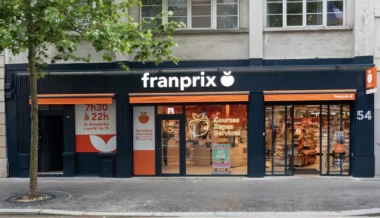
Article : Un premier magasin Franprix en test à Casablanca dès le 3 juillet
Le groupe H&S Invest Holding de Moncef Belkhayat concrétise son accord avec le groupe Casino avec l’ouverture, en test, d’un premier magasin Franprix à Casablanca.
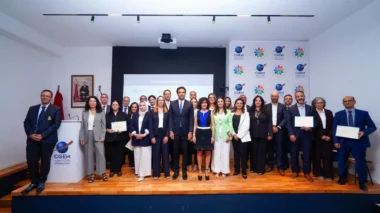
Article : 20 ans de la Charte RSE : la CGEM distingue 21 entreprises et porte à 152 le nombre de sociétés labellisées
Lancé en 2006, le dispositif patronal a récompensé cette année dix nouvelles entreprises, dont Crédit Agricole du Maroc, Pharma 5 et Rabat Région Mobilité. Onze autres ont vu leur distinction renouvelée.