
The EU Must Recognize Palestine
VALLETTA, MALTA – The United States may have just obliterated any remaining hope for a two-state solution to the Israeli-Palestinian conflict. US Secretary of State Mike Pompeo’s declaration that Israeli settlements in the West Bank do not violate international law defies a longstanding global consensus. The rest of the world must push back.
There can be no doubt that Israel’s settlement policy in the occupied Palestinian territories violates international law. In the wake of World War II, the Fourth Geneva Convention established that an occupying power “shall not deport or transfer parts of its own civilian population into the territory it occupies.” According to the Rome Statute, which established the International Criminal Court in 1998, such transfers constitute war crimes.
Moreover, when Israel began its occupation of Palestinian and Arab territories in 1967, United Nations Security Council Resolution 242 condemned its actions for violating the post-WWII consensus regarding the inadmissibility of acquiring land by war.
In 2016, the Security Council adopted another resolution, which declared that Israel’s settlement-building in Palestinian territory had “no legal validity,” constituted a “flagrant violation” of international law, and was a “major obstacle” to the two-state solution. (Rather than veto the resolution, as is the US custom, President Barack Obama’s administration abstained from the vote.)
Just days before Pompeo’s announcement, the European Court of Justice upheld this logic, ruling that goods produced in Israeli-occupied territories must be clearly labeled as such. In its statement, it declared unambiguously that the settlements “give concrete expression to a policy of population transfer” conducted by Israel outside its territory, “in violation of the rules of general international humanitarian law.”
And yet the US has long been reluctant to acknowledge this reality. Only one US administration – that of President Jimmy Carter – has declared outright that Israeli settlement policy is illegal, on the basis of a 1978 State Department legal opinion. Carter’s immediate successor, Ronald Reagan, opposed that stance publicly. Other US administrations have criticized the settlements as obstacles to peace and urged Israel to halt construction, but refrained from calling them illegal.
Not surprisingly, Israeli officials welcomed Pompeo’s declaration. The country’s right-wing prime minister, Binyamin Netanyahu – who pledged during the recent parliamentary election campaign to expand Israeli sovereignty to all Jewish settlements in the occupied West Bank – declared that US President Donald Trump’s administration had righted an “historical wrong.”
Netanyahu faces his own challenges: he has failed to form a government, and has just been indicted on corruption charges. But his main rival, Benny Gantz (who also failed to form a government), also applauded the reversal, saying, “The fate of the settlements should be determined by agreements that meet security requirements and promote peace.”
While the future of Israeli politics remains unclear, the risk of a renewed settlement-building frenzy must not be underestimated. With the US standing firmly with Israel’s most hawkish elements, it is up to the rest of the international community to prevent that outcome. The European Union should lead the charge.
After the US reversal, the EU’s foreign-policy chief, Federica Mogherini, confirmed that its position on Israeli settlement policy “remains unchanged: all settlement activity is illegal under international law” and “erodes the viability of the two-state solution and the prospects for a lasting peace.”
But this is far from the first time the EU has criticized Israel’s behavior. Indeed, from condemning Israel’s deportation of the local director of Human Rights Watch for allegedly supporting a boycott to denouncing the Israeli soldiers’ shooting of unarmed Palestinian demonstrators, the EU has often been sharply critical of Israel – all while maintaining close diplomatic, economic, and political ties with it.
Rhetoric is not enough. If European leaders – or, indeed, any others around the world – want to advance a vision of an independent Palestinian state alongside an Israeli one, they have only two choices: officially recognize Palestine as an independent state or stop recognizing Israel as one until it proves it is serious about reaching a negotiated solution.
Already, most European parliaments have voted in favor of recognizing Palestine as an independent state along the pre-1967 borders, with East Jerusalem as its capital. But only Sweden has followed through, with the EU advising others to wait for the perfect opportunity to arise – the moment when a unified decision to recognize Palestine could have a real impact. Now is that moment.
Leaving Palestinians at the mercy of their Israeli occupiers will only sustain a decades-old cycle of violence. Powerful allies like the EU can break that cycle, but only if they back up their words with deeds. No deed would send a stronger message than for all EU countries to recognize Palestine as an independent, occupied state, and engage with it accordingly.
This might not cause Israel suddenly to pack up and leave Palestinian territories. But it could discourage Israel’s leaders, buoyed by Trump’s latest reckless decision, from seeking to expand existing settlements and building new ones – or even to begin annexing Palestinian territory. In that case, the EU would face the prospect of a full-fledged apartheid state on its doorstep.
à lire aussi

Article : Football : Al Ahly mise sur Houcine Ammouta pour relancer un cycle sportif fragilisé
Deux ans de contrat, une saison sans Ligue des champions africaine à digérer et un vestiaire à reprendre en main : le technicien marocain arrive au Caire avec un CV continental solide et une qualité qui pèse dans le choix du club égyptien, à savoir sa capacité à parler directement aux joueurs.

Article : En images, la Kaaba revêt sa nouvelle Kiswa
Comme chaque année, la couverture sacrée de la Kaaba, appelée Kiswa, est remplacée lors d'une cérémonie solennelle.

Article : L’Académie du Royaume consacre une journée d’étude à la “langue de l’autre”
Le 19 juin, l’Instance supérieure de traduction réunira notamment Abdelfattah Kilito, Abdessalam Benabdelali et plusieurs spécialistes pour interroger ce que le passage d’un idiome à un autre révèle de l’identité, de l’inconscient et de l’écriture.

Article : BTP : après sa victoire en cassation, Sintram tente de suspendre sa liquidation
Renvoyée devant la cour d’appel de commerce, l’affaire Sintram connaît un nouvel épisode judiciaire à Casablanca. L’entreprise de BTP veut obtenir un répit avant le réexamen de son dossier, mais ses créanciers contestent déjà la manœuvre. Détails.
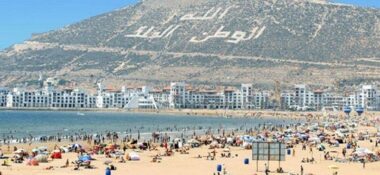
Article : Tourisme : après un début d’année 2026 solide, Agadir en route vers un été exceptionnel
À Agadir, l’été a commencé avant l’été. À fin mai, la destination affichait déjà 607.894 arrivées, 2,62 millions de nuitées et un taux d’occupation en hausse. Désormais, les professionnels misent sur un remplissage pouvant atteindre 95% en juillet-août, porté par les vacances scolaires, les réservations de dernière minute et la vigueur du marché national. Ce que disent les chiffres, et ce qu’ils annoncent pour la première station balnéaire du pays.
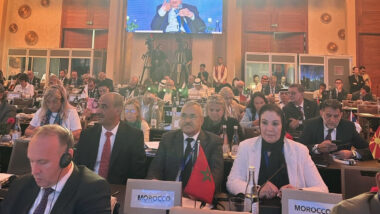
Article : Marrakech accueille les 19 et 20 juin la 4e édition du Forum parlementaire économique euro-méditerranéen et du Golfe
Parlementaires, responsables publics, CGEM et institutions financières y débattront d’intégration régionale, d’intelligence artificielle, d’emplois durables et de chaînes de valeur euro-africaines.