
Are Traditional Multinationals Ready for Emerging Markets?
WASHINGTON, DC – Since 2010, economic growth in low- and middle-income countries has been two to three times faster than in high-income countries. The ten economies with the highest projected growth rates for the next four years are all in Africa or Southeast Asia. In the coming years, emerging markets in Africa, Asia, and Latin America will also account for the lion’s share of global population growth, as well as an unprecedented expansion of the middle class.
Because of their younger, increasingly prosperous populations, emerging markets will drive an explosion in consumer spending. Real (inflation-adjusted) expenditure will grow at triple the rate in developed countries, owing to the continued expansion of Internet and mobile connectivity. Companies that ignore these opportunities risk missing out on decades of future returns.
Yet emerging markets pose significant structural challenges to developed-economy multinational companies. Four issues stand out: a lack of physical infrastructure; a data deficit and reliance on interpersonal networks; policy uncertainty; and informality.
While investment in transportation infrastructure is accelerating across emerging markets, significant gaps are likely to persist. Driven by population growth and urbanization, demand is outstripping supply. In Africa, where the infrastructure-investment gap totals $68-108 billion per year, firms pay more to do business. In Nigeria, over three-quarters of firms experience electrical outages, costing them over 15% of annual sales, on average.
Similarly, while all companies need data for investment and operational decision-making, official statistics in emerging markets are not always reliable, and are often skewed by political agendas. For example, in Pakistan, a census scheduled for 2008 was delayed by nine years, and beset by problems when it was finally conducted.
More broadly, all developing countries undergoing rapid population growth struggle to provide regular and reliable census data. Ethiopia recently delayed a census originally scheduled for 2017 for a second time, citing ethnic conflict ahead of the upcoming elections, scheduled for May 2020. In Nigeria, where the last census was conducted in 2006, past counts have consistently led to accusations of fraud. In the absence of data, relationships are key; reliable contacts with intimate knowledge of the local markets are critical for successful business operations.
Rapid economic growth is neither linear nor smooth and multinationals must navigate uncertain policy environments. There is remarkable overlap between the countries with the highest economic growth rates and those with the highest levels of political risk. In countries with underdeveloped policy processes, regular cabinet shuffles, endemic corruption, commodity dependency, and the potential for mass protests against discredited governments, uncertainty comes with the territory.
Finally, multinationals must navigate the informal sector that still dominates emerging markets, accounting for over 60% of GDP in some regions. More than 85% of employment in Africa, and over 65% in Asia and the Middle East, is in the informal sector. Mobilizing the labor and spending power in a given market is key to a multinational’s success, but navigating an environment where most economic activity is hidden from regulatory and institutional oversight requires creativity and deep local knowledge.
Although these four challenges each place different demands on firms, they all point to the need for flexibility and strategic redundancy. Smart companies will invest in local subsidiaries instead of trying to maintain strong central control, and they will embrace mobile technology to connect with consumers and build bridges to the informal sector.
Examples of success are found in new companies focused on large emerging markets sales. Young companies such as the Frontier Car Group(FCG) showcase the skills and structure needed to be successful in markets as diverse as Nigeria, Chile, Mexico, Pakistan, and Indonesia. FCG recognized that despite rapidly growing demand for used automobiles in emerging markets, there was no efficient way to sell one’s car, so it launched a multi-platform application that connects sellers to pre-vetted dealers.
To counter the under-regulated, largely informal nature of the used-auto market, FCG has established a network of inspection centers (usually a gas station or other preexisting business) where vehicles undergo an app-supervised inspection before being listed on a live bidding site. Users get a fair market price for their car in under 45 minutes, and dealers can confidently purchase vehicles sight unseen.
Moreover, FCG has created a corporate structure that is uniquely suited for rapid expansion across emerging markets with radically different business environments. Although core technology, operations, financing, marketing, and product operations are run out of the company’s Berlin headquarters, FCG enters each new market as a start-up, giving its subsidiaries the autonomy they need to adapt to each market’s unique demands.
This strategy works because FCG has been successful in identifying visionary entrepreneurs with proven track records in their home markets. For example, Etop Ikpe, the CEO of FCG’s Nigerian company, Cars45, had already worked on multiple successful e-commerce companies, and thus had a strong reputation in the business community.
Just as FCG’s model avoids costly investments in physical capital in settings with poor infrastructure, its use of mobile technology makes it ideally suited for markets where most Internet users gain access through their phones. The company is well positioned to benefit from rapid cell-phone penetration across emerging markets, as well as from existing informal businesses. The company’s decentralized approach insulates it from political shocks, while its use of local executives allows it to navigate uncertain markets. Outside investors have taken note: the three-year-old FCG raised nearly $90 million in its third funding round last year.
There is no one-size-fits-all formula for succeeding in emerging markets. But clearly, traditional multinationals’ hub-and-spoke structure leaves them ill-equipped fully to seize opportunities in emerging markets. Innovative companies like FCG are creating a new blueprint that developed-market multinationals should study.
à lire aussi

Article : Maroc-Écosse : l'Ouzbek Tantashev au sifflet, deux ans après la demi-finale olympique mouvementée contre l’Espagne
Désigné par la FIFA pour la rencontre du 19 juin au Boston Stadium, celui qui est arbitre international depuis 2013 avait quitté le terrain dès la 15e minute aux JO de Paris après une collision avec Marc Pubill.
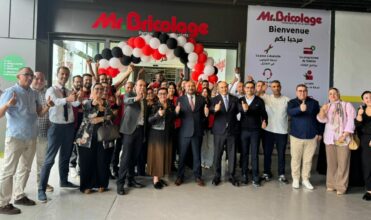
Article : Mr. Bricolage vise 45 magasins au Maroc d'ici 2032 et un plan d'investissement de 700 MDH
Mr. Bricolage Maroc prévoit le déploiement de 45 magasins d’ici 2032, au rythme d’une ouverture toutes les huit semaines, dans le cadre d’un plan porté par un investissement de 700 millions de DH.

Article : Loi 16.22 sur les adouls : l’Ordre réagit à la décision de la Cour constitutionnelle
L’invalidation partielle du texte par la Cour constitutionnelle est accueillie avec soulagement par une partie de la profession, qui y voit la confirmation de réserves exprimées depuis plusieurs mois. Mais pour Maître Driss Trali, membre du bureau exécutif de l’Ordre national, la réforme reste incomplète tant que le dépôt des fonds, l’officialité pleine de l’acte et l’indépendance de l’instance professionnelle ne sont pas consacrés par la loi.

Article : Bourse de Casablanca : le MASI termine encore dans le vert
Au lendemain de sa progression de 4,63%, l'une des plus fortes hausses de son histoire récente, le MASI poursuit son redressement le mardi 16 juin. L'indice a gagné 0,15% à 18.782,58 points, porté notamment par les valeurs immobilières et minières, dans un marché qui conserve une partie de l'élan né du regain d'optimisme sur le front géopolitique.
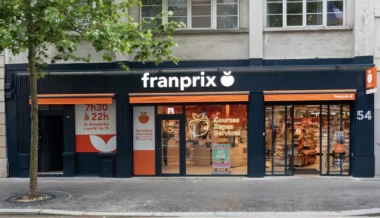
Article : Un premier magasin Franprix en test à Casablanca dès le 3 juillet
Le groupe H&S Invest Holding de Moncef Belkhayat concrétise son accord avec le groupe Casino avec l’ouverture, en test, d’un premier magasin Franprix à Casablanca.

Article : 20 ans de la Charte RSE : la CGEM distingue 21 entreprises et porte à 152 le nombre de sociétés labellisées
Lancé en 2006, le dispositif patronal a récompensé cette année dix nouvelles entreprises, dont Crédit Agricole du Maroc, Pharma 5 et Rabat Région Mobilité. Onze autres ont vu leur distinction renouvelée.