
England’s Lockdown Lessons
CAMBRIDGE – UK Prime Minister Boris Johnson’s recent warning that the lifting of England’s current third lockdown will be no “great open Sesame,” despite the fall in infections and the encouraging progress of the country’s COVID-19 vaccination program, should come as no surprise to anyone who has been following the underlying dynamics of the virus. So, why did Johnson’s government not take this approach during the country’s first two lockdowns?
Although some remain inclined to point the finger at the government’s missteps, the explanation is more complex. It also holds important lessons for managing future crises.
After England’s initial lockdown last spring imposed a sudden and powerful brake on social interactions and significantly damaged the economy, the UK government was keen to restore dynamism to particularly hard-hit sectors. For example, it launched an “Eat Out to Help Out” scheme, which offered discounts on meals in restaurants, pubs, and cafes during August. Although the government was less permissive when the country exited the second lockdown in December, it did allow a certain amount of social and economic interaction and eased the restrictions further in much of the country for Christmas.
In both cases, the government subsequently had to hit the brakes hard as COVID-19 infections and hospitalizations rose. Interim efforts to develop a compromise approach through a regionally differentiated “tier system” of restrictions proved problematic – especially because limiting the movement of people was difficult. That in turn triggered a robust blame game, with many initially taking issue with frequent changes in government policy and the inevitably confused messaging that ensued.
But since Johnson imposed a third lockdown on January 5, the government has repeatedly signaled that, despite the game-changing nature of vaccine deployment, the eventual exit will be gradual, slow, and subject to many reviews based on science and evidence. From the reopening of schools to resumption of normal commerce, the government is consistently and prudently managing expectations.
The best explanation of how the government arrived at its current approach draws on information gaps, risk methodologies, mis-sequencing, behavioral tendencies, and the political (and human) desire for early wins.
Regarding information, the enormous efforts of scientists and health-care workers during the past year have significantly expanded our understanding of COVID-19 and the SARS-CoV-2 virus that causes it. This has enabled restriction policies to undergo a de facto evolution, with a simple “on-off” framing giving way to a focus on the management of “risk budgets.”
Such knowledge proved useful in the transition from post-Lockdown I to post-Lockdown II. For example, it enhanced policymakers’ understanding of the tradeoffs involved in keeping schools open (a top priority, given that closures pose highly unequal threats to educational attainment) versus bars and restaurants. More recently, it has improved our understanding of how new, more contagious coronavirus variants substantially reduce society’s overall risk budget in trying to balance public health, resumption of economic and social interactions, and respect for individual rights and freedoms.
Mis-sequencing may also have played a part. The unsustainability of the UK government’s earlier reopening approaches was compounded by lack of sufficient progress on key pandemic-response measures such as testing, tracking, and self-isolation. The low infection rates achieved at a considerable cost during the first two lockdowns thus could not be sustained, quickly putting renewed pressure on hospitals and health-care workers.
Many have argued that indecisive leadership aggravated the government’s resulting policy flip-flops. But the U-turns in fact owe much to classic behavioral traps that are especially treacherous during times of radical uncertainty.
Deliberation inertia often materializes in the initial phases of a highly fluid situation, as does the subsequent great temptation simply to revert quickly to previous comfort zones. Both omission and optimism biases increase the challenges, especially if the overall framing is partial – as was the case with the narrow “lives versus livelihoods” narrative that initially dominated much of the world’s lockdown debate.
Johnson’s reverence for individual rights may have also contributed to the excessively fast re-openings. A final, and largely inevitable, factor was political short-termism. This has repeatedly tripped up many governments’ policies that need to play out over time, including essential structural reforms whose significant long-term benefits are often preceded by short-term adjustment costs.
Politicians’ understandably strong temptation to seek early wins often leads to premature declarations of “mission accomplished.” When US President George W. Bush announced on May 1, 2003, to great fanfare aboard the USS Abraham Lincoln that the United States had completed its major combat operations in Iraq, the fighting was in fact far from over.
Making consistently good decisions in a crisis and under radical uncertainty is very hard indeed. Rather than a decisive big-bang approach, it requires a number of iterations and mid-course reactions in response to fast-moving developments on the ground. The strong desire to avoid any mistakes often proves difficult to fulfill. Meanwhile, those suffering from the crisis face a number of challenges, including inevitable “rule fatigue.”
The UK’s evolving response to the COVID-19 pandemic is following a pattern seen in several previous crises around the world. It highlights the need to maintain an open mindset, think analytically in terms of risk budgets, distinguish carefully between recoverable and non-recoverable mistakes, and take active early steps to minimize common behavioral traps. The more we take note of these issues in real time, the greater the opportunity to improve our crisis-management approaches in the future.
à lire aussi

Article : Adouls : la Cour constitutionnelle valide l’essentiel de la réforme, mais écarte plusieurs dispositions
Saisie par 93 députés avant la promulgation du texte, la Cour a déclaré non conformes des articles touchant aux incompatibilités professionnelles, aux personnes en situation de handicap, au témoignage collectif dit “lafif” et à l’organisation des instances représentatives. Le texte devra donc être corrigé sur ces points, sans remettre en cause le cœur de la nouvelle loi 16.22.

Article : Parlement : deux textes sensibles sur la Samir et les carburants passent en commission
Deux propositions de loi portant sur les hydrocarbures et la Samir ont été récemment adoptées en commission à la Chambre des conseillers. Un vote "surprise" rendu possible par un rapport de forces numérique défavorable à la majorité, lors d’une séance où l’opposition était majoritaire en nombre. Si ces textes ont franchi l’étape de la commission, leurs promoteurs sont conscients qu’ils ont peu de chances d’être adoptés en plénière.

Article : Retail : la guerre silencieuse pour conquérir le panier des Marocains
Pendant longtemps, les courses du quotidien se sont surtout jouées entre l’épicier du quartier, le grossiste et quelques grandes surfaces. Ce modèle commence à se fissurer. Entre fusion capitalistique, rachats d’enseignes, master-franchises, centrales d’achat, logistique commune et formats de proximité, les grands opérateurs installent peu à peu des réseaux capables d’accompagner le consommateur du café du matin aux achats du week-end. Non sans bousculer les équilibres.

Article : Crédit du Maroc : ce que cache l’augmentation de capital à 699 MDH
Depuis son passage sous le contrôle de Holmarcom, Crédit du Maroc a changé de rythme. La banque affiche des bénéfices en hausse, prépare son plan CDM Boost 2028, et propose désormais à ses actionnaires de suivre le mouvement via une opération ouverte du 26 juin au 16 juillet. Derrière le prix fixé à 938 DH par action, le marché devra surtout juger si cette nouvelle étape confirme une trajectoire ou ouvre un pari plus large. Décryptage.

Article : Nador West Med : derrière le port, le pari industriel de l’Oriental
ROUND UP. Prévu pour entrer en service fin 2026, Nador West Med se construit déjà au-delà de ses quais : routes dédoublées, future autoroute vers Guercif, projets chinois dans l’éolien, les pneus et les alliages, ambition énergétique autour du GNL et de l’hydrogène vert. L’enjeu est désormais de transformer cette infrastructure en véritable moteur économique régional.
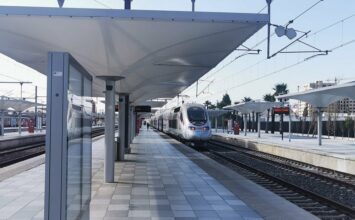
Article : Pour près de 395 MDH, ce sera Urbagec/Separator qui construira la future gare LGV de l’aéroport de Casablanca
Le marché porte sur le lot 4 du projet, dédié à la construction de la gare ferroviaire de l’aéroport Mohammed V. Cinq candidats étaient en lice, dont SGTM, Sogea Maroc et Construction Management Services, pour une estimation initiale fixée à 380 millions de DH hors taxes.