

Justin Vaïsse
Founder and Director-General of the Paris Peace ForumThe Vaccination Gap Is Jeopardizing Climate Action
PARIS – Will negotiators from the Global South be barred from attending the United Nations climate summit (COP26) in Glasgow in November because they are not vaccinated against COVID-19? This scenario will not arise, one hopes, because developing-country officials will almost certainly receive their shots in advance. But whether they will want to negotiate with rich economies that have been hoarding vaccines is less clear.
Welcome to 2021, where global climate negotiations could become collateral damage of vaccine nationalism. In normal times, the bone of contention between rich and poor countries was who should bear the brunt of efforts to reduce carbon dioxide emissions. But the pandemic has already pushed back climate talks by a year, and now threatens to create an additional North-South rift.
In January, South African President Cyril Ramaphosa, in his last month as chair of the African Union, lambasted developed countries for ordering vaccines amounting to “up to four times what their population needs.” Tedros Adhanom Ghebreyesus, Director-General of the World Health Organization, warned of a possible “catastrophic moral failure” owing to unequal vaccine distribution. And both the Anglican Archbishop of Cape Town, Thabo Makgoba, and UNAIDS Executive Director Winnie Byanyima have denounced the current global “vaccine apartheid.”
Failure to heal divisions over vaccine availability for developing countries could poison the well of global coordination and imperil the COP26 climate negotiations. The Global South accepted the principle of “common but differentiated responsibilities” in addressing climate change 30 years ago. But it might view the North’s vaccine selfishness as a sign of irresponsibility on the immediate vital issue of health – and refuse to engage in the necessary give-and-take in combating global warming.
The vaccine-induced erosion of collective responsibility, together with the economic impact of the pandemic, could result in countries announcing very disappointing “nationally determined contributions” to reduce CO2 emissions in the run-up to COP26. This risk is compounded by rich and poor countries’ differing priorities. Whereas the developed North puts tackling global warming first, health and development often take precedence in the Global South.
In this regard, US President Joe Biden has tasked Secretary of the Treasury Janet Yellen with promoting “debt relief initiatives that are aligned with and support the goals of the Paris Agreement” – in other words, green conditionality for debt reduction, restructuring, and cancellation. But developing economies that have suffered severely in the COVID-19 crisis and seen their development prospects stall might perceive such schemes as an extra burden imposed by the North.
What should be done? At their February 19 virtual meeting, G7 leaders agreed to provide an additional $4 billion to shore up the international Access to COVID-19 Tools Accelerator and the COVID-19 Vaccine Global Access (COVAX) facility, which aims to ensure rapid, fair, and equitable provision of vaccines to people everywhere.
This is a good start. But advanced economies should go further and offer the Global South a “solidarity package” encompassing vaccine distribution, debt relief, and climate goals, with the objective of securing fair and balanced efforts from all governments on all three fronts. Rich countries should recognize that, while they are negotiating over the transfer of hundreds of billions of dollars from North to South for climate action in the coming years, it would take only $10-20 billion to fund COVAX fully.
In order to prevent the North-South divide from widening further, leaders should announce the first part of that package before the April 22 international climate summit hosted by Biden. The second part could be timed to coincide with the summit on financing African economies that French President Emmanuel Macron will convene in Paris on May 18.
Rich countries therefore have an opportunity to provide developing economies with extra resources for both short-term vaccine procurement and long-term recovery. Financing could come from new allocations of special drawing rights (the International Monetary Fund’s reserve asset) or the quick use of special instruments like vaccine bonds issued by the International Finance Facility for Immunization. Above all, developed countries must ensure that COVID-19 vaccines are widely available – and continuously adapted to new coronavirus variants – with no delay for the Global South.
Exceptional dangers call for exceptional measures. With vaccine tensions and the ongoing economic crisis threatening to undermine international efforts to save the planet, a global North-South solidarity package represents the best way forward.
à lire aussi
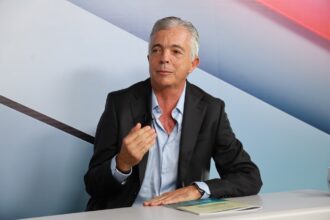
Article : Kacem Bennani Smires : “Dans la transmission des entreprises, il y a un fossé entre ce qu'il faudrait faire et la réalité”
93% du tissu entrepreneurial, 65% des emplois, 60% de la valeur ajoutée nationale, les entreprises familiales sont l'épine dorsale de l'économie marocaine. Pourtant, une sur quatre seulement réussit sa première transmission. Kacem Bennani Smires, président de l'Institut de l'entreprise familiale Maroc, décrypte les raisons de cette fragilité et les leviers pour y remédier.
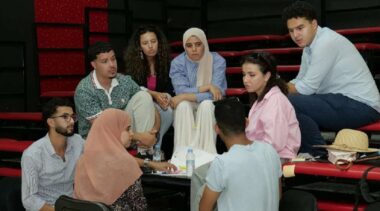
Article : Élections 2026 : derrière l’abstention, une demande de transparence et de résultats
À moins de quatre mois du scrutin, une étude de l’association Les Citoyens met au jour un paradoxe politique : 66,6% des répondants jugent le vote important, mais seuls 13,6% font confiance aux dernières élections. Signe d’un électorat qui ne tourne pas le dos aux urnes, mais réclame des preuves concrètes avant d’y retourner. Détails.
Article : Bourse de Casablanca : les minières flambent, le MASI réalise l'une de ses meilleures séances de l'année 2026
Portée par un puissant rebond des valeurs minières et par l'optimisme suscité par l'annonce d'un accord de paix au Moyen-Orient, la Bourse de Casablanca a signé l'une de ses plus fortes progressions de l'année ce lundi 15 juin. Le MASI a bondi de 4,46%, dans un marché marqué par un regain d'appétit pour le risque et des échanges dépassant les 540 MDH.

Article : Prévisions météorologiques pour le mardi 16 juin
Voici les prévisions pour le mardi 16 juin 2026, établies par la Direction générale de la météorologie : - Temps assez chaud sur le Sud-Est, […]

Article : CAN 2025 : en exclusivité, voici les arbitres du TAS appelés à trancher le litige Maroc-Sénégal
Qui tranchera le recours du Sénégal contre la décision ayant attribué la CAN 2025 au Maroc ? Médias24 révèle l'identité des trois arbitres du TAS et les derniers développements d'une procédure désormais entrée dans sa phase d'instruction, mais dont le calendrier repousse toute échéance importante à l'après-Mondial 2026.
Article : Météo du 15 au 21 juin : chaleur, orages locaux et brouillards côtiers au menu de la semaine
Sous l’effet de la dépression thermique saharienne, les températures pourraient atteindre 39 °C à 46 °C dans le Sud-Est, l’Oriental et les provinces sahariennes, tandis que l’influence maritime continuera de tempérer les zones proches de l’Atlantique et de la Méditerranée.