
Sitting-Duck America
WASHINGTON, DC – Events of the past few weeks have highlighted the current vulnerability of the United States, not militarily – that is a subject for another day – but in other dangerous ways. Unlike some commentators, I wouldn’t go so far as to say that America’s democracy is on its last legs, but it is encountering threats that few ever expected it to face.
US President Donald Trump’s autocratic tendencies have recently become more pronounced than ever. True, he has lost several court cases testing the scope of his powers. But he and the Republican-controlled Senate are busy stacking the federal courts with conservative judges, and the effects of his appointment of two ultra-conservative Supreme Court justices are already visible, for example in the recent decision to allow Trump to use Pentagon funds to pay for a wall along the US border with Mexico. Should Trump win reelection, he is likely to have the Supreme Court by the throat.
The latest phase of presidential self-aggrandizement began with Trump’s coopting the secular celebration of Independence Day in Washington, DC. Traditionally, families gather on the Mall or at various sites around the capital to watch the fireworks. But ever since he saw France’s military parade on Bastille Day in 2017, Trump wanted his own extravaganza. The Pentagon stalled him as long as it could, but this year he got a parade of sorts: a military flyover and tanks parked in front of the Lincoln Memorial, where he spoke.
Special bleachers were set up in front of the Lincoln statue (which I half expected to stand up and walk away in disgust), and seats were reserved for Republican donors. For a president to speak publicly on July 4 is highly unusual, but Trump gave a long address that occasionally mangled US history. He seemed to think, for example, that the US had airports during the Revolutionary War.
Americans like to think that their democracy has guardrails – understandings that, absent specific laws, impose limits on certain types of behavior, ensuring that there are things US leaders just won’t do. This is part of what holds the US together – or has held it together. But just days after the July 4 festivities, Trump threw away another major guardrail by launching a racist tirade against four leftist congresswomen of color: if they don’t like America, he tweeted, they can “go back” to where they came from. This bigoted rhetoric has often been expressed to marginalize immigrants throughout US history, but no president had ever said such a thing openly.
Soon, he would go even lower. At a 2020 campaign rally in North Carolina on July 17, Trump stood by while the crowd chanted “Send her back,” after he attacked Representative Ilhan Omar of Minnesota. Omar embodies Trump’s most teeming prejudices: a dark-skinned Muslim immigrant with an anti-Israel streak.
Even some Republican members of Congress, who almost never take issue with Trump, quietly expressed unease about the viciousness of the chant. This sent Trump into a familiar dance: the next day he tried to distance himself from the chant, claiming, dishonestly, that he’d quickly interrupted it, before assuring the chanters the following day that he thinks they’re wonderful people.
Trump, of course, has demonstrated racism for most of his adult life. He and his father, accused of keeping black people out of their housing projects, settled a case with the Justice Department out of court. He preceded his presidential run by falsely charging that President Barack Obama had been born in Africa. He later went after Rep. Elijah Cummings, a black congressman who represents part of Baltimore, Maryland. As chairman of the House Oversight Committee, Cummings has been highly critical of the conditions in which migrants apprehended along the southern border are being held. In tweets this weekend, Trump described Baltimore as a “disgusting, rat and rodent infested mess.” Trump’s aides have admitted privately to journalists that they expect Trump’s attacks on black and Hispanic people to help him in 2020.
The most recent reminder of the vulnerability of our democratic election system came in the form of Robert Mueller’s testimony in two congressional hearings on July 24. The power of Mueller’s words was almost lost in all the on-air chatter about his signs of frailty. But while the lanky war hero, former FBI director, and widely admired former special counsel was sometimes shambling, his terse answers in appearances before the House Judiciary Committee and the House Intelligence Committee made two things clear: Russia had engaged in a far-reaching and possibly successful effort to affect the outcome of the 2016 presidential election – something that Trump still denies – and it is already trying to affect the 2020 election. “They are doing it while we sit here,” Mueller said.
And, contrary to the claims made by Trump and his lackey, US Attorney General William Barr, Mueller repeated that his report didn’t exonerate the president. More startling was Mueller’s insistence that various people around Trump, and Trump himself, had used the election campaign (and presumably the presidency) to enrich themselves, and that such arrangements made Trump and others, like his son-in-law, Jared Kushner, vulnerable to blackmail by foreign patrons. Mueller also asserted, unprompted, that to accept election help from foreign countries, as Trump did in 2016, is a crime.
Mueller reminded all Americans with an open mind that the guardrails around our democratic election process are crashing down. In an interview with George Stephanopoulos, Trump asserted that he would accept foreign help again. After an uproar, he took that back, although only partly.
In fact, the day before Mueller testified, the current FBI director, Christopher Wray, told the Senate Judiciary Committee, “The Russians are absolutely intent on trying to interfere with our elections.” And the day after Mueller testified, the Senate Intelligence Committee issued a report stating that Russia would be involved in the next presidential election, and that countries like Saudi Arabia, Iran, and China have the capacity to interfere in US elections as well.
Despite these warnings, Senate Majority Leader Mitch McConnell blocked Senate consideration of two bills aimed at strengthening US election security, arguing that the Democrats were trying to give themselves “a political benefit.” Presumably McConnell was reflecting Trump’s position on safeguarding the US election process against foreign intervention. At least McConnell removed any question that Trump and leading Republicans view Russian interference in US elections as being to their advantage. All of them are now complicit in exposing US elections, the heartbeat of democracy, to ill-intentioned outside interference.
à lire aussi
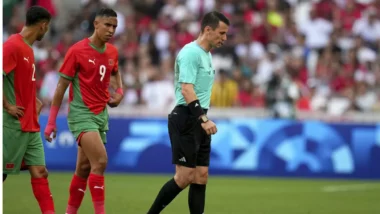
Article : Maroc-Écosse : l'Ouzbek Tantashev au sifflet, deux ans après la demi-finale olympique mouvementée contre l’Espagne
Désigné par la FIFA pour la rencontre du 19 juin au Boston Stadium, celui qui est arbitre international depuis 2013 avait quitté le terrain dès la 15e minute aux JO de Paris après une collision avec Marc Pubill.

Article : Mr. Bricolage vise 45 magasins au Maroc d'ici 2032 et un plan d'investissement de 700 MDH
Mr. Bricolage Maroc prévoit le déploiement de 45 magasins d’ici 2032, au rythme d’une ouverture toutes les huit semaines, dans le cadre d’un plan porté par un investissement de 700 millions de DH.
Article : Loi 16.22 sur les adouls : l’Ordre réagit à la décision de la Cour constitutionnelle
L’invalidation partielle du texte par la Cour constitutionnelle est accueillie avec soulagement par une partie de la profession, qui y voit la confirmation de réserves exprimées depuis plusieurs mois. Mais pour Maître Driss Trali, membre du bureau exécutif de l’Ordre national, la réforme reste incomplète tant que le dépôt des fonds, l’officialité pleine de l’acte et l’indépendance de l’instance professionnelle ne sont pas consacrés par la loi.
Article : Bourse de Casablanca : le MASI termine encore dans le vert
Au lendemain de sa progression de 4,63%, l'une des plus fortes hausses de son histoire récente, le MASI poursuit son redressement le mardi 16 juin. L'indice a gagné 0,15% à 18.782,58 points, porté notamment par les valeurs immobilières et minières, dans un marché qui conserve une partie de l'élan né du regain d'optimisme sur le front géopolitique.
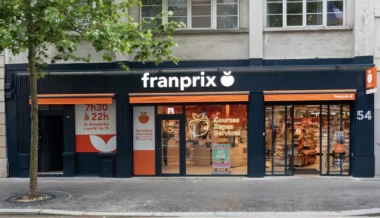
Article : Un premier magasin Franprix en test à Casablanca dès le 3 juillet
Le groupe H&S Invest Holding de Moncef Belkhayat concrétise son accord avec le groupe Casino avec l’ouverture, en test, d’un premier magasin Franprix à Casablanca.

Article : 20 ans de la Charte RSE : la CGEM distingue 21 entreprises et porte à 152 le nombre de sociétés labellisées
Lancé en 2006, le dispositif patronal a récompensé cette année dix nouvelles entreprises, dont Crédit Agricole du Maroc, Pharma 5 et Rabat Région Mobilité. Onze autres ont vu leur distinction renouvelée.