
African Countries Need Not Fear Default
FRANKFURT – Since the COVID-19 crisis began, the specter of sovereign default has loomed over developing economies. Many sovereigns are so afraid of losing market access that they are unwilling to address debt-sustainability problems. Yet a clear-eyed look at the impact of the COVID-19 crisis, together with the fiscal and financing realities for low-income countries, reveals a “new normal,” in which a timely default is far from the worst-case scenario.
According to World Bank estimates, half of the world’s poorest countries are now in or at risk of debt distress. In Sub-Saharan Africa, for example, solvency metrics have deteriorated significantly this year, following six years of gradual weakening linked to declining global commodity prices. Angola, Ghana, and Nigeria spend close to half of their government revenues on interest payments. For the 19 Sub-Saharan African sovereigns that it rates, S&P Global Ratings estimates that two-thirds of all interest payments go to private creditors.
Meanwhile, the International Monetary Fund predicts that the COVID-19 crisis will wipe out a decade of progress on poverty reduction, with lasting effects that significantly impede low-income countries’ development prospects. This should be unacceptable on humanitarian grounds alone, and even more so in light of longer-term sustainability and development goals.
To be sure, creditors have taken some steps to ease developing economies’ debt burdens. Under the G20’s Debt Service Suspension Initiative (DSSI), the world’s poorest countries, mostly in Africa, can request a postponement of bilateral debt-service payments. G20 countries have also agreed on a common framework for restructuring government debt.
But there are significant barriers to progress. For starters, many developing countries worry that rating agencies will declare a default if they restructure their bonded debt, causing them to lose market access for a prolonged period. But, while rating agencies will indeed classify a restructuring as a default, worries about losing market access are overblown.
For starters, the poorest countries already lost access to capital markets back in March. They should now be focused on regaining market access in a sustainable way.
In fact, as investors’ quest for yield has grown increasingly desperate, these countries have gained leverage. During the Latin American debt crisis of the 1980s, ten-year US Treasury yields were above 10%. Even at the height of the 2007-09 global financial crisis, ten-year Treasuries were yielding close to 4%. Today, yields have fallen below 1%. Globally, negative-yield bonds exceed $18 trillion.
In this context, investors simply cannot afford to sulk over a defaulted sovereign for too long if it means foregoing attractive returns. And, indeed, the decline in global interest rates has been accompanied by an observable reduction in the time it takes for a sovereign to regain market access after default. Argentina issued a 100-year bond in 2017 – a year after emerging from default. Greece’s ten-year bond yields less than 0.7%. That is not a coincidence.
Moreover, for a borrower on the brink of insolvency, debt restructuring boosts creditworthiness. As excess leverage is removed, growth and development potential improve. That should make DSSI-eligible sovereigns in Africa and beyond attractive investment destinations again.
While restructuring African bonds would be a boon for debtors, it would do little harm to creditors, unlike, say, the debt crisis of the 1980s. Back then, an early unilateral default by emerging-market sovereigns could have rendered some of the largest US banks insolvent, which meant creditors had a strong interest in playing hardball and buying time.
Not today. The debt held by DSSI-eligible countries amounts to only a negligible share of institutional investors’ portfolios. For the overall investment industry, the impact will be trivial. Given the lack of trauma, investors will be far less reluctant to return to the market when the price is right.
Finally, to borrow the famous words of Kenneth Rogoff and Carmen Reinhart, this time really is different. The financial predicament in which many poor countries find themselves today is the result not of reckless policies and over-borrowing, but of a major sudden shock. Investors are well aware that defaulting under the current conditions in no way signals that another default is likely. The stigma of default simply will not stick.
There is one more potential barrier to progress: private creditors’ reluctance. In fact, some private creditors are doing all they can to stoke sovereign debtors’ default fears. But the truth is that restructuring talks are all but inevitable, and both private and official creditors must participate. (Unlike in previous African debt crises, bondholders are now an important part of the debt equation in many countries.)
Such talks should be initiated as soon as possible. Past experience with sovereign-debt restructuring has shown that delays lead to deeper crises in debtor countries, larger haircuts for creditors, and more prolonged exclusion from capital markets.
Luckily, African bond maturities will be exceptionally low in 2021. That provides a perfect backdrop for the necessary and complex multi-creditor relief negotiations. On behalf of their suffering societies, African leaders must seize that opportunity, as they hold all the cards.
To make the exercise worthwhile, however, debtor governments need to commit credibly to direct future private flows in ways that promote social and economic development, thereby inoculating themselves against future shocks and setbacks. Debt relief and a sustainable recovery must be two sides of the same coin. For Africa, that coin will purchase the ultimate reward: a more prosperous and resilient future.
à lire aussi
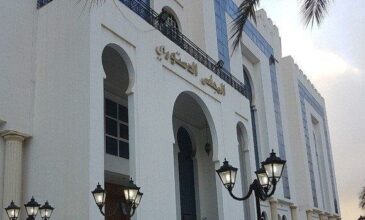
Article : Adouls : la Cour constitutionnelle valide l’essentiel de la réforme, mais écarte plusieurs dispositions
Saisie par 93 députés avant la promulgation du texte, la Cour a déclaré non conformes des articles touchant aux incompatibilités professionnelles, aux personnes en situation de handicap, au témoignage collectif dit “lafif” et à l’organisation des instances représentatives. Le texte devra donc être corrigé sur ces points, sans remettre en cause le cœur de la nouvelle loi 16.22.
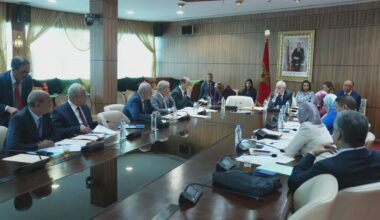
Article : Parlement : deux textes sensibles sur la Samir et les carburants passent en commission
Deux propositions de loi portant sur les hydrocarbures et la Samir ont été récemment adoptées en commission à la Chambre des conseillers. Un vote "surprise" rendu possible par un rapport de forces numérique défavorable à la majorité, lors d’une séance où l’opposition était majoritaire en nombre. Si ces textes ont franchi l’étape de la commission, leurs promoteurs sont conscients qu’ils ont peu de chances d’être adoptés en plénière.
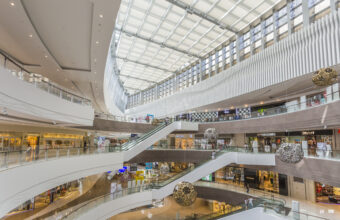
Article : Retail : la guerre silencieuse pour conquérir le panier des Marocains
Pendant longtemps, les courses du quotidien se sont surtout jouées entre l’épicier du quartier, le grossiste et quelques grandes surfaces. Ce modèle commence à se fissurer. Entre fusion capitalistique, rachats d’enseignes, master-franchises, centrales d’achat, logistique commune et formats de proximité, les grands opérateurs installent peu à peu des réseaux capables d’accompagner le consommateur du café du matin aux achats du week-end. Non sans bousculer les équilibres.

Article : Crédit du Maroc : ce que cache l’augmentation de capital à 699 MDH
Depuis son passage sous le contrôle de Holmarcom, Crédit du Maroc a changé de rythme. La banque affiche des bénéfices en hausse, prépare son plan CDM Boost 2028, et propose désormais à ses actionnaires de suivre le mouvement via une opération ouverte du 26 juin au 16 juillet. Derrière le prix fixé à 938 DH par action, le marché devra surtout juger si cette nouvelle étape confirme une trajectoire ou ouvre un pari plus large. Décryptage.
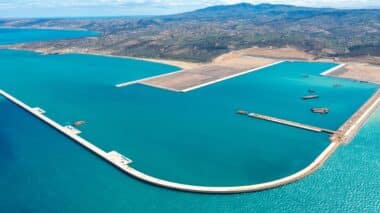
Article : Nador West Med : derrière le port, le pari industriel de l’Oriental
ROUND UP. Prévu pour entrer en service fin 2026, Nador West Med se construit déjà au-delà de ses quais : routes dédoublées, future autoroute vers Guercif, projets chinois dans l’éolien, les pneus et les alliages, ambition énergétique autour du GNL et de l’hydrogène vert. L’enjeu est désormais de transformer cette infrastructure en véritable moteur économique régional.
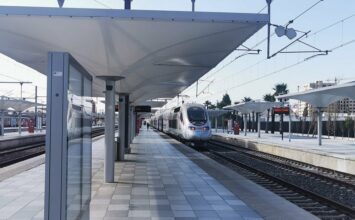
Article : Pour près de 395 MDH, ce sera Urbagec/Separator qui construira la future gare LGV de l’aéroport de Casablanca
Le marché porte sur le lot 4 du projet, dédié à la construction de la gare ferroviaire de l’aéroport Mohammed V. Cinq candidats étaient en lice, dont SGTM, Sogea Maroc et Construction Management Services, pour une estimation initiale fixée à 380 millions de DH hors taxes.