

Trump’s Lose-Lose Iran Strategy
BERLIN – One can only guess what US President Donald Trump hopes to achieve in Iran. Does he have designs on a “better” nuclear treaty than the 2015 deal from which he withdrew the United States? Are he and his advisers assuming that if they pile up enough demands, the regime will be forced to submit, or even abdicate? Or are they setting the stage for an attempt at regime change through military force?
In all likelihood, they themselves have no idea. That may be just as well, because none of the above is going to happen.
To be sure, Trump’s withdrawal from the Joint Comprehensive Plan of Action (JCPOA, as the 2015 nuclear deal is officially known) fulfilled one of his key campaign promises. The problem is that neither he nor his advisers seem to have considered what would come next.
One of the few constants of Trump’s approach to policymaking is its focus on winning the approval of his core bloc of supporters. Given that he also campaigned against America’s foreign entanglements, it is safe to assume that these voters do not want the US to launch another war in the Middle East. A military conflagration with Iran would result in even more casualties, and prove to be even less winnable, than the US-led wars in Afghanistan and Iraq.
For his part, Trump most likely wants to avoid war while still maximizing the pressure on the Iranian regime. The problem is that in the political environment of the Persian Gulf, the line between these two options is not particularly clear. Past experience shows that maximum pressure often creates the conditions for military confrontation.
Trump, unlike his hawkish national security adviser, John Bolton, claims that violent regime change is not one of the objectives of his Iran policy. Yet he is acting exactly as if the neoconservatives who led former US President George W. Bush into Iraq are still calling the shots.
This situation is all the more dangerous considering that US policymakers’ room to maneuver in the Middle East has shrunk significantly since 2003. Iran’s strategic position today is much stronger than it was then, precisely because the Iraq war toppled its foremost regional rival. And far from being isolated in the event of a military escalation, Iran would receive material and diplomatic support from both Russia and China.
At least since the fall of the Shah in 1979, Western policy toward Iran has been based on illusions. The West, led by the US, has long relied on economic sanctions to force the Iranian regime to alter its policies and behavior. But this approach, along with America’s many other mistakes in the region, has actually strengthened Iran. The country’s military forces or proxies now extend across Iraq, Syria, and Lebanon – all the way to the Mediterranean and Israel’s northern border. And though the Iranian economy is bending under the weight of sanctions, it isn’t breaking. And the security apparatus is showing no cracks whatsoever.
In response to Trump’s decision to renege on the JCPOA and re-impose sanctions, Iran has threatened to restart enrichment of weapons-grade uranium. Should the regime acquire nuclear weapons, the likelihood of an immediate war or nuclear arms race in the region – and the threat to Europe’s security – would be substantial.
Preventing such an outcome is precisely why the Europeans initiated nuclear negotiations with Iran in the early 2000s, following the US invasion of Iraq. But not until the arrival of US President Barack Obama did the overall Western strategy change. Now that Trump is reversing so much of the progress made during the Obama years, it is clear that Europe alone is too weak to prevent Iran from developing nuclear weapons.
It is worth remembering that in addition to its nonproliferation objectives, the JCPOA was also designed to reintegrate Iran into the international community. Like the Europeans, the Obama administration recognized that isolating Iran had not worked, and that another war in the region was not an option. By reversing course, Trump has sealed off the only viable path forward.
Iran has been a distinct political and cultural entity for more than 2,000 years; it isn’t going anywhere. The only question is what role this ancient, proud civilization should play in the region and the wider world. Without a satisfactory answer to that question, the entire Middle East will remain unstable, and the risk of a war extending well beyond the region will continue to increase.
Since the US began its partial withdrawal from the Middle East under Obama, Iran, Saudi Arabia, and Israel have been fighting for regional domination. And, because the JCPOA raised the prospect of a US rapprochement with Iran, it did not alleviate the tension between these longstanding rivals. In the meantime, Iran has enhanced its position and extended its regional presence through the Syrian civil war and other conflicts. With the Saudis and Israelis already on tenterhooks, a restoration of the Iranian nuclear-weapons program would put the region on the cusp of a major war.
Significant diplomatic efforts will be needed to prevent Iran from acquiring nuclear weapons, and to formulate a constructive regional and international role for the Islamic Republic. But even then, stabilization of the region must come from within; the experiences of the past century have proven that.
By withdrawing from the JCPOA for no good reason, Trump has wandered into the Iranian maze. Soon, he could come to a fork where he will have to choose between losing face and launching a military confrontation. Either way, he will disappoint his loyal fans and make the Middle East – and the world – a far more dangerous place.
à lire aussi
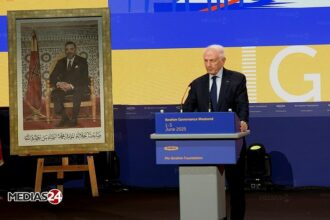
Article : André Azoulay reçoit le prix Boutros Boutros-Ghali de la Paix
Le Forum de Crans Montana salue l’engagement de longue date du conseiller du Roi Mohammed VI en faveur du dialogue interculturel, de la mémoire judéo-marocaine et du rayonnement d’Essaouira.
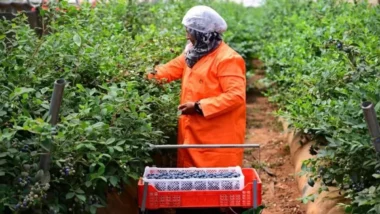
Article : Fruits rouges : l’émirati Elite Agro porte son pari marocain à 1,3 MMDH
Avec une septième ferme de 200 hectares inaugurée à Kénitra, le groupe place le Royaume au cœur de sa production de myrtilles et de framboises.
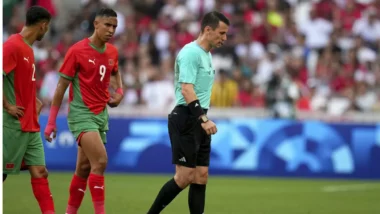
Article : Maroc-Écosse : l'Ouzbek Tantashev au sifflet, deux ans après la demi-finale olympique mouvementée contre l’Espagne
Désigné par la FIFA pour la rencontre du 19 juin au Boston Stadium, celui qui est arbitre international depuis 2013 avait quitté le terrain dès la 15e minute aux Jeux olympiques de Paris après une collision avec Marc Pubill.

Article : Mr. Bricolage vise 45 magasins au Maroc d'ici 2032 et un plan d'investissement de 700 MDH
Mr. Bricolage Maroc prévoit le déploiement de 45 magasins d’ici 2032, au rythme d’une ouverture toutes les huit semaines, dans le cadre d’un plan porté par un investissement de 700 millions de DH.

Article : Loi 16.22 sur les adouls : l’Ordre réagit à la décision de la Cour constitutionnelle
L’invalidation partielle du texte par la Cour constitutionnelle est accueillie avec soulagement par une partie de la profession, qui y voit la confirmation de réserves exprimées depuis plusieurs mois. Mais pour Maître Driss Trali, membre du bureau exécutif de l’Ordre national, la réforme reste incomplète tant que le dépôt des fonds, l’officialité pleine de l’acte et l’indépendance de l’instance professionnelle ne sont pas consacrés par la loi.
Article : Bourse de Casablanca : le MASI termine encore dans le vert
Au lendemain de sa progression de 4,63%, l'une des plus fortes hausses de son histoire récente, le MASI poursuit son redressement le mardi 16 juin. L'indice a gagné 0,15% à 18.782,58 points, porté notamment par les valeurs immobilières et minières, dans un marché qui conserve une partie de l'élan né du regain d'optimisme sur le front géopolitique.