

Palestine, towards full international recognition
The tragedy of the Palestinian people continues to upset international opinion. In all countries, there is a protest to put an end to the annihilation of this people who are fighting for their survival and independence.
The West, which bears political and moral responsibility for it, also sees its own public opinion rising up against this injustice suffered by the Palestinians and which has lasted too long. France, Australia, Canada, Portugal and many other countries are now showing their full and frank support for the existence of the State of Palestine on the 1967 borders.
Australia, which has always been a strong supporter of Tel Aviv, said through its Labour Prime Minister Anthony Albanese that it would recognize the Palestinian state at this year's UN General Assembly. According to this official, peace can only be temporary as long as Palestinians and Israelis do not each have a state. He simply failed to point out that Israel already has one constantly expanding, and that Palestinians are still seeking to achieve their own.
Relations between Australia and Israel worsened when Canberra recently banned an Israeli far-right MP from entering its territory, which could have further exacerbated tensions between Australians. According to the authorities of this country, this decision was taken to prevent the spread of hate messages and to sow division in society. All that was needed was for the Israeli foreign minister to accuse Australia of persecuting Israelis, and subsequently revoking visas to some Australian diplomats.
Previously, it was the same logic that we saw in France.Last April, President Emmanuel Macron announced that his country would finally recognize the State of Palestine in June, and then postpone the announcement to the UN General Assembly session because of the Iran-Israel war.
It is difficult to understand the real reasons for this postponement, while other countries had announced it immediately while assuming it like Spain or Ireland. This postponement was seen as yet another hesitation, and a fear of the reaction of Israel and its supporters in France, which, in any case, was not long in coming. The Israeli prime minister, aided by all the influential Franco-Israelis and French media acquired in Tel Aviv, accused the French head of state of contributing to the prevailing anti-Semitism. This accusation, which Israeli officials overuse against their opponents, received a firm and even threatening response from the Elysee, who said it would not go unanswered.
But it was Britain's reaction that raised the most questions, given that it is the reaction that is behind the Palestinian drama that has lasted for more than a century and retains historical and moral responsibility for it. It was in 1917 that his Secretary of State for Foreign Affairs Lord Arthur Balfour promised the financier Lionel Rothschild a Jewish home in Palestine, regardless of its Palestinian population. In announcing his initiative, Prime Minister Keir Starmer has remained cautious in the extreme by using the conditional: he could recognize the Palestinian state by next September. "Unless Israel agrees in the meantime to a cease-fire, recognizes the establishment of two states, and finally ensures that the West Bank will not be annexed."
Yet Labor's Starmer knows that the war of extermination and war crimes, as documented by several international organizations, waged by the extremist Israeli government against unarmed and starving Palestinian civilians are real and fall mainly to Israel, but also to the silence of the West. It was the Western countries, and his country in the first place, that were at the root of the Palestinian tragedy, and continue to support the Jewish state, while remaining complicit in the face of the ongoing human tragedy.
But this late realization was preceded by the recognition of other European countries such as Spain, Norway, Ireland or Slovenia, which saves Europe's honor. These recognitions had a very special resonance after that of Sweden, which had recognized Palestine as early as 2014. Last year, other countries from other continents, such as Jamaica, Trinidad and Tobago, Barbados and the Bahamas, joined the list, despite US attempts to postpone their decision. This late awakening of Europe was due mainly to popular pressure that did not include the deafening silence of their leaders in the face of Israel's crimes in Palestine.
Already, as soon as the Palestinian National Council announced the birth of the Palestinian state in November 1988, seventy-five countries recognized it in the days that followed. There are currently at least 148 countries that recognize Palestine, a figure that will continue to evolve in the coming weeks, including at the UN General Assembly. Israel, which is recognized by 165 states around the world, could be caught by Palestine and perhaps even be overtaken by the number of states that recognize Palestine.
We see this Palestinian dynamic every time this issue comes up in the UN General Assembly. By May 2024, the GA had adopted by an overwhelming majority by 143 votes to 9 with 25 abstentions a resolution in favour of the admission of the State of Palestine as a full member, while recommending that the Security Council reconsider this issue. This plea testifies to the excessive use by the US of the right of veto to prevent the full membership of the State of Palestine, and to protect its true ally in the Middle East, against the will of the majority of UN member states.
While the US is using and abusing its right of veto in the Security Council against the admission of Palestine, the General Assembly has evolved in its approach to admitting it.
In 2012, it adopted a landmark resolution granting Palestine non-UN observer state status by 138 votes to 9 with 41 abstentions. And in May 2024, it shifted its position by raising Palestine to statehood, on an exceptional basis, and without setting a precedent, as the resolution mentions. It was voted by 143 votes in favour, five more countries than in 2012, 9 against and 25 abstentions, compared to 41 in 2012. Under the current circumstances, if a new resolution is presented, of course, there will be fewer abstentions and more countries that will vote for Palestine.
This shows how well the Palestinian issue has evolved despite all the constraints. The more Israel increases its repression and genocidal crimes against unarmed Palestinian civilians, the more international opinion sides with the Palestinian side, i.e. with the side of law, legality and justice. The proof is that it was these stormy protests in the streets and student campuses in the West that changed the game and, paradoxically, outnumbered all the support for Ukraine in its war against Russia.
To reduce the influence of these pro-Palestinian popular impulses, Western governments are trying to mobilize law enforcement, justice, and sometimes the media. The aim is to condemn and silence any dissonant voice, and to stifle any support for Palestine. It is enough for a protester to carry the Palestinian flag or keffiyeh for him to be arrested and severely convicted, or for him to be simply accused of anti-Semitism to silence him. This whole policy of repression seems for the moment to produce only more support for the Palestinian state and its people in search of freedom. The West would have a harder time talking to us again about democracy and human rights.
à lire aussi
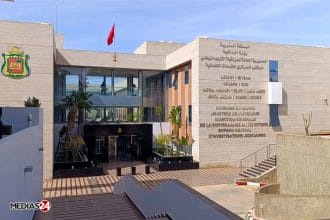
Article : Interpellation à M'diq d'un partisan de “Daech” pour préparation présumée d’un projet terroriste (BCIJ)
Un individu imprégné de l'idéologie extrémiste de l'organisation terroriste "Daech", soupçonné d'implication dans la préparation d'un projet terroriste visant à porter atteinte à la sécurité des personnes et à l'ordre public, a été interpellé par le Bureau Central d'investigations judiciaires.

Article : Le mouton de l’Aïd est-il condamné à devenir plus coûteux ? L’analyse du Pr Sraïri
Invité de l’émission "le 12/13" de Médias24, l’enseignant-chercheur Tahar Sraïri estime que les tensions observées lors de Aïd al-Adha 2026 révèlent des fragilités plus profondes. Décapitalisation du cheptel bovin, hausse durable des coûts de production, raréfaction de la main-d’œuvre agricole et impact croissant du changement climatique sur l’élevage marocain.

Article : Huit élus, dont la maire de Rabat, démissionnent du RNI au lendemain de l'annonce des candidats du parti
La maire de Rabat, le président de l'arrondissement Souissi et six autres élus communaux annoncent leur retrait du Rassemblement national des indépendants (RNI) dans un communiqué commun.
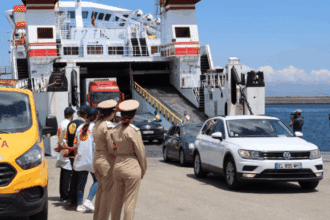
Article : Marhaba 2026 : De nouvelles facilités douanières pour les Marocains du monde (document)
À l’occasion de l’opération Marhaba 2026, l’Administration des douanes annonce des mesures destinées à simplifier les démarches des MRE, parmi lesquelles l’assouplissement des conditions d’admission temporaire des véhicules immatriculés ou la création d’une cellule dédiée à l’accompagnement des MRE porteurs de projets. Détails.
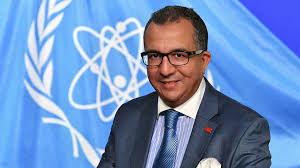
Article : Le Maroc condamne l’attaque contre la centrale nucléaire de Barakah aux Émirats Arabes Unis
Le Royaume du Maroc a condamné, vendredi à Vienne, avec la plus grande fermeté et dénoncé les attaques dont l’État des Émirats arabes unis a été victime à travers trois drones, dont l’un a visé un générateur électrique de la centrale nucléaire de Barakah à Abou Dhabi.
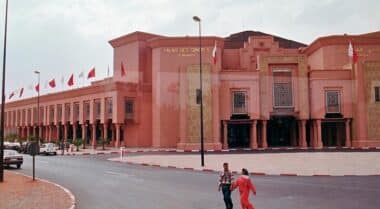
Article : À Marrakech, le retard du palais des congrès interroge la gouvernance des grands projets
Annoncé depuis deux décennies comme un "projet stratégique" pour développer le tourisme d'affaires, le projet de palais des congrès et des expositions de Marrakech est toujours en stand-by. Selon plusieurs sources des secteurs public et privé, les blocages actuels relèvent avant tout de problèmes de gouvernance, et sa concrétisation est désormais suspendue au bon vouloir du futur gouvernement. Explications.