

Lindsay Coates
Managing Director of BRAC’s Ultra-Poor Graduation Initiative
How to Stop the Poverty Pandemic
But the world has a huge opportunity to help prevent this outcome, and not only through more generous aid and vaccine distribution. Lower-income countries also need assistance in adapting and scaling more robust social protection and livelihood programs. Such initiatives build resilience, enabling people to weather future economic crises. And collaborations between enterprising non-profits and researchers can help guide the way. Careful, high-quality research to evaluate the effectiveness of specific social policies and programs in different contexts has increased markedly in the past two decades. A particularly rigorous approach known as randomized evaluation employs a methodology similar to that of medical trials to assess the real-life effects of promising innovations. This research has identified a range of effective measures to reduce extreme poverty, including schemes to enroll more girls in school, help the unemployed find jobs, and support voters in making more informed election choices. The tremendous value of this research was recognized in 2019 when the Nobel Memorial Prize in Economic Sciences was awarded to three of its pioneers, Abhijit Banerjee and Esther Duflo of MIT and Michael Kremer of Harvard. A vivid example of how social policy research-and-development collaborations can make a real difference to those whose livelihoods have been upended by the pandemic is the Graduation Approach, whose effectiveness Banerjee and Duflo have studied. Established and led by BRAC, the largest NGO based in the Global South, the Graduation Approach involves a holistic sequence of interventions that are evidence-based, highly adaptable to local contexts, and designed to meet the multidimensional needs of people in extreme poverty. Graduation participants are provided with an income-generating asset such as a cow, a sewing machine, or a cash transfer. In addition, they receive wraparound support for the following 18-36 months, including training on how to generate income from the asset, life skills coaching, consumption support, access to a savings account, and links to government assistance. BRAC previously collaborated with a team of economists from the London School of Economics on a randomized evaluation to study the Graduation program’s impact on poverty in rural Bangladesh. The results were impressive: the move to self-employment increased the poorest participants’ earnings by an average of 37% over four years. But could the approach be effective and scaled in other contexts? To answer this question, nonprofits working in seven countries, from Pakistan to Peru, were trained to run the program while rigorous evaluation continued. Researchers from MIT’s Abdul Latif Jameel Poverty Action Lab (J-PAL) and Innovations for Poverty Action conducted six concurrent randomized evaluations in each country. These coordinated studies found the Graduation Approach to be one of the most effective of the evaluated programs for helping people propel themselves out of extreme poverty. In nearly every country, Graduation program participants improved their economic outcomes. They successfully launched small businesses, and their increased income led them to explore other ways to make money. Participants also reported improved psychological well-being, including an increased sense of hope. A follow-up study published in November 2020 found that these positive effects persisted for up to ten years after the program ended. To date, BRAC has reached more than 2.1 million households in Bangladesh, where the program originated, with a “graduation” rate of 95%. As of 2018, more than 100 organizations in nearly 50 countries have piloted or implemented Graduation programs. The Graduation Approach’s worldwide expansion and proven ability to break the cycle of extreme poverty shows that designing innovative programs, collaborating with researchers to test them rigorously, and establishing trusted partnerships with governments can result in great strides toward scaling up the most effective schemes. High-quality research demonstrating the Graduation Approach’s effectiveness across contexts helped BRAC, J-PAL, and other partners convince donors and governments that the model can help vulnerable people create sustainable livelihoods and make social protection policies more inclusive and effective. As BRAC scales Graduation globally through direct implementation and with partners, it has identified important lessons that can inform similar efforts. Above all, adherence to the key underlying principles driving a program’s impact is essential, while also adapting the model to each context. An ethos of learning and critical self-evaluation is central to program success, as Graduation’s 20-year evolution in Bangladesh has shown. And by examining a program’s effects on different population groups and continuing to tweak and test its components, like the size and type of livelihood packages provided, we can continue to leverage research to empower people in extreme poverty. The scale of the Graduation Approach after years of iteration and evaluation points to areas where philanthropy and aid can be especially useful. These include investment in social policy innovations, rigorous evaluation of whether and how they work, and partnerships with governments to apply globally sourced knowledge to their own programs. Our experience shows that innovative and evidence-based approaches, when executed well, can dent poverty. With the pandemic threatening to reverse hard-won global gains, the need for policy-relevant research, and for scaling effective solutions, has never been more urgent.
© Project Syndicate 1995–2021
à lire aussi
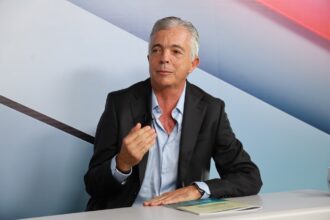
Article : Kacem Bennani Smires : “Dans la transmission des entreprises, il y a un fossé entre ce qu'il faudrait faire et la réalité”
93% du tissu entrepreneurial, 65% des emplois, 60% de la valeur ajoutée nationale, les entreprises familiales sont l'épine dorsale de l'économie marocaine. Pourtant, une sur quatre seulement réussit sa première transmission. Kacem Bennani Smires, président de l'Institut de l'entreprise familiale Maroc, décrypte les raisons de cette fragilité et les leviers pour y remédier.
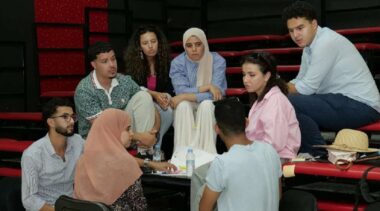
Article : Élections 2026 : derrière l’abstention, une demande de transparence et de résultats
À moins de quatre mois du scrutin, une étude de l’association Les Citoyens met au jour un paradoxe politique : 66,6% des répondants jugent le vote important, mais seuls 13,6% font confiance aux dernières élections. Signe d’un électorat qui ne tourne pas le dos aux urnes, mais réclame des preuves concrètes avant d’y retourner. Détails.

Article : Bourse de Casablanca : les minières flambent, le MASI réalise l'une de ses meilleures séances de l'année 2026
Portée par un puissant rebond des valeurs minières et par l'optimisme suscité par l'annonce d'un accord de paix au Moyen-Orient, la Bourse de Casablanca a signé l'une de ses plus fortes progressions de l'année ce lundi 15 juin. Le MASI a bondi de 4,46%, dans un marché marqué par un regain d'appétit pour le risque et des échanges dépassant les 540 MDH.

Article : Prévisions météorologiques pour le mardi 16 juin
Voici les prévisions pour le mardi 16 juin 2026, établies par la Direction générale de la météorologie : - Temps assez chaud sur le Sud-Est, […]

Article : CAN 2025 : en exclusivité, voici les arbitres du TAS appelés à trancher le litige Maroc-Sénégal
Qui tranchera le recours du Sénégal contre la décision ayant attribué la CAN 2025 au Maroc ? Médias24 révèle l'identité des trois arbitres du TAS et les derniers développements d'une procédure désormais entrée dans sa phase d'instruction, mais dont le calendrier repousse toute échéance importante à l'après-Mondial 2026.

Article : Météo du 15 au 21 juin : chaleur, orages locaux et brouillards côtiers au menu de la semaine
Sous l’effet de la dépression thermique saharienne, les températures pourraient atteindre 39 °C à 46 °C dans le Sud-Est, l’Oriental et les provinces sahariennes, tandis que l’influence maritime continuera de tempérer les zones proches de l’Atlantique et de la Méditerranée.