
How to Facilitate Trade in Africa
JOHANNESBURG – With the United States and China locked in a trade war, climate action lagging behind climate reality, and the World Trade Organization’s Appellate Body at risk of becoming inoperable, the theme of this week’s WTO public forum – “Trading Forward: Adapting to a Changing World” – couldn’t be more appropriate. But if the global trading system is to be adapted to twenty-first-century realities, careful attention must be paid to the needs of developing countries.
Consider Africa, which has been working hard lately to deepen intra-continental trade and integration. While such efforts – most notably the African Continental Free Trade Area (AfCFTA) – have the potential to spur growth and development, their impact depends both on complementary global reforms and on countries’ implementation of WTO agreements. Success is far from guaranteed.
The Trade Facilitation Agreement, which entered into force in 2017, is a case in point. One of the few WTO agreements to be ratified in recent years, the TFA places developing members’ ambitions at the forefront. It aims to expedite the movement, clearance, and release of goods across borders; establishes measures for effective cooperation between customs and other relevant authorities; and provides for technical assistance and capacity building.
The TFA recognizes that trade facilitation rests on three key pillars: simplification, harmonization, and transparency. Given its global uptake, it has the potential to ensure that reforms reflecting this recognition are “locked in” across countries, including those whose governments might otherwise be reluctant to implement them.
For African countries that manage to implement the TFA fully, the gains could be massive. According to a 2015 WTO study, the TFA could lead to a 35% increase in exports from least-developed African countries, a 3.5% boost to economic growth across developing economies, and a 20% improvement in the diversification of exports.
Yet, for many African countries, implementing trade-facilitation reforms will require overcoming concurrent challenges, such as supply constraints, slow economic growth, inefficient customs controls, and poor border coordination. In this sense, the AfCFTA – which recognizes the hard and soft infrastructure challenges hampering trade-facilitation reforms on the continent – complements the TFA. But, because the AfCFTA is yet to be implemented, its contribution remains theoretical.
To enable developing countries to pursue complementary reforms, the TFA allows them longer implementation periods, according to their individual needs and priorities. At the same time, it provides a kind of “matchmaking mechanism” for donors to provide technical and financial assistance.
But for these partnerships to work, recipient countries must identify their priorities, potential barriers to progress, and the interventions that are needed to overcome them. They must then communicate their conclusions clearly to the donors with which they are matched.
A recent study by the South African Institute of International Affairs (SAIIA) goes some way toward demonstrating how to do that, by examining the case of land-locked, low-income Zambia. Among the study’s key findings is that Zambia must go “from land-locked to land-linked” by creating effective regional transportation networks and building close relations with neighbors, in order to ensure well-functioning customs administration, border control, and access to ports. Both physical infrastructure and information and communication technology are essential.
Although Zambia does engage its neighbors in rolling out one-stop border posts, these working relationships are not without their challenges and require a balancing act between shared regional goals and national priorities. Carrying out port-of-entry operations at a single common border crossing would reduce time spent at borders, lower logistics costs, foster cooperation, and enable the integration of information and risk management. To secure the necessary buy-in for this and other trade-facilitation reforms, the private sector must be included in decision-making.
The SAIIA study also underscores the need for Zambia to embed its trade-facilitation reform priorities into the agendas of a range of government agencies, thereby improving coordination. All of these agencies must understand not only national priorities, but also how efforts can be directed toward improving trade conditions and deepening regional integration, thereby contributing to wider global development goals. Training programs and capacity-building support offered by the United Nations Conference on Trade and Development and the Global Alliance for Trade Facilitation can support this effort by helping to create a pool of government personnel with the knowledge and skills to implement long-term reforms.
The TFA, like any WTO agreement, is a powerful tool for progress. But it cannot work in isolation. The necessary complementary reforms addressing specific country-level challenges depend on the proper functioning of the broader global trading system. That is why, rather than allowing a couple of large actors to derail that system, the experts gathering for the WTO public forum this week must advance a vision for a system that accounts for all member states’ needs, beginning with the developing countries that are too often left behind.
à lire aussi
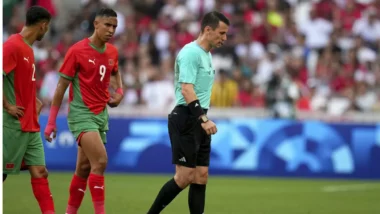
Article : Maroc-Écosse : l'Ouzbek Tantashev au sifflet, deux ans après la demi-finale olympique mouvementée contre l’Espagne
Désigné par la FIFA pour la rencontre du 19 juin au Boston Stadium, celui qui est arbitre international depuis 2013 avait quitté le terrain dès la 15e minute aux JO de Paris après une collision avec Marc Pubill.

Article : Mr. Bricolage vise 45 magasins au Maroc d'ici 2032 et un plan d'investissement de 700 MDH
Mr. Bricolage Maroc prévoit le déploiement de 45 magasins d’ici 2032, au rythme d’une ouverture toutes les huit semaines, dans le cadre d’un plan porté par un investissement de 700 millions de DH.

Article : Loi 16.22 sur les adouls : l’Ordre réagit à la décision de la Cour constitutionnelle
L’invalidation partielle du texte par la Cour constitutionnelle est accueillie avec soulagement par une partie de la profession, qui y voit la confirmation de réserves exprimées depuis plusieurs mois. Mais pour Maître Driss Trali, membre du bureau exécutif de l’Ordre national, la réforme reste incomplète tant que le dépôt des fonds, l’officialité pleine de l’acte et l’indépendance de l’instance professionnelle ne sont pas consacrés par la loi.

Article : Bourse de Casablanca : le MASI termine encore dans le vert
Au lendemain de sa progression de 4,63%, l'une des plus fortes hausses de son histoire récente, le MASI poursuit son redressement le mardi 16 juin. L'indice a gagné 0,15% à 18.782,58 points, porté notamment par les valeurs immobilières et minières, dans un marché qui conserve une partie de l'élan né du regain d'optimisme sur le front géopolitique.

Article : Un premier magasin Franprix en test à Casablanca dès le 3 juillet
Le groupe H&S Invest Holding de Moncef Belkhayat concrétise son accord avec le groupe Casino avec l’ouverture, en test, d’un premier magasin Franprix à Casablanca.

Article : 20 ans de la Charte RSE : la CGEM distingue 21 entreprises et porte à 152 le nombre de sociétés labellisées
Lancé en 2006, le dispositif patronal a récompensé cette année dix nouvelles entreprises, dont Crédit Agricole du Maroc, Pharma 5 et Rabat Région Mobilité. Onze autres ont vu leur distinction renouvelée.