
No Time to Spare for the Paris Climate Promise
DUBLIN – COVID-19 turned the world upside down in 2020. But it has also shown us that when there is a political consensus for action, human ingenuity and innovation can be deployed at the scale and speed needed to meet global challenges.
With unprecedented speed, we have developed, tested, and begun to deploy multiple effective vaccines for COVID-19. Now we must bring the same resolve to bear on fighting the other great existential threat to humanity: climate change. As United Nations Secretary-General António Guterres put it last month, “our future security and prosperity depend on bold climate action.”
And yet, even at the most recent Climate Ambition Summit on December 12, many leaders’ commitments still fell far short of what is needed to meet this collective challenge. To be sure, the European Union, the United Kingdom, and even some of the smaller countries that are most vulnerable to climate change have significantly strengthened their 2030 emissions-reduction targets. But the United States, Japan, China, and other major greenhouse-gas emitters still need to follow suit, preferably well ahead of the UN Climate Conference (COP26) in Glasgow this coming November. Given the crisis we face, there are no more excuses for delay or prevarication.
Five years ago, after long and painstaking negotiations, the world came together to conclude the Paris climate agreement. This was one of the greatest triumphs of multilateral diplomacy in recent years, but it must not be taken for granted. Without an even greater commitment to action, the legacy of Paris risks being squandered altogether.
The events of the intervening half-decade have created a geopolitical landscape that would be unrecognizable to those who gathered in Paris. Back then, words like “coronavirus” or “Brexit” would have elicited little more than a puzzled shrug; now they command the fevered attention of policymakers and heads of state and government around the world.
But we cannot allow these developments to obscure the continuing and increasingly acute need for climate action, especially climate finance. Over a decade ago, the world’s richest countries pledged to mobilize $100 billion per year by 2020 to assist poorer countries with climate adaptation and mitigation efforts. That deadline has now passed, and these countries have yet to fulfill their promise.
Still, there is hope. I am delighted that US President-elect Joe Biden has reaffirmed his commitment to rejoin the Paris agreement immediately upon taking office. American leadership is sorely needed after the four wasted years of unnecessary destruction under Donald Trump. A $2 billion payment to the Green Climate Fund by the US to help meet its part of the $100 billion commitment would be a concrete complement to rejoining the Paris accord. This money was already pledged during Barack Obama’s presidency, so there is no excuse to keep it sitting in the US Treasury’s coffers.
By the same token, other rich countries must not use the renewed focus on the US as an alibi for backpedaling on their own commitments. German Chancellor Angela Merkel’s recent announcement that she will initiate a new international process on climate finance next year is a welcome declaration of intent. But past experience shows that we cannot count on lofty rhetoric.
Moreover, all countries in 2021 must give clear proof that they are reviewing and seeking to heighten the ambitions of their nationally determined contributions, the voluntary instrument through which signatories will uphold their commitments under the Paris agreement.
Solidarity and justice lie at the heart of both the Paris accord and the UN’s Sustainable Development Goals, which were also adopted in 2015. These principles, and the responsibilities they entail, are more important than ever as we chart a sustainable recovery from the shock of COVID-19.
The blunt truth is that we have wasted too much time in the five years since Paris. The policies we need to cut emissions – including an end to fossil-fuel subsidies, a meaningful carbon price, and investment in renewable energies – have been fitful, inconsistent, and uncoordinated. But the climate crisis, like COVID-19, observes no borders and is indifferent to national sovereignty.
While attention has properly been focused on the virus, the world has also witnessed ever more extreme weather phenomena, from wildfires in Australia and California to the costliest storm on record in the Bay of Bengal, which forced two million people to evacuate their homes. We have all become acutely and intimately aware of the fragility of human existence and the extent to which, across borders and generations, our fates are interconnected.
As we move from Paris to 2030, global leaders, businesses, and citizens alike should expect to be judged by the actions that are (or are not) taken today. Neither our descendants nor the planet will tolerate more selfish short-termism.
à lire aussi

Article : Adouls : la Cour constitutionnelle valide l’essentiel de la réforme, mais écarte plusieurs dispositions
Saisie par 93 députés avant la promulgation du texte, la Cour a déclaré non conformes des articles touchant aux incompatibilités professionnelles, aux personnes en situation de handicap, au témoignage collectif dit “lafif” et à l’organisation des instances représentatives. Le texte devra donc être corrigé sur ces points, sans remettre en cause le cœur de la nouvelle loi 16.22.
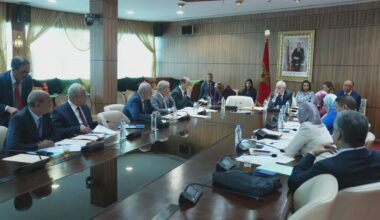
Article : Parlement : deux textes sensibles sur la Samir et les carburants passent en commission
Deux propositions de loi portant sur les hydrocarbures et la Samir ont été récemment adoptées en commission à la Chambre des conseillers. Un vote "surprise" rendu possible par un rapport de forces numérique défavorable à la majorité, lors d’une séance où l’opposition était majoritaire en nombre. Si ces textes ont franchi l’étape de la commission, leurs promoteurs sont conscients qu’ils ont peu de chances d’être adoptés en plénière.

Article : Retail : la guerre silencieuse pour conquérir le panier des Marocains
Pendant longtemps, les courses du quotidien se sont surtout jouées entre l’épicier du quartier, le grossiste et quelques grandes surfaces. Ce modèle commence à se fissurer. Entre fusion capitalistique, rachats d’enseignes, master-franchises, centrales d’achat, logistique commune et formats de proximité, les grands opérateurs installent peu à peu des réseaux capables d’accompagner le consommateur du café du matin aux achats du week-end. Non sans bousculer les équilibres.

Article : Crédit du Maroc : ce que cache l’augmentation de capital à 699 MDH
Depuis son passage sous le contrôle de Holmarcom, Crédit du Maroc a changé de rythme. La banque affiche des bénéfices en hausse, prépare son plan CDM Boost 2028, et propose désormais à ses actionnaires de suivre le mouvement via une opération ouverte du 26 juin au 16 juillet. Derrière le prix fixé à 938 DH par action, le marché devra surtout juger si cette nouvelle étape confirme une trajectoire ou ouvre un pari plus large. Décryptage.
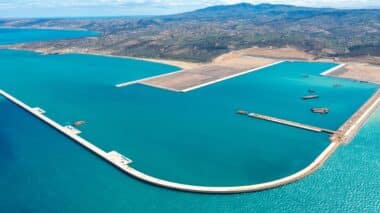
Article : Nador West Med : derrière le port, le pari industriel de l’Oriental
ROUND UP. Prévu pour entrer en service fin 2026, Nador West Med se construit déjà au-delà de ses quais : routes dédoublées, future autoroute vers Guercif, projets chinois dans l’éolien, les pneus et les alliages, ambition énergétique autour du GNL et de l’hydrogène vert. L’enjeu est désormais de transformer cette infrastructure en véritable moteur économique régional.

Article : Pour près de 395 MDH, ce sera Urbagec/Separator qui construira la future gare LGV de l’aéroport de Casablanca
Le marché porte sur le lot 4 du projet, dédié à la construction de la gare ferroviaire de l’aéroport Mohammed V. Cinq candidats étaient en lice, dont SGTM, Sogea Maroc et Construction Management Services, pour une estimation initiale fixée à 380 millions de DH hors taxes.