
Smart Immigration for Europe
PARIS – Immigration-related headlines have become a staple in Europe, whether the story is of an illegal Malian immigrant scaling a Paris building to rescue a toddler or the formation of a populist government in Italy that aims to deport a half-million migrants. And yet, despite the constant coverage of the issue – or, more likely, precisely because of it – the immigration policy debate remains beset by misconceptions and politicization.
In the United Kingdom, the Brexit vote was fueled partly by false and distorted claims, such as that unrestrained migration from the rest of Europe was driving down wages. Since the vote, however, the anti-Brexit camp has engaged in similar distortions, warning that, once it has left the European Union, the UK will face a skills shortage. But plenty of countries – such as Australia, Canada, and Singapore – do just fine without agreements guaranteeing freedom of movement from other countries, by issuing skills-matching visas.
Such distortions, by both pro- and anti- immigration forces across Europe, have consistently thwarted sober debate on the topic. Even when parties seem to be carrying out a reasonable cost-benefit analysis of immigration’s economic impact, they tend to cite only the studies and data that back their own viewpoint. This precludes agreement on creative and effective solutions.
Judging by my years spent studying the international migration of highly skilled workers, not to mention living as an immigrant, a rational and balanced debate on immigration must begin with the perspective of immigrants themselves. What drives a person to move to a new and usually unknown country?
In answering this question, it quickly becomes clear that immigration is a highly varied phenomenon, depending as it does on a diversity of factors such as nationality, skill level, intended duration abroad, and motivation. The experience of a medical specialist moving permanently to the UK from India is very different from that of a construction worker from Romania hoping to secure a better salary in France. From the ease of the journey to the living conditions into which they settle, both the experiences of both are very different from those of a refugee from Syria hoping to wait out that country’s civil war in Germany.
What these experiences do have in common is they are generally driven by a desire to raise one’s living standards, whether through a more prestigious position, a higher salary, or increased physical safety. In short, immigrants want better lives – not a new culture or identity.
Economic migrants, in particular, are simply job-seekers from overseas. If comparable employment could be created at home, they might never migrate at all. In this sense, the economic migration challenge boils down to an issue of job brokerage.
Given this, economic migrants should be matched with jobs where they are needed, potentially through newly created job-brokering agencies for major immigrant-sending countries. A program inspired by the EU-Turkey refugee-exchange program – in which the number of rotating work visas made available for a country are tied to the number of illegal job-seeking immigrants repatriated to that country – could also be created.
Of course, once in the host country, the immigrants’ rights as foreign workers should be protected. But they do not need to be granted full access to the political rights and social benefits of their host society’s citizens.
This is roughly the system that is in place in the United Arab Emirates, where millions of foreign-born workers voluntarily pursue employment. They know they will enjoy labor and human-rights protections, with abuses prosecuted under the law, but no additional privileges. This system enables the UAE to give nearly eight million people the opportunity to raise their living standards, while avoiding a backlash from the indigenous population.
Another innovative solution, which may work in some areas, is Switzerland’s “G permit” scheme, available to foreigners who live in a border zone in their home country and work in a border zone in Switzerland. (Border zones are established by treaty.) All cross-border commuters must return to their home country at least once a week. Could the EU create its own “border zone” category permitting a system of flexible mobility for non-permanent workers from Africa and the Near East?
Denying migrants the privileges associated with living in their host country may seem to contradict traditional European liberal and egalitarian values. As a liberal myself, I share these values, but recognize that insisting on them as a matter of policy ultimately undermines migrants’ interests . With vehemently anti-immigrant political forces gaining ground throughout Europe, one must ask whether the newcomers desperate for a job are better served by being admitted on a conditional basis (including, potentially, for a limited period), or by not being admitted at all.
Skills-biased immigration gives rise to a similar dilemma. Many in Europe argue that this approach not only discriminates against the weakest groups of immigrants, but also leads to a brain drain from countries that need highly skilled workers.
But, again, one must examine the trade-off. Skilled immigrants are more likely to integrate smoothly into the host society, to which they can add more value. This enables the construction of cultural bridges between host societies and home countries. More important, those immigrants can send more money home in remittances than they would have been able to contribute in taxes had they remained.
The immigration issue has long been a thorn in the EU’s side, not least because of the fear-mongering and emotional manipulation that have impeded constructive debate. The key to softening the thorn, if not removing it altogether, may be to establish, at the national and EU levels, a social contract for economic migrants. Such a “foreign worker rights charter” would protect immigrants’ rights, while restricting their social privileges.
With immigration no longer dominating the political agenda, the EU might finally be able to address the myriad other challenges it faces. Ideally, it would do so with the same kind of cooperative, creative, and clear-eyed approach.
à lire aussi
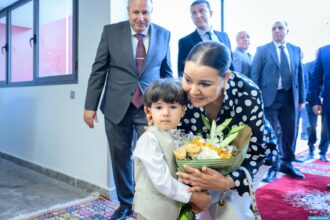
Article : La Princesse Lalla Asmaa lance à Rabat le programme “La prothèse auditive pour tous”
La Princesse Lalla Asmaa, présidente de la Fondation Lalla Asmaa, a présidé mardi 16 juin à Rabat la première Journée des patients souffrant de surdité. L’événement a été marqué par le lancement du programme national "La prothèse auditive pour tous". Un programme inédit destiné à rendre l’appareillage auditif gratuit et accessible aux Marocains les plus démunis.
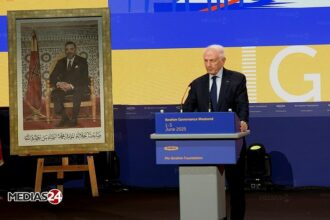
Article : André Azoulay reçoit le prix Boutros Boutros-Ghali de la Paix
Le Forum de Crans Montana salue l’engagement de longue date du conseiller du Roi Mohammed VI en faveur du dialogue interculturel, de la mémoire judéo-marocaine et du rayonnement d’Essaouira.

Article : Fruits rouges : l’émirati Elite Agro porte son pari marocain à 1,3 MMDH
Avec une septième ferme de 200 hectares inaugurée à Kénitra, le groupe place le Royaume au cœur de sa production de myrtilles et de framboises.
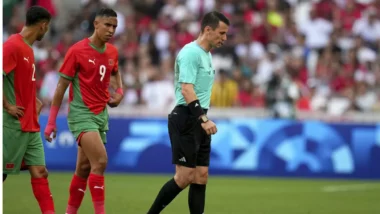
Article : Maroc-Écosse : l'Ouzbek Tantashev au sifflet, deux ans après la demi-finale olympique mouvementée contre l’Espagne
Désigné par la FIFA pour la rencontre du 19 juin au Boston Stadium, celui qui est arbitre international depuis 2013 avait quitté le terrain dès la 15e minute aux Jeux olympiques de Paris après une collision avec Marc Pubill.
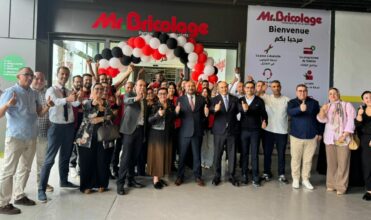
Article : Mr. Bricolage vise 45 magasins au Maroc d'ici 2032 et un plan d'investissement de 700 MDH
Mr. Bricolage Maroc prévoit le déploiement de 45 magasins d’ici 2032, au rythme d’une ouverture toutes les huit semaines, dans le cadre d’un plan porté par un investissement de 700 millions de DH.

Article : Loi 16.22 sur les adouls : l’Ordre réagit à la décision de la Cour constitutionnelle
L’invalidation partielle du texte par la Cour constitutionnelle est accueillie avec soulagement par une partie de la profession, qui y voit la confirmation de réserves exprimées depuis plusieurs mois. Mais pour Maître Driss Trali, membre du bureau exécutif de l’Ordre national, la réforme reste incomplète tant que le dépôt des fonds, l’officialité pleine de l’acte et l’indépendance de l’instance professionnelle ne sont pas consacrés par la loi.