
What Biden Owes the Palestinians
AMMAN – Nearly three years ago, Palestinian President Mahmoud Abbas took the extraordinary step of ending all negotiations with US President Donald Trump’s administration, owing to its unabashed pro-Israel bias. Under President-elect Joe Biden, the Palestinian leadership is looking forward to getting back to the negotiating table. At the top of their agenda will be an end to Israel’s construction of illegal settlements on Palestinian land in the occupied territories.
The Trump administration’s bias in favor of Israel could not have been more blatant. Those who led the “peace process” – such as Trump’s son-in-law, Jared Kushner, and the US ambassador to Israel, David Friedman – have all publicly supported Israeli settlement building and violations of Palestinian human rights.
Not surprisingly, the so-called peace plan this team devised gave Israel virtually everything it wanted, while offering no concessions to the Palestinians. Instead, the Trump administration attempted to buy Palestinians’ acquiescence – or, more accurate, surrender – with promises of investment. Rather than submit, Abbas broke off discussions with the United States – a remarkable decision when one considers that, in the 1980s, the Palestinians were pleading with the Americans to hold direct talks with their leaders.
But Abbas had no choice. With the world’s leading superpower on its side, Israeli Prime Minister Binyamin Netanyahu’s right-wing government did not need the Palestinians’ approval to ramp up its settlement building and lay the groundwork for more. In recent months, Israel has carried out an unprecedented spree of demolition of Palestinian homes and structures.
There is no question that such activities violate international humanitarian law. The United Nations Security Council confirmed as much four years ago, when it unanimously passed Resolution 2334. The resolution’s preamble explicitly condemned “all measures aimed at altering the demographic composition, character, and status of the Palestinian Territory occupied since 1967,” including “the construction and expansion of settlements” and “the demolition of homes and displacement of Palestinian civilians.”
Yet the Trump administration remains committed to supporting Israel’s violations. Secretary of State Mike Pompeo, who may be eyeing his own presidential run in 2024, is poised to visit an illegal Israeli settlement in the occupied West Bank, making him the first US secretary of state to do so. This is a blatant violation of Resolution 2334, which calls on all states “to distinguish, in their relevant dealings, between the territory of the State of Israel and the territories occupied since 1967.”
Since the Trump administration’s betrayal, Palestinians have been fending for themselves. In protest of Israel’s settlement activity, they have refused to accept taxes collected by Israel on their behalf – a decision that, together with a sharp reduction in US aid, has pushed the Palestinian Authority to the brink of bankruptcy.
This goes to show how crucial the settlement issue is to the Palestinians – and for good reason. Beyond violating international law and Palestinians’ rights, Israeli settlement expansion precludes the establishment of an independent Palestinian state along the pre-1967 borders.
Fortunately, there are promising signs that Biden will take a very different approach from his predecessor. Resolution 2334 passed because US President Barack Obama’s administration, then in its final days, decided not to veto it. The order came from Susan Rice, Obama’s national security adviser at the time, who is now said to be on Biden’s short list for secretary of state.
Of course, Biden himself was vice president in the Obama administration, and in 2014, he told Netanyahu, “I don’t agree with a damn thing you say.” Other projected Biden administration appointees – including incoming chief of staff Ron Klain – all oppose illegal Israeli settlement activity.
Abbas clearly hopes that this will translate into progress. After congratulating Biden on his victory, Abbas called on his administration to “strengthen Palestinian-American relations,” pursue “freedom, independence, justice, and dignity” for Palestinians, and “work for peace, stability, and security for all” in the Middle East and worldwide.
Even before Biden was elected, Abbas was attempting to jump-start progress. In his speech before the UN General Assembly in September, he called on the Quartet – the US, the UN, the European Union, and Russia – to convene an international conference early next year “to engage in a genuine peace process, based on international law, UN resolutions, and the relevant terms of reference, leading to an end of the occupation.”
To hold such a conference, let alone produce results, in the first days of the Biden administration is a tall order. But it is not unreasonable to expect the new administration to implement Resolution 2334 immediately – and that means bringing Israeli settlement building to a swift end.
Contrary to popular belief, a permanent settlement of the Israel-Palestine conflict is not a lost cause. But it will require courageous and resolute US leadership. Whether Biden will provide that remains to be seen, but pledging to ensure that Israel begins respecting Resolution 2334 would be a good start.
à lire aussi

Article : Le Nouvel an de l'hégire (1er Moharram) sera célébré ce mercredi 17 juin au Maroc
Le 1er Moharram de la nouvelle année de l’Hégire 1448 correspondra au mercredi 17 juin 2026, a annoncé le ministère des Habous et des affaires islamiques.

Article : Adouls : la Cour constitutionnelle valide l’essentiel de la réforme, mais écarte plusieurs dispositions
Saisie par 93 députés avant la promulgation du texte, la Cour a déclaré non conformes des articles touchant aux incompatibilités professionnelles, aux personnes en situation de handicap, au témoignage collectif dit “lafif” et à l’organisation des instances représentatives. Le texte devra donc être corrigé sur ces points, sans remettre en cause le cœur de la nouvelle loi 16.22.

Article : En commission, les conseillers votent la nationalisation de la Samir et le plafonnement des hydrocarbures
Deux propositions de loi portant sur les hydrocarbures et la Samir ont été récemment adoptées en commission à la Chambre des conseillers. Un vote "surprise" rendu possible par un rapport de forces numérique défavorable à la majorité, lors d’une séance où l’opposition était majoritaire en nombre. Si ces textes ont franchi l’étape de la commission, leurs promoteurs sont conscients qu’ils ont peu de chances d’être adoptés en plénière.

Article : Retail : la guerre silencieuse pour conquérir le panier des Marocains
Pendant longtemps, les courses du quotidien se sont surtout jouées entre l’épicier du quartier, le grossiste et quelques grandes surfaces. Ce modèle commence à se fissurer. Entre fusion capitalistique, rachats d’enseignes, master-franchises, centrales d’achat, logistique commune et formats de proximité, les grands opérateurs installent peu à peu des réseaux capables d’accompagner le consommateur du café du matin aux achats du week-end. Non sans bousculer les équilibres.

Article : Crédit du Maroc : ce que cache l’augmentation de capital à 699 MDH
Depuis son passage sous le contrôle de Holmarcom, Crédit du Maroc a changé de rythme. La banque affiche des bénéfices en hausse, prépare son plan CDM Boost 2028, et propose désormais à ses actionnaires de suivre le mouvement via une opération ouverte du 26 juin au 16 juillet. Derrière le prix fixé à 938 DH par action, le marché devra surtout juger si cette nouvelle étape confirme une trajectoire ou ouvre un pari plus large. Décryptage.
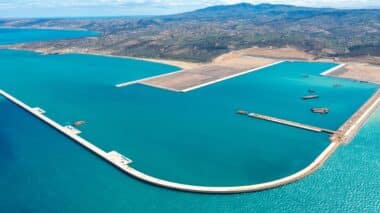
Article : Nador West Med : derrière le port, le pari industriel de l’Oriental
ROUND UP. Prévu pour entrer en service fin 2026, Nador West Med se construit déjà au-delà de ses quais : routes dédoublées, future autoroute vers Guercif, projets chinois dans l’éolien, les pneus et les alliages, ambition énergétique autour du GNL et de l’hydrogène vert. L’enjeu est désormais de transformer cette infrastructure en véritable moteur économique régional.