
The Lessons of the EU Leadership Fight
BERLIN – The haggling may have been unedifying, but the candidates nominated by the European Council to lead the European Union’s governing institutions are undoubtedly impressive. If approved by the European Parliament, German Minister of Defense Ursula von der Leyen and Belgian Prime Minister Charles Michel will become president of the European Commission and Council, respectively, and Spanish Minister of Foreign Affairs Josep Borrell will serve as High Representative of the Union for Foreign Affairs and Security Policy. Then, in November, Christine Lagarde is set to succeed Mario Draghi as president of the European Central Bank.
The good news is that each of these candidates would strengthen the EU at a time of global insecurity. The bad news is that the EU itself will continue to face significant challenges from within. The struggle to fill the top leadership positions resulted in the elimination of the Spitzenkandidaten process – whereby the largest party grouping in the European Parliament selects the Commission president – and the return of backroom deal-making, which many see as undemocratic. The justification for that change needs to be explained, or the EU’s credibility may suffer. After all, the Spitzenkandidaten process was introduced in 2014 to counter the perception that the EU suffers from a democratic deficit.
The leadership struggle has also intensified a clash of perspectives within – and about – the EU’s sources of legitimacy. Whereas member states with a strong parliamentary culture think the top personnel should be selected based on the results of May’s European Parliament election, others (like France) consider executive experience far more important than the link to those results. It is naturally a long process to devise a broadly accepted system for selecting EU leaders. Despite this year’s setback, the principle of the Spitzenkandidaten system should be preserved and combined in the next elections, with additional transnational lists of candidates backed by stronger trans-European party structures. Beyond that, the EU also needs to strengthen the role of the European Parliament.
A number of MEPs are deeply frustrated by the Council’s failure to nominate any of the Spitzenkandidats on offer, and they could make their sense of betrayal known by voting against von der Leyen’s appointment. Should her candidacy be rejected, months of institutional gridlock would likely follow. As a show of good faith, von der Leyen should announce early that she will work toward empowering MEPs de facto to initiate legislation. With an inter-institutional agreement with the European Commission, such a change would not require an amendment to any founding treaties. Moreover, if confirmed, von der Leyen and the new European Parliament president, David Maria Sassoli of Italy’s Democratic Party, should establish a working relationship as close as that of their respective predecessors, Jean-Claude Juncker and Martin Schulz. But, given the new composition of the European Parliament, they should strongly involve the chairs of all parliamentary groups that wish to work toward a stronger Europe.
The fact that MEPs elected Sassoli instead of the Council’s own candidate, former Bulgarian Prime Minister Sergei Stanishev, suggests that the European Parliament election in May has led to a renewed desire for institutional self-assertion. And yet the election left the body more fragmented than ever. The number of seats held in the 751-member parliament by the two main party groups, the European People’s Party (EPP) and the Progressive Alliance of Socialists and Democrats (S&D), fell from 404 to 336, owing to gains by the Greens, right-wing nationalists, and liberal centrists.
The fall of Europe’s grand coalitions and the emergence of new, smaller parties will impede decision-making, as already demonstrated by the Parliament’s failure to agree on its own Spitzenkandidaten. Divisions among the parliamentary groups are not just political, but also geographic. The EPP has almost no MEPs from France or Italy, and large delegations from Germany and Northern Europe. The S&D draws far more support from the Iberian Peninsula and Italy, with relatively few MEPs from the Visegrád group (the Czech Republic, Hungary, Poland, Slovakia) or France.
The increased fragmentation in the European Parliament goes hand in hand with changing relationships between EU member states. France and Germany’s days of working hand in glove are gone; and even if they do come together on a particular issue, blocking minorities can stand in their way at the Council. The latest round of EU leadership negotiations shows just how hard it has become to reach a majority, let alone unanimity. On the contrary, national governments fight increasingly recklessly for their interests. As a result, individual member states will face a strong temptation to pursue specific objectives in smaller, likeminded groups. The challenge, then, is to ensure that such initiatives follow official EU processes, rather than being decided through intergovernmental backroom deals.
The strong turnout in the European Parliament election indicates that the EU has not lost public support. The political center was strengthened at a time when Euroskeptic and nationalist parties are on the rise in member states. Overall, public trust in the EU is as high as it was in the 1980s, when European integration served as a defense against the Soviet Union. For most Europeans, being a part of the EU still means something.
But the outcome of the election also signaled a desire for change. Many citizens abandoned traditional parties, and a significant share of them did so out of fear. Like politicians at the national level, the EU’s new leaders will have to answer to voters who harbor deep uncertainties about their and their children’s future. Europeans are understandably anxious about great-power competition, new security threats, and a technological revolution that threatens to upend entire economic systems and societies.
The EU, working with member-state governments, will need to respond to these challenges with ambition and resolve. The European Council has already devised a strategic agenda for 2019-2024, and now the ball is in the European Parliament’s court. Since the elections in May, MEPs from the four moderate party groups have been negotiating a shared program of policy priorities. In other words, they are putting substance over personnel; regardless of who fills the top leadership positions, the European Parliament will already have a shared platform in place. Despite the circumvention of the Spitzenkandidaten process, this effort, like the slate of promising candidates selected by the Council, suggests that the EU is slowly and steadily maturing.
à lire aussi
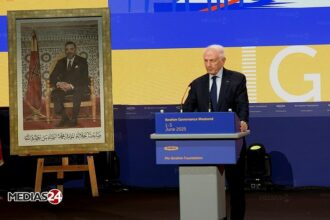
Article : André Azoulay reçoit le prix Boutros Boutros-Ghali de la Paix
Le Forum de Crans Montana salue l’engagement de longue date du conseiller du Roi Mohammed VI en faveur du dialogue interculturel, de la mémoire judéo-marocaine et du rayonnement d’Essaouira.
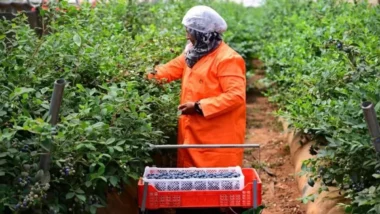
Article : Fruits rouges : l’émirati Elite Agro porte son pari marocain à 1,3 MMDH
Avec une septième ferme de 200 hectares inaugurée à Kénitra, le groupe place le Royaume au cœur de sa production de myrtilles et de framboises.
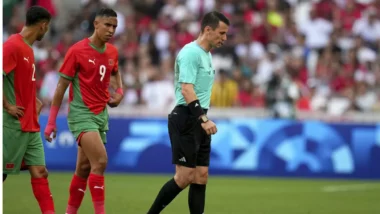
Article : Maroc-Écosse : l'Ouzbek Tantashev au sifflet, deux ans après la demi-finale olympique mouvementée contre l’Espagne
Désigné par la FIFA pour la rencontre du 19 juin au Boston Stadium, celui qui est arbitre international depuis 2013 avait quitté le terrain dès la 15e minute aux Jeux olympiques de Paris après une collision avec Marc Pubill.
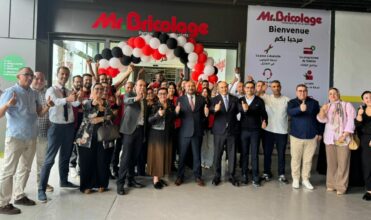
Article : Mr. Bricolage vise 45 magasins au Maroc d'ici 2032 et un plan d'investissement de 700 MDH
Mr. Bricolage Maroc prévoit le déploiement de 45 magasins d’ici 2032, au rythme d’une ouverture toutes les huit semaines, dans le cadre d’un plan porté par un investissement de 700 millions de DH.
Article : Loi 16.22 sur les adouls : l’Ordre réagit à la décision de la Cour constitutionnelle
L’invalidation partielle du texte par la Cour constitutionnelle est accueillie avec soulagement par une partie de la profession, qui y voit la confirmation de réserves exprimées depuis plusieurs mois. Mais pour Maître Driss Trali, membre du bureau exécutif de l’Ordre national, la réforme reste incomplète tant que le dépôt des fonds, l’officialité pleine de l’acte et l’indépendance de l’instance professionnelle ne sont pas consacrés par la loi.
Article : Bourse de Casablanca : le MASI termine encore dans le vert
Au lendemain de sa progression de 4,63%, l'une des plus fortes hausses de son histoire récente, le MASI poursuit son redressement le mardi 16 juin. L'indice a gagné 0,15% à 18.782,58 points, porté notamment par les valeurs immobilières et minières, dans un marché qui conserve une partie de l'élan né du regain d'optimisme sur le front géopolitique.