
The World Is Running Out of Time
WASHINGTON, DC – In 2015, the international community launched a renewed effort to tackle collective global challenges under the auspices of the United Nations Sustainable Development Agenda and the Framework Convention on Climate Change (COP21). But after an initial flurry of interest, the progress that has been made toward achieving the Sustainable Development Goals and tackling climate change has tapered off. Around the world, many seem to have developed an allergy to increasingly stark warnings from the UN and other bodies about accelerating species extinctions, ecosystem collapse, and global warming.
Now is not the time to debate whether progress toward global goals is a matter of the glass being half-full or half-empty. Soon, there will no longer even be a glass to worry about. Despite global news coverage of civic and political action to address our mounting crises, the underlying trends are extremely frightening. In recent months, the Intergovernmental Panel on Climate Change (IPCC) has marshaled overwhelming evidence to show that the effects of global warming in excess of 1.5oC above preindustrial levels will be devastating for billions of people around the world.
A recent report from the Intergovernmental Science-Policy Platform on Biodiversity and Ecosystem Services serves as yet another wake-up call. Human activities, the report concludes, have put an unprecedented one million species at risk of extinction. The oceans that supply food and livelihoods to more than four billion people are under threat. If we do not take immediate action to reverse these trends, the challenges of playing catch-up later will probably be insurmountable.
For decades, most of the major economies have relied on a form of capitalism that delivered considerable benefits. But we are now witnessing the implications of the Nobel laureate economist Milton Friedman’s famous mantra: “the social responsibility of business is to increase its profits.” A corporate-governance model based on maximizing shareholder value has long dominated our economic system, shaping our accounting frameworks, tax regimes, and business-school curricula.
But we have now reached a point where leading economic thinkers are questioning the fundamentals of the prevailing system. Paul Collier’s The Future of Capitalism, Joseph E. Stiglitz’s People, Power, and Profits, and Raghuram G. Rajan’s The Third Pillar all offer comprehensive assessments of the problem. A capitalist system that is disconnected from most people and unmoored from the territories in which it operates isno longer acceptable. Systems do not work in isolation. Eventually, reality asserts itself: global trade tensions reemerge, populist nationalists win power, and natural disasters grow in frequency and intensity.
Simply put, our approach to capitalism has exacerbated previously manageable social and environmental problems and sowed deep social divisions. The explosion in inequality and the laser focus on short-term results (that is, quarterly earnings) are just two symptoms of a broken system.
To maintain a well-functioning market economy that supports all stakeholders’ interests requires us to shift our focus to the long term. In some ways, this is already happening. But we need to channel the positive efforts underway into a concerted campaign to push systemic reforms past the tipping point. Only then will we have achieved a feedback loop that rewards long-term, sustainable approaches to business.
Most important, we must not succumb to complacency. Short-term tensions over trade and other issues will inevitably capture the attention of people and governments. But to permit the latest headlines to distract us from impending environmental and social catastrophes is to miss the forest for the trees.
Having said that, the impetus for driving positive change cannot be based on fear. The looming crises are both real and terrifying, but repeated warnings to that effect have diminishing returns. People have become immune to reality. Long-term change, then, must come from a readjustment of the market and our regulatory frameworks. Although consumers, investors, and other market participants should keep educating themselves and pushing for change, there also needs to be a thorough and rapid re-examination of the rules and norms governing capitalism today.
We need to impose real costs on market participants who do not change their behavior. That won’t happen through speeches, commentaries, and annual reports. The market economy is a powerful force that needs direction, and regulators and market participants themselves are the ones holding the compass. It is time to get serious about establishing the direct financial incentives and penalties needed to drive systemic change. Only after those are in place can we begin to debate whether the glass is half-empty or half-full.
à lire aussi

Article : André Azoulay reçoit le prix Boutros Boutros-Ghali de la Paix
Le Forum de Crans Montana salue l’engagement de longue date du conseiller du Roi Mohammed VI en faveur du dialogue interculturel, de la mémoire judéo-marocaine et du rayonnement d’Essaouira.
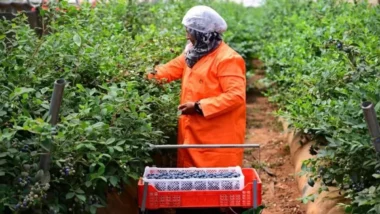
Article : Fruits rouges : l’émirati Elite Agro porte son pari marocain à 1,3 MMDH
Avec une septième ferme de 200 hectares inaugurée à Kénitra, le groupe place le Royaume au cœur de sa production de myrtilles et de framboises.
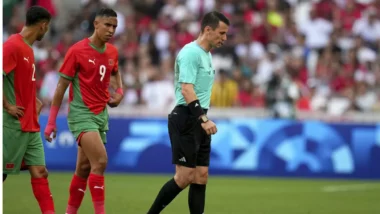
Article : Maroc-Écosse : l'Ouzbek Tantashev au sifflet, deux ans après la demi-finale olympique mouvementée contre l’Espagne
Désigné par la FIFA pour la rencontre du 19 juin au Boston Stadium, celui qui est arbitre international depuis 2013 avait quitté le terrain dès la 15e minute aux Jeux olympiques de Paris après une collision avec Marc Pubill.

Article : Mr. Bricolage vise 45 magasins au Maroc d'ici 2032 et un plan d'investissement de 700 MDH
Mr. Bricolage Maroc prévoit le déploiement de 45 magasins d’ici 2032, au rythme d’une ouverture toutes les huit semaines, dans le cadre d’un plan porté par un investissement de 700 millions de DH.

Article : Loi 16.22 sur les adouls : l’Ordre réagit à la décision de la Cour constitutionnelle
L’invalidation partielle du texte par la Cour constitutionnelle est accueillie avec soulagement par une partie de la profession, qui y voit la confirmation de réserves exprimées depuis plusieurs mois. Mais pour Maître Driss Trali, membre du bureau exécutif de l’Ordre national, la réforme reste incomplète tant que le dépôt des fonds, l’officialité pleine de l’acte et l’indépendance de l’instance professionnelle ne sont pas consacrés par la loi.
Article : Bourse de Casablanca : le MASI termine encore dans le vert
Au lendemain de sa progression de 4,63%, l'une des plus fortes hausses de son histoire récente, le MASI poursuit son redressement le mardi 16 juin. L'indice a gagné 0,15% à 18.782,58 points, porté notamment par les valeurs immobilières et minières, dans un marché qui conserve une partie de l'élan né du regain d'optimisme sur le front géopolitique.