

The Triple Crisis Shaking the World
BERLIN – The COVID-19 pandemic is entering its second phase as countries gradually reopen their economies and loosen or even revoke strict social-distancing measures. Yet, barring the arrival of an effective, universally available therapy or vaccine, the transition back to “normal” will be more aspirational than real. Worse, it risks triggering a second wave of infections at the local and regional level, and possibly on a much larger scale.
True, political decision-makers, health-care providers, scientists, and the general public have learned a great deal from the experience of the first wave. Though a second wave of infections seems highly probable, it will play out differently than the first wave. Rather than a full-scale lockdown that brings economic and social life to a standstill, the response will rely mainly on strict but targeted rules for social distancing, face masks, telecommuting, video conferencing, and so forth. But, depending on the next wave’s intensity, local or regional lockdowns may still be deemed necessary in the most extreme cases.
Much like the first wave of the pandemic, the next phase will involve a trio of simultaneous crises. To the risk of new infections getting out of control and spreading globally once again must be added the ongoing economic and social fallout and an escalating geopolitical bust-up. The global economy is already in a deep recession that will not be quickly or easily overcome. And this, along with the pandemic, will factor into the intensifying Sino-American rivalry, particularly in the months leading up to the United States’ presidential election in November.
As if this combination of health, socioeconomic, and geopolitical upheavals were not destabilizing enough, one also cannot ignore the Trump factor. If US President Donald Trump were to win a second four-year term, the current global chaos would escalate dramatically, whereas a victory for his Democratic opponent, Joe Biden, would at least bring greater stability.
The stakes in the US presidential election could scarcely be higher. Given the world’s mounting crises, it is no exaggeration to say that humanity is approaching an historic crossroads. The full extent of the economic recession probably will not become apparent until this fall and winter, when it will most likely come as another shock, because the world is no longer accustomed to such dramatic contractions. Both psychologically and in real terms, we are accustomed to continuous growth.
Will richer countries in the West and Asia be able to deal with a deep, widespread, prolonged recession or even depression? Even if trillions of dollars in stimulus spending proves sufficient to offset a full collapse, the question will be what comes next.
In the worst scenario (which is not impossible), Trump is re-elected, the second wave of the pandemic is global, economies continue to crash, and the new cold war in East Asia turns hot. But even if one does not assume the worst, the triple crisis will usher in a new era, requiring that national political and economic systems and multilateral institutions be rebuilt. Even in the best-case scenario, there can be no return to the status quo ante. The past has passed; only the future counts now.
We should harbor no illusions about what might and should come next. The crises triggered by the pandemic are so deep and far-reaching that they inevitably will lead to a radical redistribution of power and wealth at the global level. The societies that have prepared for this outcome by mustering the necessary energy, know-how, and investments will be among the winners; those that fail to see what is coming will find themselves among the losers.
After all, long before the pandemic, the world was already undergoing a transition to the digital age, with far-reaching implications for the value of traditional technologies, legacy industries, and the distribution of global power and wealth. Moreover, an even greater global crisis is already fully visible on the horizon. The consequences of runaway climate change will be far graver than anything we have ever seen, and there will be no chance of a vaccine to solve that problem.
The COVID-19 pandemic thus marks a real turning point. For centuries, we have relied on a system of political economy comprising sovereign egoistical nation-states, industries (both under capitalism and socialism) that run on fossil fuels, and the consumption of finite natural resources. This system is quickly reaching its limits, making fundamental change unavoidable.
The task now is to learn as much as we can from the first wave of the triple crisis. For Europe, which seemed to have fallen far behind economically and geopolitically, this moment represents an unexpected opportunity to address its obvious shortcomings. Europe has the political values (democracy, rule of law, and social equality), technical know-how, and investment power to act decisively in the interest of its own principles and goals, as well as those of humanity more generally. The only question is what Europeans are waiting for.
à lire aussi
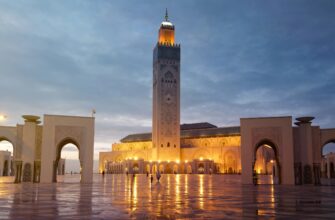
Article : Le Nouvel an de l'hégire (1er Moharram) sera célébré ce mercredi 17 juin au Maroc
Le 1er Moharram de la nouvelle année de l’Hégire 1448 correspondra au mercredi 17 juin 2026, a annoncé le ministère des Habous et des affaires islamiques.
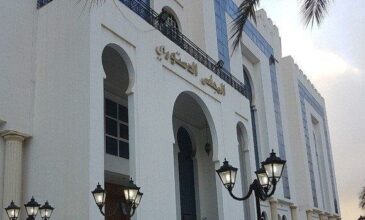
Article : Adouls : la Cour constitutionnelle valide l’essentiel de la réforme, mais écarte plusieurs dispositions
Saisie par 93 députés avant la promulgation du texte, la Cour a déclaré non conformes des articles touchant aux incompatibilités professionnelles, aux personnes en situation de handicap, au témoignage collectif dit “lafif” et à l’organisation des instances représentatives. Le texte devra donc être corrigé sur ces points, sans remettre en cause le cœur de la nouvelle loi 16.22.
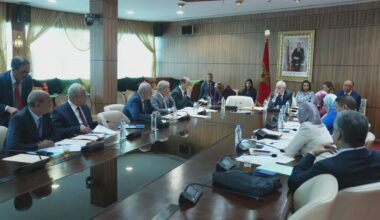
Article : En commission, les conseillers votent la nationalisation de la Samir et le plafonnement des hydrocarbures
Deux propositions de loi portant sur les hydrocarbures et la Samir ont été récemment adoptées en commission à la Chambre des conseillers. Un vote "surprise" rendu possible par un rapport de forces numérique défavorable à la majorité, lors d’une séance où l’opposition était majoritaire en nombre. Si ces textes ont franchi l’étape de la commission, leurs promoteurs sont conscients qu’ils ont peu de chances d’être adoptés en plénière.
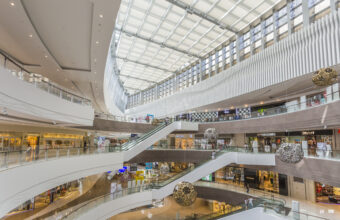
Article : Retail : la guerre silencieuse pour conquérir le panier des Marocains
Pendant longtemps, les courses du quotidien se sont surtout jouées entre l’épicier du quartier, le grossiste et quelques grandes surfaces. Ce modèle commence à se fissurer. Entre fusion capitalistique, rachats d’enseignes, master-franchises, centrales d’achat, logistique commune et formats de proximité, les grands opérateurs installent peu à peu des réseaux capables d’accompagner le consommateur du café du matin aux achats du week-end. Non sans bousculer les équilibres.
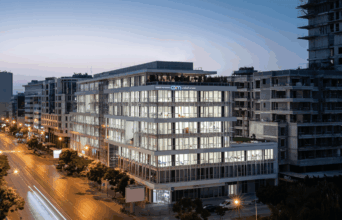
Article : Crédit du Maroc : ce que cache l’augmentation de capital à 699 MDH
Depuis son passage sous le contrôle de Holmarcom, Crédit du Maroc a changé de rythme. La banque affiche des bénéfices en hausse, prépare son plan CDM Boost 2028, et propose désormais à ses actionnaires de suivre le mouvement via une opération ouverte du 26 juin au 16 juillet. Derrière le prix fixé à 938 DH par action, le marché devra surtout juger si cette nouvelle étape confirme une trajectoire ou ouvre un pari plus large. Décryptage.
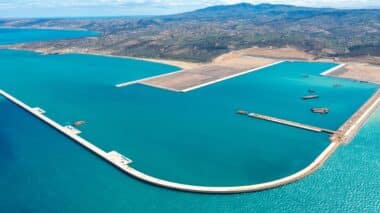
Article : Nador West Med : derrière le port, le pari industriel de l’Oriental
ROUND UP. Prévu pour entrer en service fin 2026, Nador West Med se construit déjà au-delà de ses quais : routes dédoublées, future autoroute vers Guercif, projets chinois dans l’éolien, les pneus et les alliages, ambition énergétique autour du GNL et de l’hydrogène vert. L’enjeu est désormais de transformer cette infrastructure en véritable moteur économique régional.