
Governing Geoengineering
NEW YORK – Climate change poses an unprecedented threat to humanity, one that appears increasingly likely to reduce global standards of living dramatically within our lifetime, and cause untold damage in the longer term. And, because addressing such a daunting planetary challenge requires radical approaches, there have been wide-ranging discussions about what the world must urgently do to limit the rise in global temperature to less than 1.5°C above pre-industrial levels.
Although reducing greenhouse-gas emissions must remain the highest priority, the United Nations Intergovernmental Panel on Climate Change (IPCC) says this is not enough. Some now suggest that we also need to remove huge amounts of carbon dioxide from the air. Others argue that we may also need to reflect sunlight back into space, to buy the world more time to reduce and remove emissions.
Taken together, these two approaches are known as geoengineering. And as the effects of climate change worsen, a growing number of policymakers, scientists, and entrepreneurs are considering such options more seriously.
But at present, we have no idea what unforeseen and unintended consequences deploying these new technologies might have. The unknown unknowns – especially with solar geoengineering – could be just as bad as the known challenges presented by climate change.
What’s more, as with global warming, the impact of these technologies will transcend national borders. This puts those who have the least say – the vulnerable and the poor – on the front line. It also risks exacerbating wider threats to international peace and security, such as resource scarcity and forced climate migration.
This is why the Elders, a group of independent global leaders, is calling on the international community to agree on a rigorous governance framework for geoengineering, and to put it in place without delay. Such a decision-making system must be transparent, participatory, and accountable. It should include the voices of those most affected and enable all governments and non-governmental stakeholders to gain the fullest possible understanding of these new technologies for more informed decision-making.
Since the Industrial Revolution, we have known that technology is not a panacea, and that it advances human wellbeing only if all those affected are given the chance to participate in its development. This consideration is all especially relevant to geoengineering, because our knowledge of these technologies and their impact remains limited.
Fortunately, efforts are underway to address this. This week, the UN Environment Assembly – the world’s highest-level decision-making body on environmental issues – will consider whether to initiate a global learning process on both the science and governance of geoengineering. To this end, the UNEA would call for a worldwide assessment of these emerging technologies, giving all countries a common platform of knowledge.
This shared understanding is an important first step toward ensuring that decisions concerning the use or non-use of geoengineering are based on the principles of equality, justice, and universal rights. These are the values underlying the 2015 Paris climate agreement and the Sustainable Development Goals, both of which were adopted during my tenure as UN Secretary-General.
The UN is best placed to accommodate the governance framework requirements we now need. Only through the UN’s multilateral processes can we ensure that geoengineering technologies, and how they might be applied, are not the preserve of individual states. This is vital for environmental sustainability, international security, and the wellbeing of future generations around the world.
Many people are wary of this debate, particularly in international fora. They fear that it could be a foot in the door for highly dangerous ideas, and that the very act of drawing attention to these technologies could reduce pressure to cut emissions.
I understand these concerns, and I agree that our main collective priority must still be to cut emissions; end the use of fossil fuels; and promote a zero-carbon, climate-resilient, and people-centered economic transition.
But we also need to acknowledge that the geoengineering genie is already out of the bottle. The likelihood of unilateral deployment of solar geoengineering increases every year. The global community must decide whether to engage now, by setting clear governance rules and guardrails, or allow individual actors to take the lead, creating a fait accompli for the rest of us.
Ignoring this debate would be a mistake. Instead, the world should focus on learning more, including via the process at the UNEA, in order to understand the full range of options and assess their risks with the best information available.
How to understand and potentially harness disruptive new technologies for the benefit of all humanity is one of the defining questions of our age. Future generations will not forgive us if we fail to answer it convincingly.
à lire aussi

Article : La Princesse Lalla Asmaa lance à Rabat le programme “La prothèse auditive pour tous”
La Princesse Lalla Asmaa, présidente de la Fondation Lalla Asmaa, a présidé mardi 16 juin à Rabat la première Journée des patients souffrant de surdité. L’événement a été marqué par le lancement du programme national "La prothèse auditive pour tous". Un programme inédit destiné à rendre l’appareillage auditif gratuit et accessible aux Marocains les plus démunis.

Article : André Azoulay reçoit le prix Boutros Boutros-Ghali de la Paix
Le Forum de Crans Montana salue l’engagement de longue date du conseiller du Roi Mohammed VI en faveur du dialogue interculturel, de la mémoire judéo-marocaine et du rayonnement d’Essaouira.
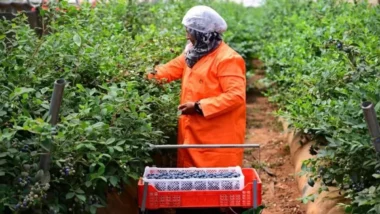
Article : Fruits rouges : l’émirati Elite Agro porte son pari marocain à 1,3 MMDH
Avec une septième ferme de 200 hectares inaugurée à Kénitra, le groupe place le Royaume au cœur de sa production de myrtilles et de framboises.
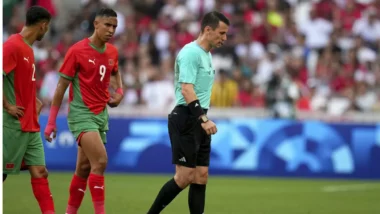
Article : Maroc-Écosse : l'Ouzbek Tantashev au sifflet, deux ans après la demi-finale olympique mouvementée contre l’Espagne
Désigné par la FIFA pour la rencontre du 19 juin au Boston Stadium, celui qui est arbitre international depuis 2013 avait quitté le terrain dès la 15e minute aux Jeux olympiques de Paris après une collision avec Marc Pubill.

Article : Mr. Bricolage vise 45 magasins au Maroc d'ici 2032 et un plan d'investissement de 700 MDH
Mr. Bricolage Maroc prévoit le déploiement de 45 magasins d’ici 2032, au rythme d’une ouverture toutes les huit semaines, dans le cadre d’un plan porté par un investissement de 700 millions de DH.

Article : Loi 16.22 sur les adouls : l’Ordre réagit à la décision de la Cour constitutionnelle
L’invalidation partielle du texte par la Cour constitutionnelle est accueillie avec soulagement par une partie de la profession, qui y voit la confirmation de réserves exprimées depuis plusieurs mois. Mais pour Maître Driss Trali, membre du bureau exécutif de l’Ordre national, la réforme reste incomplète tant que le dépôt des fonds, l’officialité pleine de l’acte et l’indépendance de l’instance professionnelle ne sont pas consacrés par la loi.