
The Case for an Arabian Universal Basic Income
LONDON – The notion of a government-provided universal basic income (UBI) has been gaining traction throughout the developed world. Although UBI policies face significant political and fiscal obstacles in the West, the idea is catching on in a region where conditions for introducing a universal cash-grant system are more favorable: the wealthy, oil-exporting Arabian Peninsula.
The Gulf oil monarchies, though largely authoritarian, already provide their citizens with very generous benefits, including free education and health care, cheap energy, and, most important, an implicit public-employment guarantee. Some two-thirds of employed citizens in Gulf Cooperation Council (GCC) countries hold a public-sector job.
This system has created both a sizable middle class and extreme economic distortions. Energy subsidies are environmentally damaging and disproportionately favor richer households, while excess public employment is unproductive and takes nationals out of the private-sector economy. Although today’s new entrants to the labor market often do not have access to public employment, it nonetheless distorts their expectations about wages and working hours.
As oil prices have fallen and the number of working-age nationals continues to grow, Gulf States’ established welfare systems have become fiscally unsustainable. But public employment in particular has proved difficult to reform. Mass government layoffs are politically unrealistic. The challenge is to find a new wealth-sharing model that is fairer, more transparent, less economically distortive, and fiscally sustainable.
As I argued in a recent paper, the most intuitive and tamper-proof mechanism for such wealth sharing would be a UBI. In the GCC countries, exceptionally, such a scheme could be financed without tax hikes, by reforming existing wealth-sharing policies. The key idea is to separate domestic energy policy and public employment from the wealth-distribution process, thereby enabling badly needed rationalization in both domains.
A UBI would be financed out of savings from reductions in domestic energy subsidies, a halt to public-sector hiring, and the gradual trimming of the public-sector workforce. Those leaving government would receive the new cash grant as a quid pro quo; additional “golden handshake” incentives could help accelerate the process. The UBI would give all adult citizens basic income security, but also sufficient incentive to earn supplementary income in the private sector.
An Arabian UBI would face none of the problems that bedevil such proposals in OECD countries. Besides not requiring any new taxes, such a measure would not create work disincentives compared to the status quo, because the economic distortions arising from idle public employment are much worse.
In a recent project supported by the Kuwait Programme at the London School of Economics and the Kuwait Public Policy Center, I showed how an Arabian UBI could work in practice. Simply redirecting Kuwait’s current energy subsidies toward a UBI could finance sizable monthly grants for citizens. To reduce the current wealth-sharing model’s distortions, payments should be differentiated. Because Kuwaiti citizens in public employment already receive large implicit transfers, they could get a minimal grant of about $200 per month that compensated them for the higher energy expenses resulting from the subsidy cuts.
This would leave sufficient savings to pay every adult citizen outside of the public sector a monthly grant of $700 and every child a grant of $230. These payments would not afford recipients a comfortable life, but they would help to narrow the wage gap between the public and private sectors, which currently amounts to about $1,400 per month for Kuwaiti citizens. Citizens with modest private-sector salaries could supplement them with the UBI to reach socially acceptable levels of total income. From a political perspective, the introduction of a UBI would be a powerful quid pro quo for drastically reduced public-sector hiring.
My estimates show that while all major income categories of Kuwaiti households would be net beneficiaries from the reform, poorer households would benefit significantly more, making the reform strongly progressive. Foreign households in Kuwait would not be directly compensated for the increase in energy prices and would thus suffer a small negative financial impact.
Although such households’ energy consumption is typically very low, Kuwait should strictly enforce its minimum-wage rules to ensure that no low-income foreign workers face energy poverty. My estimates also indicate that the impact of higher energy costs on inflation and local firms’ competitiveness would be minimal.
Moreover, the UBI figures used here are lower-boundary estimates. Cash grants could be significantly higher if they were financed out of savings from the gradual attrition of Kuwaiti public employment. A 10% reduction of the public payroll could finance an increase of $650 per month in UBI payments to adults. In a virtuous circle, Kuwaitis deciding to leave government to receive the UBI would generate further resources for the system.
Decoupling government employment from wealth sharing would give citizens stronger incentives to seek skills that are relevant in the private sector. Because the UBI would be unconditional, it would not be “taxed away” as private incomes rise, thus minimizing the work disincentives associated with conventional means-tested welfare programs. The security of a basic income would give citizens autonomy to take entrepreneurial risks and make the most of their talents.
Kuwait is not alone. Other oil-producing countries in the Middle East and North Africa (MENA) region operate similar patronage systems with essentially the same distortions and fiscal challenges. The same rationale for UBI reforms applies in other GCC countries and even in struggling oil-rich states like Libya and Iraq, although cash grants there would be smaller.
For the time being, a generous UBI remains unaffordable in Western countries. In MENA oil states, by contrast, some form of direct wealth sharing might be the only politically feasible way to reform existing welfare structures and avoid a long-term fiscal crisis.
à lire aussi
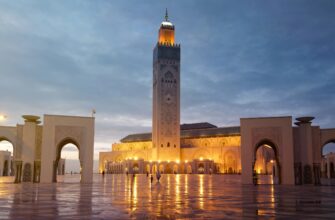
Article : Le Nouvel an de l'hégire (1er Moharram) sera célébré ce mercredi 17 juin au Maroc
Le 1er Moharram de la nouvelle année de l’Hégire 1448 correspondra au mercredi 17 juin 2026, a annoncé le ministère des Habous et des affaires islamiques.
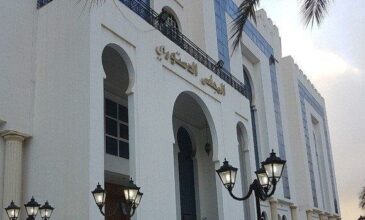
Article : Adouls : la Cour constitutionnelle valide l’essentiel de la réforme, mais écarte plusieurs dispositions
Saisie par 93 députés avant la promulgation du texte, la Cour a déclaré non conformes des articles touchant aux incompatibilités professionnelles, aux personnes en situation de handicap, au témoignage collectif dit “lafif” et à l’organisation des instances représentatives. Le texte devra donc être corrigé sur ces points, sans remettre en cause le cœur de la nouvelle loi 16.22.
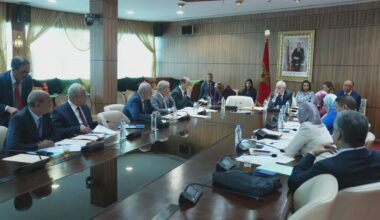
Article : En commission, les conseillers votent la nationalisation de la Samir et le plafonnement des hydrocarbures
Deux propositions de loi portant sur les hydrocarbures et la Samir ont été récemment adoptées en commission à la Chambre des conseillers. Un vote "surprise" rendu possible par un rapport de forces numérique défavorable à la majorité, lors d’une séance où l’opposition était majoritaire en nombre. Si ces textes ont franchi l’étape de la commission, leurs promoteurs sont conscients qu’ils ont peu de chances d’être adoptés en plénière.

Article : Retail : la guerre silencieuse pour conquérir le panier des Marocains
Pendant longtemps, les courses du quotidien se sont surtout jouées entre l’épicier du quartier, le grossiste et quelques grandes surfaces. Ce modèle commence à se fissurer. Entre fusion capitalistique, rachats d’enseignes, master-franchises, centrales d’achat, logistique commune et formats de proximité, les grands opérateurs installent peu à peu des réseaux capables d’accompagner le consommateur du café du matin aux achats du week-end. Non sans bousculer les équilibres.

Article : Crédit du Maroc : ce que cache l’augmentation de capital à 699 MDH
Depuis son passage sous le contrôle de Holmarcom, Crédit du Maroc a changé de rythme. La banque affiche des bénéfices en hausse, prépare son plan CDM Boost 2028, et propose désormais à ses actionnaires de suivre le mouvement via une opération ouverte du 26 juin au 16 juillet. Derrière le prix fixé à 938 DH par action, le marché devra surtout juger si cette nouvelle étape confirme une trajectoire ou ouvre un pari plus large. Décryptage.
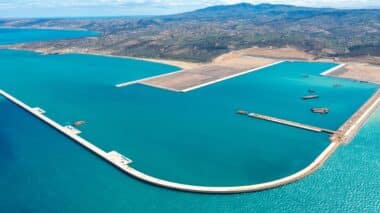
Article : Nador West Med : derrière le port, le pari industriel de l’Oriental
ROUND UP. Prévu pour entrer en service fin 2026, Nador West Med se construit déjà au-delà de ses quais : routes dédoublées, future autoroute vers Guercif, projets chinois dans l’éolien, les pneus et les alliages, ambition énergétique autour du GNL et de l’hydrogène vert. L’enjeu est désormais de transformer cette infrastructure en véritable moteur économique régional.