
The Pioneer School: Three Questions from Youssef Saâdani to Form Your Own Opinion
Youssef Saâdani, a member of the CNMD, former advisor to the Ministry of National Education, and a discreet contributor to the ongoing reform, joins the debate on the Pioneer School by addressing three fundamental questions: its purpose, its mechanism, and its effectiveness.
A Debate Concerning All Citizens
The Pioneer School is the flagship project of the educational reform launched under the 2022–2026 roadmap. After an initial pilot phase in 2023, the model has gradually expanded and is expected to cover 80 % of primary schools and 50 % of public middle schools by the next academic year (September 2026). It is no longer an experimental initiative but rather a reflection of the current reality of our educational system. The debate surrounding the Pioneer School should therefore engage all citizens concerned with the country’s development.
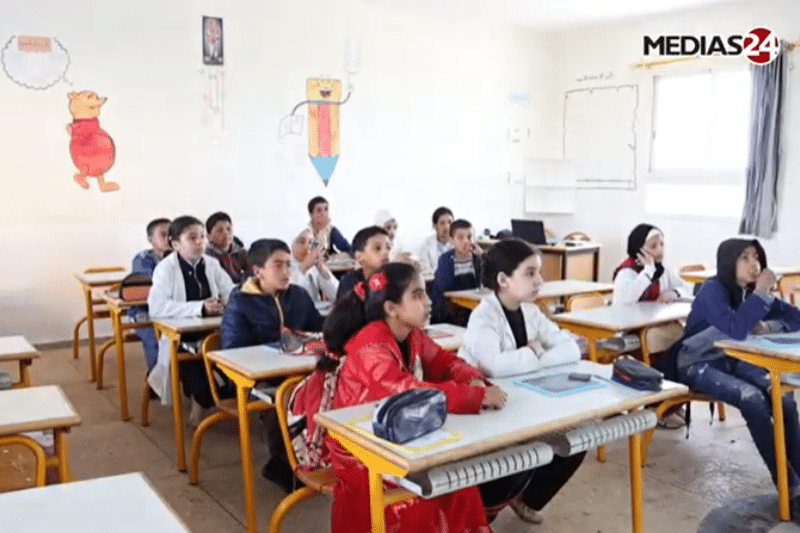
Yet public opinion remains poorly informed about the true nature of the Pioneer School, its achievements, and its challenges. How many readers would imagine that Moroccan public schools, even in rural areas, could resemble those shown in several videos — including the most recent one published by the World Bank? How many would have guessed that one of the world’s leading neuroscientists, Stanislas Dehaene, would praise the Moroccan public school system?
As is often the case with education policy, citizens are mostly exposed to vehement and polarized rhetoric—amplified by media and social networks—whose sole purpose is to discredit initiatives without nuance.
It is natural, even necessary, for any reform to spark critical debate. That is how public action evolves and mistakes are corrected. Yet such debate must be informed, grounded in facts, and guided above all by the best interests of our children.
For everyone to form a free and reasoned opinion, it is helpful to structure the debate around three key questions: What is the objective of the Pioneer School? How does it operate in practice? And does it deliver satisfactory results?
Some may see little value in seeking further information or sincerely asking these questions, as their stance—whether favorable or critical—is already set. "Facts do not penetrate where certainties dwell." For those who genuinely wish to examine the evidence, these three questions offer a framework for personal reflection.
By Youssef Saâdani, member of the Higher Education Council
Question 1: What is the objective of the Pioneer School?
The Pioneer School has chosen to focus on three structural issues that have plagued the Moroccan education system for decades: the accumulation of learning gaps among students, the lack of comprehension in class, and the absence of learning assessment.
This choice stems from the conviction that without addressing these fundamental problems, nothing sustainable can be built within the Moroccan education system. It would be illusory to set high ambitions for our students while the foundations remain unrepaired.
The first identified problem is the accumulation of learning gaps among students. For decades, teachers have begun each school year facing pupils with significant delays in reading, writing, and arithmetic. These gaps accumulate year after year until they become irreversible by the end of primary school. Teachers were left alone and powerless in the face of this widespread phenomenon. Most say that in each class, only a handful of students—often fewer than five—had the necessary prerequisites to follow lessons properly. Within the Pioneer School framework, the decision was made to prioritize the reduction of these accumulated gaps, which forms the curative pillar of the model.
The second issue addressed by the Pioneer School is the lack of student comprehension in class. Lessons are often too dense, complex concepts are introduced too quickly, and when students encounter difficulties, teachers lack the time to guide their understanding. Added to this are practical training and teaching resources that many educators consider insufficient. To tackle this challenge specifically, the second pillar of the Pioneer School was designed as the preventive pillar.
Lastly, the third issue the Pioneer School seeks to address concerns the lack of learning assessment. Until recently, the Ministry of National Education did not provide objective data on students’ actual proficiency levels. For instance, in 2022, it was impossible to determine from internal records the proportion of pupils able to read a paragraph correctly or perform a basic arithmetic operation. Without measuring reality, no accountability or improvement mechanisms could be built on reliable indicators. To remedy this, the Pioneer School established an evaluative pillar dedicated to monitoring student learning.
What do the detractors of the Pioneer School think of these objectives? In general, they question their relevance and criticize them for lacking ambition. According to them, the excessive focus on basic learning and struggling students risks lowering the overall level of public education. They also warn against the danger of sacrificing gifted students in the name of catching up with the majority’s shortcomings. Proponents of this critical view argue that the ambition for our students should be raised and that they should be equipped with 21st‑century skills such as creativity, problem‑solving, and critical thinking. While they sometimes acknowledge the importance of foundational knowledge, they quickly add that this dimension is unworthy of being elevated to a national educational project.
Against these criticisms, supporters of the Pioneer School (including the author of this article) invoke the principle of dynamic transition. Given the initial state of our education system, marked by a learning crisis, it was necessary to go through a leveling phase focused on the fundamentals—a process that may take several years—before gradually raising the bar of expectations. Emphasizing basic skills, contrary to some criticisms directed at the Pioneer School, is not the ultimate goal; it is the starting point toward more demanding forms of knowledge. It is illusory, even dangerous, to demand excellence immediately and for everyone, as this would only exacerbate the problems of accumulated gaps and lack of comprehension in class. The global trend observed in other emerging countries confirms the relevance of Morocco’s choice within the Pioneer School framework (see here).
The defenders of the Pioneer School also argue that fears of a decline in standards are largely overstated. Beyond the remediation phase at the start of the school year, the Pioneer School curriculum is in fact more demanding in Arabic and mathematics than before—for instance, by introducing systematic instruction in problem‑solving strategies and a nuanced understanding of texts. In French, the very low level of students has required a more realistic redefinition of learning objectives to ensure they are genuinely attainable.
Question 2: How Does It Work in Practice?
Now that readers are familiar with the three pillars of the Pioneer School—the curative, preventive, and evaluative pillars—they naturally wonder how the model operates in practice, day after day, inside classrooms.
Since the 1990s, every attempt at educational reform in Morocco has faced the same challenge: operationalization. How can professional practices be transformed for 300,000 teachers across more than 10,000 schools? As stakeholders in the system often remark, most reforms—though well‑conceived on paper—have stopped at the classroom door.
The purpose of the Pioneer School is to provide a concrete answer to this implementation challenge through a strategy of direct empowerment. In practice, this means equipping teachers with operational pedagogical tools that support them in their daily work. These tools have been carefully selected based on the findings of scientific research. To ensure effective adoption, teachers have also received training and close, ongoing support.
With the Pioneer School, teachers are now equipped to tackle major learning delays. They use a remediation method known as Teaching at the Right Level (TaRL) to help students catch up in reading and arithmetic. This approach includes placement tests, a protocol for forming groups according to learning needs, student activity booklets, and detailed guides for conducting lessons. All of this is new and fills a gap that has persisted for decades.
Our teachers are also equipped to deliver lessons that are more accessible and engaging for students. They now have a suite of tools to implement structured pedagogy: more progressive and spacious reference textbooks produced by ministry experts rather than private publishers; a repository of effective teaching practices detailing professional gestures recommended by academic research; and lessons that can be projected in class, enriched with sound, images, and animations. More than 2,000 lessons have been developed, covering the entire primary‑school curriculum in mathematics, Arabic, and French. All Pioneer School classrooms are equipped with projectors, and every teacher has a laptop.
Lastly, teachers are now equipped to assess students’ learning outcomes with greater rigor. Reference frameworks—previously non‑existent—have been developed to define learning expectations at the end of each school year. Every six weeks, standardized tests are administered to all Pioneer School students. The results are recorded in the Massar information system, enabling real‑time monitoring of skill mastery on a national scale. For instance, it is now possible to know the proportion of students capable of reducing fractions to a common denominator. To promote objective evaluation of academic achievement, a verification mechanism has been introduced, involving random retesting of students and calculating a concordance rate between internal and external assessments.
What do the critics of the Pioneer School think of this teacher empowerment strategy? Generally, they oppose it for two main reasons. The first concerns the choice of pedagogical approaches. They challenge the structured and progressive pedagogy adopted by the reform, arguing that it makes students too passive and insufficiently intellectually stimulated. By simplifying everything and explaining everything to learners, they claim, the space for effort, intuition, exploration, and creative problem‑solving is reduced. The central thesis of these critics is that students must be challenged to learn — that from cognitive chaos emerges light.
The second reason for rejecting the Pioneer School’s empowerment strategy relates to the risk of teacher robotization. The structured lessons provided to teachers, they argue, limit flexibility and reduce their role to that of classroom facilitators. Teachers would be prevented from adapting lessons to their students’ specific needs or from using approaches they consider more effective. For detractors of the Pioneer School, rather than supplying ready‑made tools, it would be wiser to train teachers in a wide range of pedagogical methods and grant them the freedom to design their own lessons.
What do the supporters of the Pioneer School respond to these criticisms? They first point out that more than 60 % of Morocco’s active teachers have been recruited within the past decade. The country therefore has a young teaching workforce with limited practical experience. Realistically, it is unlikely that training alone can transform teaching practices on a system‑wide scale. What can ten days of training per year achieve against the weight of entrenched habits? In this context, the empowerment strategy appears to be the most pragmatic way to trigger genuine change.
Among the tools developed, structured pedagogy—an approach that progresses gradually from simple to complex—is validated by scientific literature for its effectiveness, particularly with vulnerable students, who constitute the majority in Moroccan public schools. In the "Smart Buys" report published in 2023 by a panel of international experts, three approaches were identified as the most recommended by global educational research, including structured pedagogy (link to the report). Moreover, the relevance of the Pioneer School’s pedagogical approach is endorsed by leading scientific figures, notably John Sweller, one of the world’s foremost cognitive psychologists. In short, the extensive evidence supporting this method renders the theoretical debate over its relevance largely sterile—especially since critics often overlook the pedagogical resources already produced.
Regarding the risk of robotization, supporters of the Pioneer School argue that teacher empowerment is not meant to standardize teachers but, on the contrary, to free them from low‑value tasks—such as writing lessons on the board—so they can focus on the professional gestures that have the greatest impact: maintaining students’ attention by modulating the pace of the lesson, checking understanding through frequent questioning, and providing explanatory feedback to prevent repeated errors. These three gestures form the essence of the art of teaching. Within the Pioneer School framework, teachers must retain the freedom to act according to the specific needs of their classes while relying on the provided pedagogical scenarios. Year after year, through the use of these tools, teachers will progressively master the structured‑pedagogy approach and gain greater autonomy.
Question 3: Does It Work?
To answer the question "Does it work?", it is essential to distinguish between two levels of analysis. The first concerns the model’s intrinsic effectiveness—its pedagogical toolkit and internal mechanisms. The second relates to its effectiveness on a larger scale, that is, once generalized across the system.
Regarding the first level, we have several objective sources to assess the model's effectiveness in itself. Indeed, from the program's launch, the Ministry of National Education opted for transparency by subjecting Pioneer Schools to numerous evaluations conducted by external stakeholders (Higher Education Council, ONDH, J-PAL, Sanady). It is extremely rare, in Morocco as well as abroad, for a public policy to be evaluated to such an extent from its inception.
At the first level, several objective sources allow us to assess the model’s intrinsic performance. From the program’s inception, the Ministry of National Education chose transparency by subjecting Pioneer Schools to numerous evaluations conducted by external bodies such as the Higher Education Council, ONDH, J‑PAL, and Sanady. It is exceptionally rare—both in Morocco and abroad—for a public policy to be evaluated so extensively from its very launch.
The seven empirical and independent studies conducted so far all point in the same direction and highlight two main results: on one hand, a concrete transformation of the institutions engaged in the program; on the other hand, a significant improvement in the students' overall level. To better understand the significance of these results, let's take the example of an evaluation conducted by J-PAL, a research center affiliated with MIT, considered the world's most renowned laboratory in impact evaluation. In September 2023, J-PAL researchers randomly selected 10,000 students from new Pioneer Schools and 10,000 students from regular schools. A test conducted at the beginning of the school year showed that both groups had exactly the same level in math, Arabic, and French. At the end of the school year, in June 2024, another test was administered to the same students, on what was studied during the school year (with comparable curricular scope). The results showed that Pioneer School students achieved a mastery rate of 60% compared to 40% for students from regular schools.
The seven empirical and independent studies conducted so far all point in the same direction and highlight two main findings: on the one hand, a tangible transformation of the institutions involved in the program; on the other, a significant improvement in students’ overall performance. To grasp the significance of these results, let’s take the example of an evaluation carried out by J‑PAL, a research center affiliated with MIT and widely regarded as the world’s leading laboratory for impact evaluation. In September 2023, J‑PAL researchers randomly selected 10,000 students from newly established Pioneer Schools and 10,000 from regular schools. A test administered at the beginning of the school year showed that both groups had exactly the same level in mathematics, Arabic, and French. At the end of the school year, in June 2024, the same students took another test covering the year’s curriculum. The results revealed that Pioneer School students achieved a mastery rate of 60 %, compared with 40 % for students from regular schools.
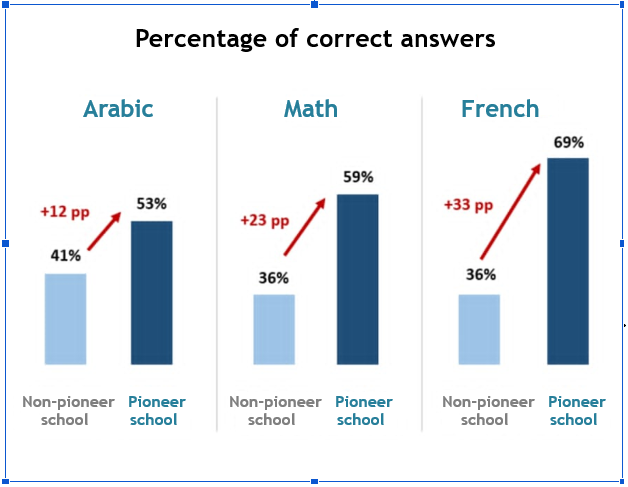
According to J-PAL researchers, such an impact of around 20 percentage points, on such a vast experimentation scale, corresponds to an unprecedented effect in modern academic literature, both in developed and developing countries. They write: "To our knowledge, the overall program impact of 0.9 s.d. is larger than any impact ever estimated for a program implemented by a government."
Upon reading these results and being well‑versed in academic literature, Stanislas Dehaene, the world’s most cited neuroscientist and president of the scientific council for French national education, declared during a conference: "Twenty years ago, everyone looked at Finland; now we look at Morocco." After learning about the empowerment strategy implemented in Morocco, he launched in France the Pioneer of Maths project, openly inspired by the Moroccan Pioneer School.
Morocco—thanks to its teachers, administrators, and experts—has designed an educational model that has achieved an impact rarely observed worldwide in an experimental context. What could have been a source of national pride, a beacon of hope for the future of public education, has instead been neglected, doubted, or relativized by critics of the Pioneer School. For them, these evaluations—conducted by internationally renowned experts and based on field surveys—are deemed worthless, allegedly tainted by statistical bias and methodological flaws.
If we reasonably accept that the seven independent evaluations conducted cannot all be wrong—as the reform’s critics claim—then we can conclude that the Pioneer School’s tools, when properly implemented, offer a relevant response to structural learning challenges. Of course, significant improvements remain to be made, particularly in lessons and textbooks, but overall, Morocco has found a viable path for the future of its schools—and, for now, no operational alternative exists.
While the generalization process is still underway, it is too early to judge the success of the Pioneer Schools. Everything depends on the ministry’s ability to strengthen ownership among all stakeholders, enabling them to better understand and make full use of the tools at their disposal. Rather than getting bogged down in sterile debates about the relevance of the Pioneer School model, the truly meaningful and productive discussion for our country is the one that focuses on large‑scale appropriation.
If the Pioneer School program continues in the coming years, we will only know whether it truly constitutes a success—or, conversely, a failure—in 2031, during the PIRLS (reading) and TIMSS (mathematics and science) assessments. For middle school, the pivotal date will be 2033 (PISA). Before these milestones, several international evaluations will take place—PIRLS 2026, TIMSS 2027, and PISA 2029—but they will only partially capture the full potential of a model still in the process of generalization and appropriation.
The possibility of a spectacular and lasting breakthrough for Morocco in international education rankings from 2031 onward is entirely plausible. Yet the real challenge lies elsewhere: will we have the wisdom to ask the right questions, examine the facts, and seek understanding—to rise above approximations and intentions that cloud the debate surrounding the Pioneer School?

à lire aussi

Article : Maaden Structures : une restructuration financière à 10 millions de dirhams
Le capital de l'entreprise spécialisée dans le mobilier urbain et l'appareillage électrique passe à 10 millions de DH à la suite d'une opération de restructuration financière transformant ses dettes envers sa maison-mère en capital.

Article : La Galice demande à Madrid de rouvrir le marché marocain aux bovins espagnols
Après plusieurs mois de blocage lié à la dermatose nodulaire contagieuse, les autorités régionales invoquent l’absence de nouveaux cas depuis mars en Catalogne et en Aragon pour réclamer des discussions avec Rabat.
Article : ENQUÊTE. Manuels scolaires : le nouveau modèle qui fait trembler les éditeurs (2/2)
Après les ruptures de la rentrée, l’autre face de la réforme apparaît dans les comptes des éditeurs. Sorties de la conception des manuels et cantonnées à l’impression-distribution, certaines maisons disent devoir vendre des ouvrages à 9, 15 DH ou 17 DH tout en assumant les frais de production, de stockage et de logistique. Dans ce deuxième volet, Médias24 examine les effets économiques du modèle des écoles pionnières, entre baisse des prix, saisine du Conseil de la concurrence et inquiétudes sur la survie d’une filière longtemps structurée autour du livre scolaire.
Article : La Princesse Lalla Asmaa lance à Rabat le programme “La prothèse auditive pour tous”
La Princesse Lalla Asmaa, présidente de la Fondation Lalla Asmaa, a présidé mardi 16 juin à Rabat la première Journée des patients souffrant de surdité. L’événement a été marqué par le lancement du programme national "La prothèse auditive pour tous". Un programme inédit destiné à rendre l’appareillage auditif gratuit et accessible aux Marocains les plus démunis.
Article : André Azoulay reçoit le prix Boutros Boutros-Ghali de la Paix
Le Forum de Crans Montana salue l’engagement de longue date du conseiller du Roi Mohammed VI en faveur du dialogue interculturel, de la mémoire judéo-marocaine et du rayonnement d’Essaouira.

Article : Fruits rouges : l’émirati Elite Agro porte son pari marocain à 1,3 MMDH
Avec une septième ferme de 200 hectares inaugurée à Kénitra, le groupe place le Royaume au cœur de sa production de myrtilles et de framboises.