
During the discussion of the 2026 sectoral budget in a parliamentary committee, Minister of Energy Transition Leila Benali committed to reintroducing the text for adoption before the end of December 2025. Today, the spring parliamentary session represents the final opportunity to push this reform through; otherwise, this strategic project will likely be postponed to the next government’s term.
Publicité
Mining. Morocco highly ranked by Fraser, yet hampered by structural weaknesses
ANALYSIS. Ranked 15th out of 68 countries by the Fraser Institute in terms of mining attractiveness, Morocco confirms its positioning among the most promising African destinations for investment. However, behind this performance, operators highlight persistent weaknesses, especially in terms of geological data, regulatory framework, and administrative efficiency, which continue to hinder the full deployment of the sector's potential.

Par
Amine Bouwafoud
Le 18 mars 2026 à 19h22
|
Modifié 18 mars 2026 à
19h22
The annual evaluation of the mining sector conducted by the Fraser Institute — a Canadian think tank — has ranked Morocco 15th out of 68 countries for investment attractiveness. This performance places Morocco as Africa’s second destination in the field, just behind Botswana.
This year’s ranking is based on a survey conducted between August 5 and November 26, 2025, among a panel of decision-makers and experts. Notably, more than 46% of respondents were presidents or vice presidents of mining companies, representing exploration expenditures of roughly $4.2 billion in 2025.
The report noted that in Morocco, surveyed mining operators voiced growing concerns over the country’s geological databases, mining legislation, and administrative practices.
Despite Morocco’s strong international and regional ranking, mining operators’ perceptions send a signal that cannot be ignored: the country is missing out on major investment opportunities. In an era where perception shapes both economics and politics, overlooking these concerns risks eroding Morocco’s attractiveness to foreign mining investors — particularly when much of the country’s subsoil remains unexplored and could hold untapped wealth.
To delve deeper, our analysis focused on the three major concerns raised by mining operators surveyed by the Fraser Institute, showing that little is truly lacking — apart from a determined political will — to boost the sector’s attractiveness.
Understanding Fraser's methodology
First and foremost, it is worth noting that the 68 countries included in this ranking were each evaluated by at least five survey participants — a crucial criterion to avoid exclusion. Morocco’s consistent presence in every edition since 2021 underscores the strong interest shown by operators.
Regarding the evaluation methodology, the overall investment attractiveness index is calculated by combining two independently assessed indicators, a safeguard designed to minimize opinion bias:
- The mining potential index (geological attractiveness) places Morocco 9th out of 41 countries.
- The policy perception index, which gauges opinions on governmental support for mining investment, ranks Morocco 25th among the 68 jurisdictions evaluated.
In an interview with Médias24, Julio Mejía, the report's author, identified three main obstacles that could hinder mining investment in Morocco:
- Geological databases — covering the quality and scale of maps and the accessibility of geological information; 60% of respondents flagged this as a concern.
- Mining legislation — investors question whether judicial procedures are fair, transparent, swift, and efficiently administered; 50% of respondents do not consider this an attractive factor.
- Mining administration— the interpretation and enforcement of regulations; 43% of respondents stated this discourages investment in the country.
Conversely, the survey highlighted several strengths that enhance Morocco’s attractiveness for mining investment:
- Strong mining potential (subject to optimal policies) — coupled with a regulatory environment aligned with international standards, competitive taxation, and a stable political climate, Morocco’s mining potential is considered very attractive by 60% of respondents.
- Quality infrastructure — including road networks, ports, logistics platforms, and electricity supply; 60% of respondents view these as encouraging factors.
- Security — Morocco’s security climate is perceived by 60% of respondents as a major asset favoring investment.
Analysis of the availability and accessibility of geological and mining data in Morocco
Promoting investment in the mining sector fundamentally depends on the quality and accessibility of geological information. This data should primarily be provided by the supervisory ministry, which is responsible for disseminating relevant, updated, and insightful resources to potential investors, enabling them to identify opportunities and target high‑potential mining analogs.
The ministry’s website currently offers free access to nine publications that outline the mining geology of Morocco’s regions. Authored by eminent Moroccan and French researchers, these documents are structured as geological circuits. Written in French and published in 2011, they form part of the Notes and Memoirs of the Geological Service of Morocco collection.
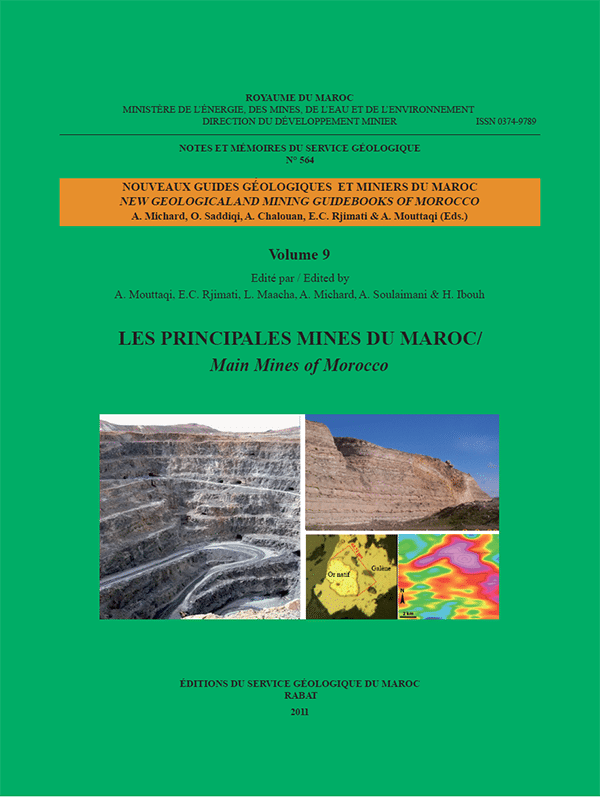
In addition to these nine volumes, the collection serves as both a detailed database and a historical archive of geological work conducted since 1927, covering mining as well as broader geological themes.
On the cartographic side, the ministry’s website hosts a dynamic catalog of available maps, along with acquisition prices, all presented in French. While the 1:1,000,000 geological map covers the entire national territory, coverage diminishes at finer scales: approximately 50% at the 1:100,000 scale (which can reach 70% when combined with 1:200,000 maps), and only 19% at the 1:50,000 scale — a shortfall largely due to the lack of data updates from the ministry.
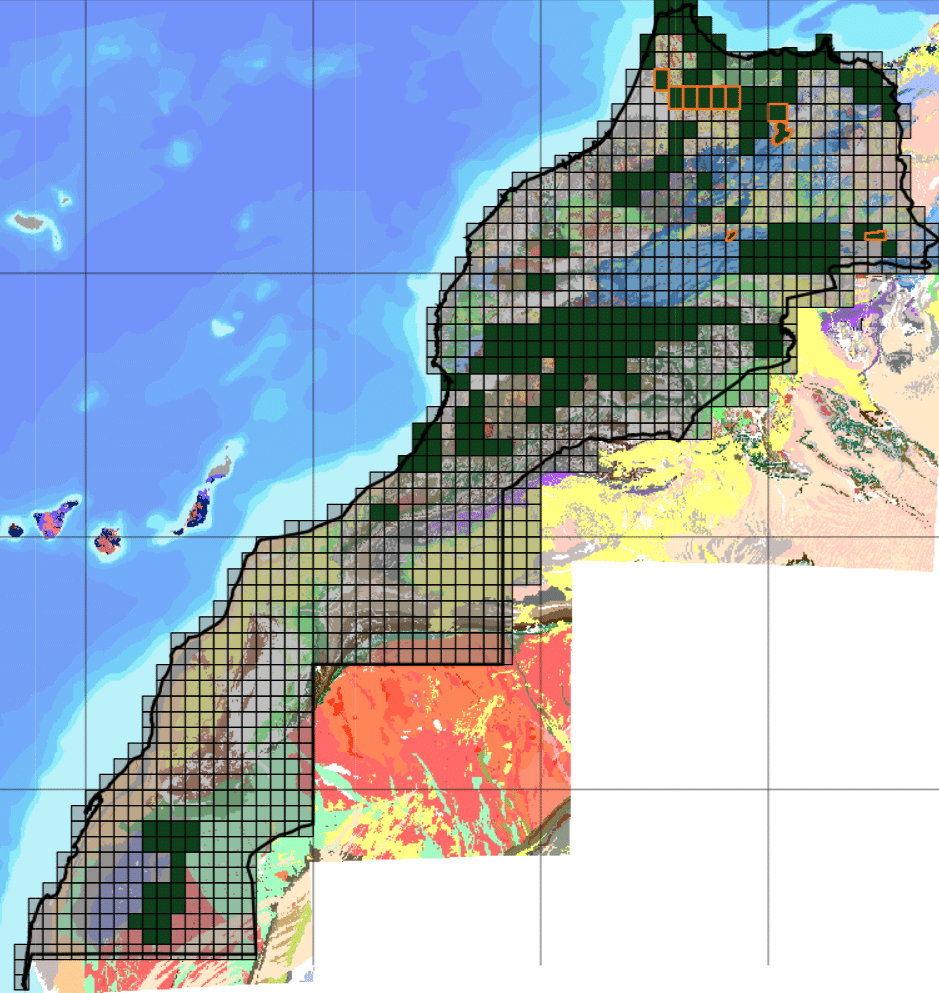
This modest high‑resolution coverage rate is explained by the nature of geological mapping, which is far more than graphic representation: it reflects substantial multidisciplinary investment. For example, producing a single 1:50,000 map requires a budget of between 1 and 2 million dirhams — or more, depending on the complexity and accessibility of the region studied.
While the scientific quality of the data produced is not in question, several barriers to investment persist.
The use of French, though relevant in certain contexts, limits accessibility for a broader pool of foreign investors. Translating or providing this information in English — the universal language of business and investment — would make Moroccan geological data more accessible and enhance project efficiency.
In addition to a lack of overall platform updates, visiting the Department of Energy Transition website (mem.gov.ma) reveals a server display error when selecting the English version.
Unlike the supervisory ministry, ONHYM effectively fulfills its promotional mission by providing clear and accessible numerical data in English, although its scope naturally focuses on its own project portfolio.
For the ministry, basic adjustments would suffice to address this communication gap — especially given Morocco’s comparative advantages as an investment destination: access to green energy, incentivizing taxation, strategic logistical infrastructure, and extensive mining experience built over decades.
Mining reform: a race against time before the end of the government's term
Regulatory reform of Law 33-13 on mines remains eagerly awaited. The draft revolves around innovative, strategic, and responsible measures — including an ESG framework applicable throughout the mine’s lifecycle, enhanced status for mining employees, the development of an integrated value chain, and regulation of critical and strategic mineral ores, among others.
That said, the current mining law does not constitute a direct hindrance to investment. It clearly defines procedures, obligations, and responsibilities for all parties. Yet improvements remain possible — particularly to strengthen transparency and enhance the efficiency of mining administration.
Similar to mining data, publishing an English version of the mining code is essential to effectively promote legal best practices in the sector.
Alongside the second edition of the International Mining Congress, held in Marrakech from November 24 to 26, 2025, the ministry unveiled its project for a digital mining cadastre, expected to be operational by March 2026 — with only two weeks remaining before the end of the month.
A demonstration of its pre‑version suggests that the platform will enable online acquisition of geological data, clearly identify blocks open for investment, and improve the efficiency of mining administration.
Hoping for no delays, the new cadastre is expected to serve as a fully digital one‑stop shop. By digitizing 40 administrative procedures related to mining license applications, grants, and monitoring, it promises to inject fresh impetus into a new generation of mining investments.
In conclusion, the mining sector carries a high investment risk, making it essential to attract foreign capital capable of absorbing such exposure. Its major importance, compared to other sectors, lies in its ability to generate development opportunities in remote areas. While national operators have long acted as catalysts, the recent example of Canadian company Aya Gold & Silver illustrates the tangible benefits of the 2015 mining reform.
With recognized African expertise and a promising Moroccan investment environment, Aya Gold & Silver swiftly integrated into the sector through the Zgounder silver mine, doubling Morocco's silver production capacity. Its Boumadine project is expected to drive development in the Drâa‑Tafilalet region by 2030, an area previously dominated by artisanal mining.
Continuing the sector’s modernization through administrative digitalization and closer attention to stakeholders’ demands are the key growth drivers. These efforts will enable Morocco to attract more capital and unlock the full potential of its underground resources.
Si vous voulez que l'information se rapproche de vous
Suivez la chaîne Médias24 sur WhatsApp
© Médias24. Toute reproduction interdite, sous quelque forme que ce soit, sauf autorisation écrite de la Société des Nouveaux Médias. Ce contenu est protégé par la loi et notamment loi 88-13 relative à la presse et l’édition ainsi que les lois 66.19 et 2-00 relatives aux droits d’auteur et droits voisins.
Par
Amine Bouwafoud
Le 18 mars 2026 à 19h22
à lire aussi

NATION
Article : Au congrès mondial de la CGLU, le Roi appelle à faire des villes un moteur de justice sociale
Dans un message lu mardi 23 juin à Tanger par le ministre de l’Intérieur, Abdelouafi Laftit, le Souverain a défendu une action publique territoriale fondée sur la proximité, l’équité et l’efficacité, en affirmant que l’accès aux services de base devait être “un droit du citoyen” et non dépendre du lieu de résidence ou du statut social.
ECONOMIE
Article : Abdellatif Jouahri : “Nous souhaitons le réveil de l'investissement privé”
Le deuxième Conseil de Bank Al-Maghrib de l'année 2026 s'est tenu ce mardi 23 juin, suivi par la traditionnelle conférence de presse du Gouverneur. Voici l'essentiel des réponses de Abdellatif Jouarhri aux questions des journalistes.
Communication d'entreprise
Article : Mauritanie : à Nouakchott, Attijariwafa bank organise plus de 350 rendez-vous B2B pour accélérer les partenariats africains
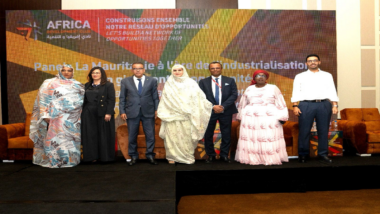
Les 18 et 19 juin 2026, le Club Afrique Développement et Attijari bank Mauritanie ont réuni près de 300 acteurs économiques et institutionnels venus notamment du Maroc, du Sénégal, de Côte d’Ivoire, d’Égypte, des États-Unis et d’Europe. Mines, énergie, pêche, agro-industrie, BTP... La 46e mission multisectorielle du groupe a mis en avant les secteurs appelés à porter l’industrialisation du pays, avec un mémorandum signé pour accompagner les micro, petites et moyennes entreprises.

Energie
Article : ONHYM-SA : la réforme qui change les règles du jeu pour les ambitions énergétiques du Maroc
Le changement peut sembler administratif. Il est en réalité hautement stratégique. En devenant ONHYM-SA, l’Office obtient une marge de manœuvre nouvelle pour porter des actifs, investir au Maroc comme à l’étranger et s’impliquer davantage dans la création de valeur, à un moment où le Royaume prépare les prochaines étapes du gazoduc Afrique-Atlantique et la structuration de son marché gazier.
BUSINESS
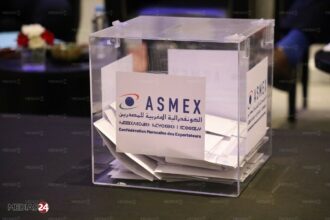
Article : ASMEX. Avec 102 voix sur 293, Sonia Mezzour élue présidente
Sonia Mezzour a été élue présidente de l’ASMEX, à l’issue de l'assemblée générale élective tenue ce mardi 23 juin à Casablanca. Elle succède à Hassan Sentissi El Idrissi, qui dirigeait la Confédération marocaine des exportateurs depuis 2013.

Santé
Article : Ordre des médecins : inscrite au prochain Conseil de gouvernement, la réforme débloquera-t-elle enfin les élections ?
Depuis décembre 2022, les instances ordinales vivent sous mandat expiré, tandis que les médecins privés contestent des négociations menées en leur nom sur l’AMO, les tarifs et leur place dans les futurs groupements sanitaires territoriaux. Le texte attendu le jeudi 25 juin pourrait ouvrir une sortie de crise pour quelque 17.000 praticiens, dans un secteur qui affirme assurer 67% de l’offre de soins. Détails.