
Can the Sahel’s Coming Crisis Be Averted?
LONDON – Some crises take us by surprise. They seem to come out of nowhere, suddenly creating upheaval and a desperate scramble to respond. Other crises are manifest, but there is no single point of eruption. The factors that fuel them intensify until the moment comes when we realize – too late – the gravity and the urgency of the situation.
The Sahel and the broader region of northern Sub-Saharan Africa is a crisis of the latter kind. We know what is coming. The warning signs are all there. The evidence is gathered. The international community has recognized the need to confront the problem. But, despite our efforts, it is obvious we must do more.
If and when the eruption comes – as it surely must without a change of policy – the consequences will include fresh waves of extremism and migration, affecting Europe and spreading further afield to America and Arabia. These waves could be even larger than those from the Middle East in the wake of Syria’s civil war and the breakdown of the Arab Spring.
The five countries usually included in the Sahel – Mauritania, Mali, Burkina Faso, Niger and Chad – are part of a wider geographic area that stretches across Africa from the Atlantic coast in the west through northern Nigeria to Sudan in the east. The population of the Sahel 5, currently at roughly 80 million, is the fastest growing of any group of countries in the world. It is estimated that by 2030 the population of Niger will rise from more than 21 million today to 35 million; Burkina Faso will have 27 million, up from just over 19 million today.
Poverty in the region is chronic, and climate change is compounding it. Governance capacity is weak. The development challenges are massive. As a result, radicalization and extremism are on the march. In just the last six months, terror attacks in Mali, Burkina Faso, and Niger have killed nearly 5,000 people in 1,200 incidents, already a significant increase on the year before.
It would be unfair to say that the international community has ignored the issue or not understood its importance. As the region’s problems have grown in recent years, there have been military interventions, not least by France. The Sahel countries have created their own coordination body, the G5 Sahel. And the international community has created the Sahel Alliance, which brings together leading players and donors, with the participation of major European countries and the United States.
But the blunt truth is that the situation is deteriorating, despite widespread recognition of the mounting danger. True, individual countries are stepping up their assistance efforts. But addressing this crisis requires a comprehensive, fully coordinated effort. At present, discussions are coordinated in various forums, but initiatives remain too ad hoc – worthy in themselves, but suboptimal in impact unless brought together as part of a coherent strategy.
What I learned over time about such situations is that the crucial determinant of whether they can be mastered is the bandwidth of focus among the critical players. That bandwidth is found when the crisis overwhelms. But it rarely exists when the crisis could still be averted.
Of course, parts of the international community are responding as they should. French President Emmanuel Macron and German Chancellor Angela Merkel have committed to action, and United Nations Secretary General António Guterres is highly focused. But many of the leading players are missing in distraction. Britain is beset by Brexit, Europe by myriad internal debates, and the US by its politics.
And the Sahel countries, despite huge efforts, cannot avert the coming crisis on their own. When I visited Ouagadougou, the capital of Burkina Faso, the valiant nature of the government’s combat of the security threat was clear, but there was no concealing the monumental nature of the challenge it faces.
My organization, the Institute for Global Change, works on program delivery in many of the countries near the Sahel. In virtually all of my conversations with these countries’ leaders, anxiety over what is happening there is now uppermost.
Two immediate steps are urgently required.
First, a high-level international meeting of the countries in the Sahel Alliance, together with other interested parties, such as the Gulf states and multilateral institutions, should generate pledges and commitments of support that are properly integrated into one comprehensive plan for the region. Each aspect – development, governance, infrastructure, investment, counter-extremism, and security – should be targeted, with countries working together and not replicating one another’s efforts. No donor will give up control of its contributions, but everyone’s contributions should be strategically aligned.
Second, in exchange for such support, the Sahel countries themselves should commit to the reforms and measures necessary for the support to be effective. In other words, averting a crisis requires a genuine partnership in which both sides have core responsibilities, as well as a proper mechanism for follow-up and implementation.
We should be in no doubt about what is likely to happen should we fail to act. The Sahel is a powder keg, and a fuse lit by extremism is burning at an accelerating pace. The world’s leaders must focus long enough to conceive the right plan and create the right mechanism to implement it. It would be a very sensible precautionary use of bandwidth.
à lire aussi
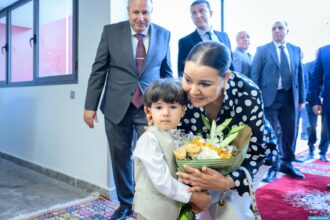
Article : La Princesse Lalla Asmaa lance à Rabat le programme “La prothèse auditive pour tous”
La Princesse Lalla Asmaa, présidente de la Fondation Lalla Asmaa, a présidé mardi 16 juin à Rabat la première Journée des patients souffrant de surdité. L’événement a été marqué par le lancement du programme national "La prothèse auditive pour tous". Un programme inédit destiné à rendre l’appareillage auditif gratuit et accessible aux Marocains les plus démunis.
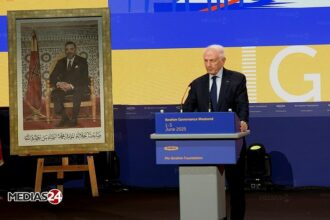
Article : André Azoulay reçoit le prix Boutros Boutros-Ghali de la Paix
Le Forum de Crans Montana salue l’engagement de longue date du conseiller du Roi Mohammed VI en faveur du dialogue interculturel, de la mémoire judéo-marocaine et du rayonnement d’Essaouira.
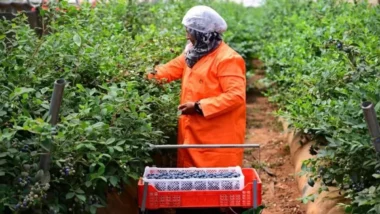
Article : Fruits rouges : l’émirati Elite Agro porte son pari marocain à 1,3 MMDH
Avec une septième ferme de 200 hectares inaugurée à Kénitra, le groupe place le Royaume au cœur de sa production de myrtilles et de framboises.
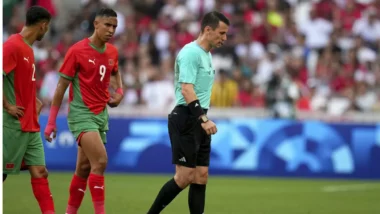
Article : Maroc-Écosse : l'Ouzbek Tantashev au sifflet, deux ans après la demi-finale olympique mouvementée contre l’Espagne
Désigné par la FIFA pour la rencontre du 19 juin au Boston Stadium, celui qui est arbitre international depuis 2013 avait quitté le terrain dès la 15e minute aux Jeux olympiques de Paris après une collision avec Marc Pubill.

Article : Mr. Bricolage vise 45 magasins au Maroc d'ici 2032 et un plan d'investissement de 700 MDH
Mr. Bricolage Maroc prévoit le déploiement de 45 magasins d’ici 2032, au rythme d’une ouverture toutes les huit semaines, dans le cadre d’un plan porté par un investissement de 700 millions de DH.

Article : Loi 16.22 sur les adouls : l’Ordre réagit à la décision de la Cour constitutionnelle
L’invalidation partielle du texte par la Cour constitutionnelle est accueillie avec soulagement par une partie de la profession, qui y voit la confirmation de réserves exprimées depuis plusieurs mois. Mais pour Maître Driss Trali, membre du bureau exécutif de l’Ordre national, la réforme reste incomplète tant que le dépôt des fonds, l’officialité pleine de l’acte et l’indépendance de l’instance professionnelle ne sont pas consacrés par la loi.