
The COVID Silver Linings Playbook
CHIPPING NORTON – The human tragedies and massive economic disruptions caused by COVID-19 have rightly commanded the attention of the public and policymakers for more than six months, and should continue to do so. But in managing the immediate crisis, we must not lose sight of the opportunities. The oft-quoted line about not letting a crisis go to waste has rarely been more relevant.
For companies, governments, households, and multilateral institutions navigating this unsettling period, the basic task is the same: to overcome pandemic-induced disruptions in ways that also emphasize the silver linings of the crisis. Now is the time to look to lock in trends and conditions that will reshape our society and economy for the better over the long term. With this overarching objective in mind, here are the top six silver linings that I see.
The first is that we are living through one of the most exciting and promising periods of medical invention and innovation in history. While the immediate focus is rightly on COVID-19 vaccines and therapies, we should expect the research currently underway to produce a host of other discoveries, many of which will yield significant, durable benefits. Moreover, the crisis is forcing us to confront a battery of complex issues concerning drug pricing and distribution, both domestically and globally, as well as the range of social and other inequalities that we have allowed to worsen.
Second, deeper cross-border private-sector collaboration, often outside the purview of governments, is fueling this process of scientific leapfrogging. In mobilizing against the coronavirus, scientists around the world are sharing information like never before, and pharmaceutical companies are collaborating in unprecedented ways. These collective efforts are being supported by dynamic public-private partnerships, showing that this instrument of development can indeed be “win-win” when it is properly focused and there is clear alignment.
Third, the economic disruptions resulting from the pandemic have fueled multiple private-sector efforts to collect and analyze a broader range of high-frequency data in domains extending far beyond medicine. In the economics discipline, for example, there is a massive surge of interest in innovative new methods of measuring economic activity through granular high-frequency indicators like mobility (smartphone geolocation), electricity consumption, and retail traffic, as well as credit card usage and restaurant reservations. These metrics are now supplementing the official statistics compiled by governments, providing considerable scope for compare-and-contrast exercises that can improve the quality and policy relevance of data-collection efforts.
Fourth, the COVID-19 shock has raised our collective awareness and sensitivity to low-probability, high-impact “tail risks.” Suddenly, many in the private and public sectors are thinking more in terms of the full distribution of potential outcomes, whereas in the past they focused only on the most likely events. Policymakers have become more open to scenario analyses and the broader range of “if-then” conversations that such analyses elicit.
In the case of climate change – a major risk that some wrongly perceived as a distant tail instead of a baseline – the sharp reduction in harmful emissions during the current crisis has provided clear evidence that a new way is possible. And it is now widely accepted that governments have an important role to play in underwriting a durable and inclusive recovery. The door is open for more public investment in climate mitigation and adaptation, and there is a growing chorus demanding that the new normal be “green.”
This speaks to a fifth silver lining. The pandemic has led country after country to run a series of “natural experiments,” which have shed light on a host of issues that go well beyond health and economics. Systems of governance and modes of leadership have come under scrutiny, revealing a wide divergence in their capacity to respond to the same large shock. These issues have not been limited to the public sector. Corporate responsibility has also been brought to the fore as company after company scrambles to respond to what was once unthinkable. And multilateral cooperation has been shown to be lacking, increasing the threats to all.
Finally, the crisis has required many companies to hold candid conversations about work-life balance, and to devise innovative solutions to accommodate employees’ needs. There have already been far-reaching changes in how we work, interact with colleagues, and consume goods and services, and only some of these are likely to be reversed after the pandemic has passed.
These six silver linings constitute only a preliminary list of the opportunities offered by the pandemic. The point is not to discount the severity of the shock and uncertainty that have confronted the majority of the world’s population. The pandemic has lasted much longer than many expected, and continues to leave tragedy and destruction in its path.
But that is all the more reason to make the most out of our collective response. The challenge now is to expand and refine this list, so that we can seize the opportunities on offer and lock in more positive trends for the long term. By acting together, we can transform a period of deep adversity into one of shared wellbeing for us and for future generations.
© Project Syndicate 1995–2020
à lire aussi

Article : Le Nouvel an de l'hégire (1er Moharram) sera célébré ce mercredi 17 juin au Maroc
Le 1er Moharram de la nouvelle année de l’Hégire 1448 correspondra au mercredi 17 juin 2026, a annoncé le ministère des Habous et des affaires islamiques.

Article : Adouls : la Cour constitutionnelle valide l’essentiel de la réforme, mais écarte plusieurs dispositions
Saisie par 93 députés avant la promulgation du texte, la Cour a déclaré non conformes des articles touchant aux incompatibilités professionnelles, aux personnes en situation de handicap, au témoignage collectif dit “lafif” et à l’organisation des instances représentatives. Le texte devra donc être corrigé sur ces points, sans remettre en cause le cœur de la nouvelle loi 16.22.
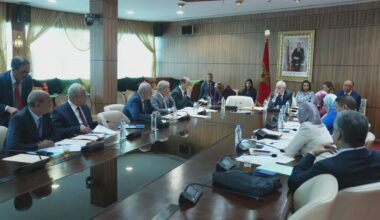
Article : En commission, les conseillers votent la nationalisation de la Samir et le plafonnement des hydrocarbures
Deux propositions de loi portant sur les hydrocarbures et la Samir ont été récemment adoptées en commission à la Chambre des conseillers. Un vote "surprise" rendu possible par un rapport de forces numérique défavorable à la majorité, lors d’une séance où l’opposition était majoritaire en nombre. Si ces textes ont franchi l’étape de la commission, leurs promoteurs sont conscients qu’ils ont peu de chances d’être adoptés en plénière.

Article : Retail : la guerre silencieuse pour conquérir le panier des Marocains
Pendant longtemps, les courses du quotidien se sont surtout jouées entre l’épicier du quartier, le grossiste et quelques grandes surfaces. Ce modèle commence à se fissurer. Entre fusion capitalistique, rachats d’enseignes, master-franchises, centrales d’achat, logistique commune et formats de proximité, les grands opérateurs installent peu à peu des réseaux capables d’accompagner le consommateur du café du matin aux achats du week-end. Non sans bousculer les équilibres.

Article : Crédit du Maroc : ce que cache l’augmentation de capital à 699 MDH
Depuis son passage sous le contrôle de Holmarcom, Crédit du Maroc a changé de rythme. La banque affiche des bénéfices en hausse, prépare son plan CDM Boost 2028, et propose désormais à ses actionnaires de suivre le mouvement via une opération ouverte du 26 juin au 16 juillet. Derrière le prix fixé à 938 DH par action, le marché devra surtout juger si cette nouvelle étape confirme une trajectoire ou ouvre un pari plus large. Décryptage.
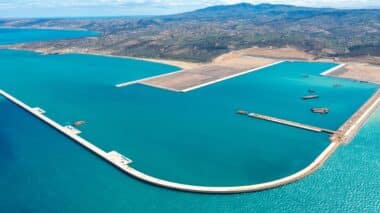
Article : Nador West Med : derrière le port, le pari industriel de l’Oriental
ROUND UP. Prévu pour entrer en service fin 2026, Nador West Med se construit déjà au-delà de ses quais : routes dédoublées, future autoroute vers Guercif, projets chinois dans l’éolien, les pneus et les alliages, ambition énergétique autour du GNL et de l’hydrogène vert. L’enjeu est désormais de transformer cette infrastructure en véritable moteur économique régional.