
The Value of Fake News
NEW YORK – On a trip to Ethiopia in the 1990s, I met with Prime Minister Meles Zenawi to try to persuade him to stop jailing journalists. Since Meles’s guerillas had ousted a repressive Soviet-backed dictatorship a few years before, there had been an explosion of exuberant and sometimes wildly inaccurate little newspapers, many of them attacking Meles. So he had cracked down, introducing laws criminalizing what he called “insults” to the government and fining and imprisoning journalists for inaccuracies. Ethiopia quickly became one of the world’s top jailors of journalists. Now, with a new reformist prime minister, Abiy Ahmed, in office for just one year, Ethiopia has made so much progress in freeing jailed journalists and lifting press controls that it is hosting World Press Freedom Day. But don’t celebrate yet. Some in the newly freed press are publishing sometimes inaccurate stories – whipping up ethnic and tribal enmity and attacking Abiy. With the first free elections in 15 years taking place next year, he is in the same spot Meles was, and is considering restoring some of the press controls he had canceled. Before he does that, he should take a long and critical look at Meles’s crackdown and the lesson it holds: journalists are irrepressible, and controlling them achieves nothing in the long run. In fact, it merely delays the development of a more professional media. Meles had offered a simple explanation for his government’s actions. “Our journalists are not professional like those in the United States and Western Europe,” he told me. “They do not know how to report the news accurately. We must set guidelines for them until they learn how to do their jobs.” If he were alive today, Meles would probably be railing against “fake news.” Over more than three decades of fighting for a worldwide free press, and as an early chairman of the Committee to Protect Journalists, I have heard arguments like Meles’s many times. Journalists, officials in emerging democracies often insist, must be constrained by the state until they are able to carry out their work responsibly. But rather than accelerating the development of a credible free press, this approach impedes it. After my meeting with Meles, I began seeking historical evidence for his claim that insufficiently professional journalism justified suppression of the press; that way, I could counter his argument on my next trip. I found one precedent in early US history. In fact, Meles’s words were eerily similar to arguments made in the eighteenth century by US President John Adams and his Federalists, who denounced a free and enthusiastic press that disseminated criticism – both accurate and inaccurate – of the new country’s politicians. Arguing that an unrestrained press threatened America’s future, Adams succeeded temporarily in stifling journalists in 1798, when he signed the Alien and Sedition Acts, which authorized imprisoning and fining journalists who “write, print, utter, or publish any false, scandalous and malicious writing” against the government. Twenty newspaper editors were subsequently jailed. But Thomas Jefferson and his Democratic-Republicans pushed back against the Federalists, both in Congress and the courts. And, fortunately for US journalists, Jefferson was elected president in 1800. Within two years, the alien and sedition laws either expired or were repealed. That opened the way for the American press to experiment, thereby developing – over more than two centuries – a culture of deep and accurate reporting, including consistent fact-checking. There’s no shortcut to a vibrant free press; it takes a long period of trial and error for the norms and institutions of professional journalism to develop. Politicians must trust the process – and maintain a thick skin. While repressive media laws may benefit leaders in the short run, in the long run, they stunt the development of a country’s press. There is quantitative evidence of this effect. When the French Revolution began in 1789, press restrictions were lifted. Four years later, there were more than 400 newspapers in the country, including 150 in Paris alone. By 1799, that figure had risen to 1,300 newspapers across the country. That was 1,300 venues for aspiring journalists to learn and hone their craft. But the revolution took a repressive turn. By the time Napoleon Bonaparte took power in 1799, the number of newspapers in Paris had plunged to 72. He soon reduced that number to 13, and then, in 1811, to four. Likewise, after the collapse of the Soviet Union, media of all types flourished. But some of the newly independent successor states embraced the idea that media “guidelines” were needed. Many enacted laws that were advertised as ensuring a free press, but that have been used to penalize journalists for aggressive, critical reporting. Libel was criminalized. Enormous fines were imposed on independent publications, broadcasters, and bloggers. China and Turkey – both Olympic-level jailers of journalists – have ramped up their repression in recent years. Just last month, Russian President Vladimir Putin signed new laws authorizing punishment of individuals and online media for spreading so-called fake news and information that “disrespects” the state. US President Donald Trump is trying to go in the same direction. His constant branding of journalists as “liars” and “enemies of the people” echoes the Nazis’ preferred label for the media: the Lügenpresse (lying press). Even in the European Union, journalists are still jailed for criminal libel and insulting the government, according to a 2014 International Press Institute study. “The vast majority of EU states maintain criminal defamation provisions that provide imprisonment as a possible punishment,” the IPI found. “Prosecutions continue to be carried out and journalists continue to be sentenced to criminal punishments.” Allowing the press to experiment, make mistakes, and learn from them has been crucial to the success of democracies worldwide. That is why governments and civil societies need to be vigilant in supporting a free press, even – or especially – if it is still developing. © Project Syndicate 1995–2019
à lire aussi
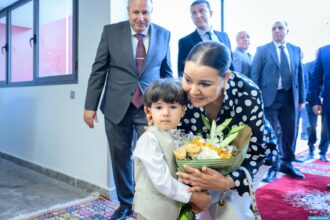
Article : La Princesse Lalla Asmaa lance à Rabat le programme “La prothèse auditive pour tous”
La Princesse Lalla Asmaa, présidente de la Fondation Lalla Asmaa, a présidé mardi 16 juin à Rabat la première Journée des patients souffrant de surdité. L’événement a été marqué par le lancement du programme national "La prothèse auditive pour tous". Un programme inédit destiné à rendre l’appareillage auditif gratuit et accessible aux Marocains les plus démunis.
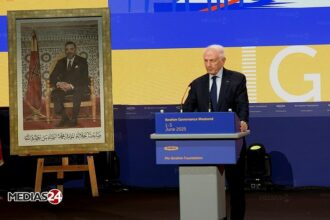
Article : André Azoulay reçoit le prix Boutros Boutros-Ghali de la Paix
Le Forum de Crans Montana salue l’engagement de longue date du conseiller du Roi Mohammed VI en faveur du dialogue interculturel, de la mémoire judéo-marocaine et du rayonnement d’Essaouira.
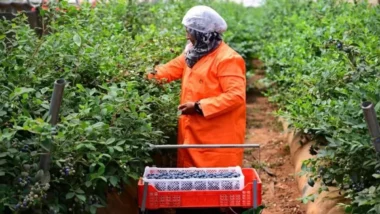
Article : Fruits rouges : l’émirati Elite Agro porte son pari marocain à 1,3 MMDH
Avec une septième ferme de 200 hectares inaugurée à Kénitra, le groupe place le Royaume au cœur de sa production de myrtilles et de framboises.
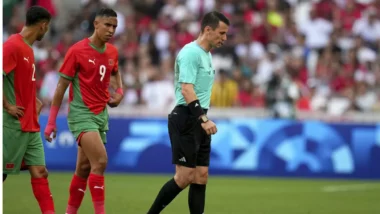
Article : Maroc-Écosse : l'Ouzbek Tantashev au sifflet, deux ans après la demi-finale olympique mouvementée contre l’Espagne
Désigné par la FIFA pour la rencontre du 19 juin au Boston Stadium, celui qui est arbitre international depuis 2013 avait quitté le terrain dès la 15e minute aux Jeux olympiques de Paris après une collision avec Marc Pubill.

Article : Mr. Bricolage vise 45 magasins au Maroc d'ici 2032 et un plan d'investissement de 700 MDH
Mr. Bricolage Maroc prévoit le déploiement de 45 magasins d’ici 2032, au rythme d’une ouverture toutes les huit semaines, dans le cadre d’un plan porté par un investissement de 700 millions de DH.

Article : Loi 16.22 sur les adouls : l’Ordre réagit à la décision de la Cour constitutionnelle
L’invalidation partielle du texte par la Cour constitutionnelle est accueillie avec soulagement par une partie de la profession, qui y voit la confirmation de réserves exprimées depuis plusieurs mois. Mais pour Maître Driss Trali, membre du bureau exécutif de l’Ordre national, la réforme reste incomplète tant que le dépôt des fonds, l’officialité pleine de l’acte et l’indépendance de l’instance professionnelle ne sont pas consacrés par la loi.