

The Transatlantic Tragedy
BERLIN – Between the intensifying Sino-American drama and the persistent COVID-19 crisis, the world is undeniably undergoing fundamental, historic change. Seemingly immutable structures built up over many decades are suddenly exhibiting a high degree of malleability, or simply disappearing altogether.
In the ancient past, today’s unprecedented developments would have put people on guard for signs of a coming apocalypse. In addition to the pandemic and geopolitical tensions, the world is also confronting the climate crisis, the balkanization of the global economy, and the far-reaching technological disruptions brought on by digitization and artificial intelligence.
Gone are the days when the West – led by the United States, with the support of its European and other allies – enjoyed unchallenged political, military, economic, and technological primacy. Thirty years after the end of the Cold War – when Germany was reunified and the US emerged as the world’s sole superpower – the case for Western leadership is no longer credible, and East Asia, with an increasingly authoritarian and nationalistic China at the helm, is moving swiftly to replace it.
But it wasn’t the escalating rivalry with China that weakened the West. Rather, the West’s decline has been driven almost entirely by internal developments on both sides of the Atlantic, particularly – though not exclusively – within the Anglo-Saxon world. The United Kingdom’s Brexit referendum and US President Donald Trump’s election in 2016 marked a definitive break in the transatlantic commitment to liberal values and a global rules-based order, heralding the revival of a narrow-minded fixation on national sovereignty that has no future.
The transatlantic West, a concept embodied in the establishment of NATO after World War II, was the result of the military triumph of the US and UK in the Pacific and European theaters. It was these two countries’ leaders who created the post-war order and its principal institutions, from the United Nations and the General Agreement on Tariffs and Trade (the precursor to the World Trade Organization) to the World Bank and the International Monetary Fund. As such, the “liberal world order” – and indeed “the West” generally – was wholly an Anglo-Saxon initiative, one that victory in the Cold War further vindicated.
But in the ensuing decades, the Anglo-Saxon world’s powers have been exhausted, and many of its people have begun to long for a return to a mythical imperial golden age. The prospect of reclaiming past greatness has become a successful political slogan in both countries. Between Trump’s “America First” doctrine to UK Prime Minister Boris Johnson’s effort to “take back control,” the common denominator is a yearning to relive idealized moments of the nineteenth and twentieth centuries.
In practice, these slogans amount to a self-defeating reversal. The founders of an international order that enshrines democracy, the rule of law, collective security, and universal values are now dismantling it from within, thereby undercutting their own power. And this Anglo-Saxon self-destruction has created a vacuum, leading not to a new order but to chaos.
Of course, Europeans – starting with the Germans – are in no position to sit back complacently or point the finger at the Anglo-Saxons. By free-riding on security matters and simply shrugging their shoulders at persistently high trade surpluses, they, too, bear responsibility for today’s nationalist resurgence.
If the West – as an idea and as a political bloc – is to survive, something will have to change. The US and the European Union will each be weaker alone than as a united front. But Europeans now have no other choice but to transform the EU into a genuine power player in its own right. A deep rift has opened up between continental Europeans – who must hold on to the traditional Western construct – and increasingly nationalistic Anglo-Saxons.
After all, Brexit is not really about pragmatic questions of trade; rather, it represents a fundamental break between two value systems. More to the point, what happens if Trump is re-elected in November? The transatlantic West almost certainly would not survive the next four years, and NATO would probably face an existential crisis, even if Europeans increase their defense spending in response to US demands. For Trump and his followers, the money isn’t really the issue. Their primary concern is with American supremacy and European fealty.
By contrast, if former US Vice President Joe Biden is elected, the tone of transatlantic relations would certainly become friendlier. But there is no going back to the pre-Trump era. Even under a Biden administration, Europeans would not quickly forget the deep distrust that has been sown these past four years.
Whoever wins in November, the US will have to deal with a Europe that puts much greater stock in its own sovereignty – particularly on technological matters – than it has in the past. The cozy interdependencies of the immediate post-Cold War years are long gone. The relationship will have to be remodeled, and both sides will need to adjust. Europe will have to do much more to safeguard its own interests, and America would do well to understand that Europe’s interests may diverge from its own.
à lire aussi
Article : Le Nouvel an de l'hégire (1er Moharram) sera célébré ce mercredi 17 juin au Maroc
Le 1er Moharram de la nouvelle année de l’Hégire 1448 correspondra au mercredi 17 juin 2026, a annoncé le ministère des Habous et des affaires islamiques.

Article : Adouls : la Cour constitutionnelle valide l’essentiel de la réforme, mais écarte plusieurs dispositions
Saisie par 93 députés avant la promulgation du texte, la Cour a déclaré non conformes des articles touchant aux incompatibilités professionnelles, aux personnes en situation de handicap, au témoignage collectif dit “lafif” et à l’organisation des instances représentatives. Le texte devra donc être corrigé sur ces points, sans remettre en cause le cœur de la nouvelle loi 16.22.

Article : En commission, les conseillers votent la nationalisation de la Samir et le plafonnement des hydrocarbures
Deux propositions de loi portant sur les hydrocarbures et la Samir ont été récemment adoptées en commission à la Chambre des conseillers. Un vote "surprise" rendu possible par un rapport de forces numérique défavorable à la majorité, lors d’une séance où l’opposition était majoritaire en nombre. Si ces textes ont franchi l’étape de la commission, leurs promoteurs sont conscients qu’ils ont peu de chances d’être adoptés en plénière.

Article : Retail : la guerre silencieuse pour conquérir le panier des Marocains
Pendant longtemps, les courses du quotidien se sont surtout jouées entre l’épicier du quartier, le grossiste et quelques grandes surfaces. Ce modèle commence à se fissurer. Entre fusion capitalistique, rachats d’enseignes, master-franchises, centrales d’achat, logistique commune et formats de proximité, les grands opérateurs installent peu à peu des réseaux capables d’accompagner le consommateur du café du matin aux achats du week-end. Non sans bousculer les équilibres.

Article : Crédit du Maroc : ce que cache l’augmentation de capital à 699 MDH
Depuis son passage sous le contrôle de Holmarcom, Crédit du Maroc a changé de rythme. La banque affiche des bénéfices en hausse, prépare son plan CDM Boost 2028, et propose désormais à ses actionnaires de suivre le mouvement via une opération ouverte du 26 juin au 16 juillet. Derrière le prix fixé à 938 DH par action, le marché devra surtout juger si cette nouvelle étape confirme une trajectoire ou ouvre un pari plus large. Décryptage.
Article : Nador West Med : derrière le port, le pari industriel de l’Oriental
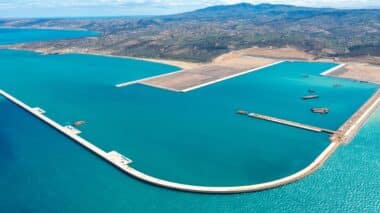
ROUND UP. Prévu pour entrer en service fin 2026, Nador West Med se construit déjà au-delà de ses quais : routes dédoublées, future autoroute vers Guercif, projets chinois dans l’éolien, les pneus et les alliages, ambition énergétique autour du GNL et de l’hydrogène vert. L’enjeu est désormais de transformer cette infrastructure en véritable moteur économique régional.