

The End of the World As We Know It
BERLIN – After three decades of moving toward a single global market governed by the rules of the World Trade Organization, the international order has undergone a fundamental change. The United States and China are locked in a tariff war that at first seemed to be about the bilateral trade balance, but has turned out to be about much more. Until recently, one could find hope in the fact that, despite frequent exchanges of threats, the two countries were negotiating. Not anymore. Last month, under pressure from US President Donald Trump’s administration, Google terminated its cooperation with Huawei, thereby depriving the Chinese smartphone maker of the license to use Google’s Android software and related services. The move poses an existential threat to Huawei. But, more than that, it marks both a new pinnacle in the Sino-American conflict and the end of US-led globalization. The message from the US is clear: technology and software exports are no longer just a matter of business; they are about power. From now on, the US will put might over market. Now that the conflict has assumed the form of a hegemonic struggle, China may have to pull out all the stops to protect its national champions. That means withdrawing as quickly as possible from all supply chains that rely on US-made high-tech inputs, particularly semiconductors. China would have to start sourcing all the necessary components domestically, or from safe partners within its orbit. In the medium term, this adjustment would effectively divide the world into two spheres of economic competition. Sooner or later, all smaller powers dependent on global markets would have to choose a side, unless they are somehow strong enough to withstand both American and Chinese pressure. With China and the US both demanding clarity, even economic giants like the European Union, India, and Japan would be faced with an intractable economic dilemma. Assuming that an open, unified global market does indeed become a thing of the past, the question, then, will be how China plays its cards. As America’s largest creditor, would it see a currency war as its ace up the sleeve? If so, an already dangerous struggle for global technological preeminence would become a broader and more immediately perilous conflict. The danger is not just that economic rivalry, protectionism, and trade restrictions would threaten global prosperity; it is that these developments also would raise the risk of a serious political confrontation. Technological sovereignty would take the place of trade and exchange, and the nationality of corporations – even major multinationals – would become just as important as their business model. Still, it would be a mistake to conclude that this whole conflict was brought on solely by Trump and his neo-nationalist agenda. Two days after Google announced its decision, the New York Times published a commentary by Thomas L. Friedman, author of The World is Flat, echoing many of Trump’s attacks on China’s unfair trade practices. If that is where the previous ideological high priest of globalization now stands, China is facing off against not just Trump’s America, but liberal America, too. The Trump administration’s latest move is meant to signal that the US will not hand over its dominant global position without a fight. Yet by precipitating a break in the existing trade relationship with China, the US will incur immense costs of its own. No doubt turbulence awaits Europe, too. A rupture in the global economy would pose a fundamental challenge to the European – and especially the German – export model. Though the European Union will remain dependent on the American security guarantee and trade with the US, the bloc’s exporters have become increasingly reliant on the Chinese market. A scenario in which they are forced to decide between the two would thus produce a lose-lose outcome. True, in a full-scale technology war, the EU’s value as an ally to the US would increase, and the risks of punitive US tariffs on European exports would decline. But European exporters that have become more dependent on China would be squeezed. Past experience has shown that Europe usually needs a crisis in order to move to the next stage of its development. If there is any silver lining in the current situation, it is that Europe may now have no choice but to develop a geopolitical strategy for the twenty-first century. The EU was largely spared a populist upset in the recent European Parliament election. Now it must get to work safeguarding its prosperity and sovereignty in an age of Sino-American rupture. © Project Syndicate 1995–2019
à lire aussi

Article : La Princesse Lalla Asmaa lance à Rabat le programme “La prothèse auditive pour tous”
La Princesse Lalla Asmaa, présidente de la Fondation Lalla Asmaa, a présidé mardi 16 juin à Rabat la première Journée des patients souffrant de surdité. L’événement a été marqué par le lancement du programme national "La prothèse auditive pour tous". Un programme inédit destiné à rendre l’appareillage auditif gratuit et accessible aux Marocains les plus démunis.
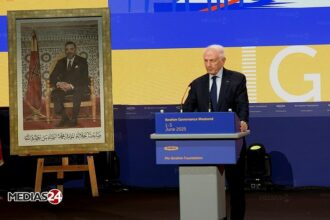
Article : André Azoulay reçoit le prix Boutros Boutros-Ghali de la Paix
Le Forum de Crans Montana salue l’engagement de longue date du conseiller du Roi Mohammed VI en faveur du dialogue interculturel, de la mémoire judéo-marocaine et du rayonnement d’Essaouira.

Article : Fruits rouges : l’émirati Elite Agro porte son pari marocain à 1,3 MMDH
Avec une septième ferme de 200 hectares inaugurée à Kénitra, le groupe place le Royaume au cœur de sa production de myrtilles et de framboises.
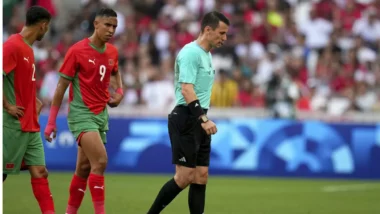
Article : Maroc-Écosse : l'Ouzbek Tantashev au sifflet, deux ans après la demi-finale olympique mouvementée contre l’Espagne
Désigné par la FIFA pour la rencontre du 19 juin au Boston Stadium, celui qui est arbitre international depuis 2013 avait quitté le terrain dès la 15e minute aux Jeux olympiques de Paris après une collision avec Marc Pubill.

Article : Mr. Bricolage vise 45 magasins au Maroc d'ici 2032 et un plan d'investissement de 700 MDH
Mr. Bricolage Maroc prévoit le déploiement de 45 magasins d’ici 2032, au rythme d’une ouverture toutes les huit semaines, dans le cadre d’un plan porté par un investissement de 700 millions de DH.

Article : Loi 16.22 sur les adouls : l’Ordre réagit à la décision de la Cour constitutionnelle
L’invalidation partielle du texte par la Cour constitutionnelle est accueillie avec soulagement par une partie de la profession, qui y voit la confirmation de réserves exprimées depuis plusieurs mois. Mais pour Maître Driss Trali, membre du bureau exécutif de l’Ordre national, la réforme reste incomplète tant que le dépôt des fonds, l’officialité pleine de l’acte et l’indépendance de l’instance professionnelle ne sont pas consacrés par la loi.