
Banking on Refugees
KAMPALA – Every minute, on average, 31 people are displaced – forced to leave their jobs, homes, and even their families. These refugees often arrive, after arduous journeys, in new countries with no money or identification, and few possessions. Yet, far from securing a safer, more prosperous future, they often find themselves marginalized, excluded, and even demonized, denied opportunities to integrate into their host societies or contribute to the local economy. One straightforward way to empower refugees is to give them access to financial services.
Financial service providers (FSPs) have long neglected this population, owing to accessibility and identification challenges, together with perceptions of refugees as a high-risk group. But technological advances in the last decade have made providing financial services to refugees easier, safer, and more cost-effective than ever.
Thanks to digital and mobile technologies, banking no longer happens primarily in brick-and-mortar branches, but rather on people’s phones, wherever they are. This has facilitated the rise of digital wallets that enable users to receive, store, and spend money using only their phones. In recent years, mobile money has become wildly popular in Sub-Saharan Africa in particular, and it can be a game changer for the world’s massive unbanked population – 1.7 billion people – two-thirds of whom already own a mobile phone that could act as a gateway to financial services.
There is little reason to distinguish refugees from the rest of the world’s unbanked. Contrary to popular belief, refugees are not a higher-risk demographic: the Kiva Refugee Impact Report found that, when it comes to loan repayment, refugees are on par with non-refugees. Moreover, thanks to facial-recognition and artificial-intelligence technologies, banks can now instantly verify users’ identities, using, for example, a quick iris scan run through an open-source identity-verification application programming interface (API).
As a result, refugees’ lack of an identity card, loan collateral, and/or a fixed address is becoming irrelevant. This will be all the more true with the introduction of ID2020, a collaboration among Microsoft, Accenture, and the United Nations that will use biometric data and the blockchain (distributed ledgers) to create an encrypted, permanent, and shareable means of identification for all refugees.
It is in the interest of FSPs themselves to make use of the blockchain. True, the technology – which facilitates direct transactions among parties, creating a permanent and immutable record – has the potential to displace FSPs in the long term, by ending their monopoly on intermediating trust. But, in the short term, its adoption by banks could slash costs and reduce the risk of fraud, thereby enabling the rapid expansion of services to refugees, among others. In this sense, the blockchain could revolutionize credit access for refugees.
Already, the blockchain is being used to help refugees. For example, in Jordan, the Zaatari refugee camp distributes humanitarian aid using the blockchain and cryptocurrency. Each refugee is issued a digital wallet, into which money for food and supplies is deposited, with facial recognition being used to verify transactions. The results have been compelling: fair and accurate aid distribution, a 98% reduction in transaction fees, and fewer cases of misappropriation of funds.
In Finland, MONI, a blockchain startup, and the Finnish Immigration Service have issued refugees a digital ID stored on the blockchain. With a MONI account, refugees can access government benefits, even if they have lost their passports. Such uses of the blockchain reduce reliance on government-issued identification, as they encourage the acceptance of other forms, such as a UN-issued refugee ID.
There is another, long-term rationale for FSPs to expand services to refugees. Doing so would allow them to collect data and learn valuable lessons that can help shape their approach to increasingly mobile global customers, who are shifting from full-time jobs to remote and freelance work in the “gig economy.”
The creditworthiness of freelancers – expected to represent 43% of the workforce by 2020 – can be difficult to determine, owing to their irregular and unpredictable incomes. And so-called digital nomads often lack a permanent address, making it difficult to conduct credit checks. These workers of the future thus raise many of the same challenges for traditional financial services that refugees do. Alternative credit-scoring methods that are created for refugees today could be applied much more widely in the future.
Given all of this, banks should act now to expand their services to refugees. They could follow the example of the financial-technology (fintech) company MyBucks, which has already opened a banking branch in Malawi’s Dzaleka refugee camp to provide loans, mobile banking, and training services.
Of course, resolving the refugee crisis and tapping the economic potential of the more than 25 million refugees worldwide will also require changes in other areas, beginning with destination-country political narratives. In many countries, politicians and the media have been portraying refugees as a threat to security, cultural cohesion, and public resources.
Former US Secretary of State Hillary Clinton blamed her loss to Donald Trump in the 2016 presidential election, and the Brexit vote that preceded it, on the public backlash against immigration, and recently suggested that Europe should admit fewer refugees, in order to stem the rise of populism. Gunter Nooke, Germany’s Africa Commissioner, had an even more unpalatable proposal: African countries should cede land to be administered by the European Union as special economic zones, in what would amount to “voluntary colonialism.”
Such solutions are not only unethical; they would not end the crisis. Humanitarian aid alone will not work, either, except as a stopgap measure. To preserve long-term stability and dynamism, host countries must unlock economic opportunities for refugees. FSPs and fintech companies, known for their capacity for disruption, can play a key role in that process.
à lire aussi
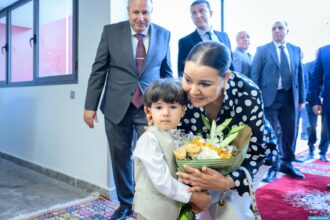
Article : La Princesse Lalla Asmaa lance à Rabat le programme “La prothèse auditive pour tous”
La Princesse Lalla Asmaa, présidente de la Fondation Lalla Asmaa, a présidé mardi 16 juin à Rabat la première Journée des patients souffrant de surdité. L’événement a été marqué par le lancement du programme national "La prothèse auditive pour tous". Un programme inédit destiné à rendre l’appareillage auditif gratuit et accessible aux Marocains les plus démunis.

Article : André Azoulay reçoit le prix Boutros Boutros-Ghali de la Paix
Le Forum de Crans Montana salue l’engagement de longue date du conseiller du Roi Mohammed VI en faveur du dialogue interculturel, de la mémoire judéo-marocaine et du rayonnement d’Essaouira.

Article : Fruits rouges : l’émirati Elite Agro porte son pari marocain à 1,3 MMDH
Avec une septième ferme de 200 hectares inaugurée à Kénitra, le groupe place le Royaume au cœur de sa production de myrtilles et de framboises.

Article : Maroc-Écosse : l'Ouzbek Tantashev au sifflet, deux ans après la demi-finale olympique mouvementée contre l’Espagne
Désigné par la FIFA pour la rencontre du 19 juin au Boston Stadium, celui qui est arbitre international depuis 2013 avait quitté le terrain dès la 15e minute aux Jeux olympiques de Paris après une collision avec Marc Pubill.
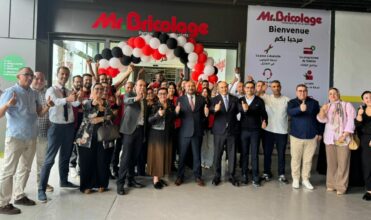
Article : Mr. Bricolage vise 45 magasins au Maroc d'ici 2032 et un plan d'investissement de 700 MDH
Mr. Bricolage Maroc prévoit le déploiement de 45 magasins d’ici 2032, au rythme d’une ouverture toutes les huit semaines, dans le cadre d’un plan porté par un investissement de 700 millions de DH.

Article : Loi 16.22 sur les adouls : l’Ordre réagit à la décision de la Cour constitutionnelle
L’invalidation partielle du texte par la Cour constitutionnelle est accueillie avec soulagement par une partie de la profession, qui y voit la confirmation de réserves exprimées depuis plusieurs mois. Mais pour Maître Driss Trali, membre du bureau exécutif de l’Ordre national, la réforme reste incomplète tant que le dépôt des fonds, l’officialité pleine de l’acte et l’indépendance de l’instance professionnelle ne sont pas consacrés par la loi.