
Fomenting Intellectual Revolution in the MENA Region
WASHINGTON, DC – Many countries across the Middle East and North Africa (MENA) remain stuck in the transition from an administered to a market economy. While some have made more progress than others, all continue to face a wide range of economic and political challenges.
The main economic obstacles fall into two general categories: opaque ownership structures and firms’ inability to enter or exit markets easily. Politically, the fact that most MENA countries are autocracies – the region is one of the last on Earth with absolute monarchies and military rule – is the principal barrier to economic change.
Nonetheless, social pressure has grown with the rise of a more educated generation whose aspirations often exceed the limited opportunities available in labor markets dominated by public-sector hiring. The private sector in most MENA countries is chronically anemic, and the politicization of employment has effectively disenfranchised many young people, triggering an explosion of angry street protests.
The widespread revolts that started with the “Arab Spring” in 2011 shocked the region’s political systems, but the ultimate outcomes varied widely. While some regimes fell, others became even more autocratic, and elites generally remained unpersuaded of the need for deep economic restructuring and labor-market reforms.
The situation in the MENA region resembles that of the Soviet bloc in the 1980s. For a while, those lobbying against reforms – particularly the entrenched nomenklatura – succeeded in preventing the kind of bold and inclusive measures that were needed. But, eventually, elites’ failure to adapt led to a full-scale political collapse, finally enabling a transformation of the system.
In a similar fashion, MENA governments today operate with strategic opacity. Many countries disclose only limited amounts of the most basic data needed to conduct informed public-policy debates. Generally, this information flows from government agencies to favored think tanks whose analysis is then discussed in the media.
This process of intermediation allows governments to remain aloof. Local authorities and public administrators routinely avoid accountability, while, behind the scenes, the status quo is maintained by powerful insiders who benefit from rents on, say, oil revenues, or from monopoly positions in key sectors.
One particularly egregious obstacle to reform are those who hold exclusive import licenses for consumer products. Under this arrangement, imports in many countries are effectively subsidized by an overvalued exchange rate, while the domestic financial system lends to the government to finance lucrative import activities for the benefit of a few elites. Political leaders apparently have been unable to take on these vested interests, even as they have come under increasing pressure from disenfranchised younger generations.
But, despite elites’ best efforts to repress pressure for change, a second wave of protests began sweeping the region in 2019, which suggests that most leaders’ political capital is running out. In the MENA region, protests are a relatively new way to push for accountability. And now, the dual shock of the COVID-19 pandemic and the collapse in oil prices seems to have dealt a fatal blow to a social contract that was already cracking under the weight of demographic change.
The new demand for accountability once again opens the door for change. There is an opportunity to educate the region’s entire population about the deficiencies of the current system, and to chart a course toward a much-needed transformation. This is necessary for building a dynamic but stable constituency in support of deeper, more inclusive reform whenever the opportunity opens up. With the support of a broad-based constituency, political leaders might then find the courage both to initiate change and hold a now-weakened oligarchy at bay.
But the transformation cannot happen incrementally or one project at a time. MENA countries need wholesale reform to rebalance the role of the state and its protected firms and workers with that of a largely informal market. To have even a remote chance of success, the ideas underlying a full-scale transformation must command broad popular support, especially among young people.
A top-down approach to renewing the social contract will not work. The kind of renewal that is needed will require decentralized decision-making, underpinned by a change in social attitudes about individual risk-taking. Political leaders, even when elected democratically, cannot simply instruct the population on these changes; they will need to be embraced by each individual.
With this in mind, the international community should look for ways to expand the capacity for new thinking in the region – among both government officials and individual citizens. A strategy to disseminate ideas about reform could help to create the culture that is needed to support markets and evidence-based policymaking.
Introducing new ideas and models is the kind of soft engagement the region needs before it can undertake the difficult task of transforming itself. Most important, MENA countries need a domain for independent economic-policy debate. The international community thus should focus on cultivating independent think tanks, of which there are few in the region, owing to government policies to discourage or ban them.
A new ecosystem for the creation and diffusion of ideas would in turn provide journalists and others with the information they need to hold governments accountable. What the MENA region needs most is even more sunlight.
à lire aussi
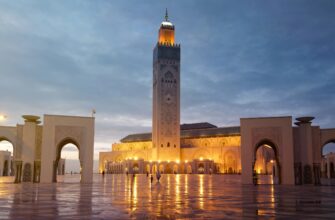
Article : Le Nouvel an de l'hégire (1er Moharram) sera célébré ce mercredi 17 juin au Maroc
Le 1er Moharram de la nouvelle année de l’Hégire 1448 correspondra au mercredi 17 juin 2026, a annoncé le ministère des Habous et des affaires islamiques.
Article : Adouls : la Cour constitutionnelle valide l’essentiel de la réforme, mais écarte plusieurs dispositions
Saisie par 93 députés avant la promulgation du texte, la Cour a déclaré non conformes des articles touchant aux incompatibilités professionnelles, aux personnes en situation de handicap, au témoignage collectif dit “lafif” et à l’organisation des instances représentatives. Le texte devra donc être corrigé sur ces points, sans remettre en cause le cœur de la nouvelle loi 16.22.
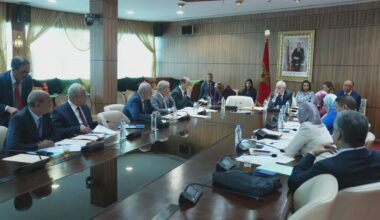
Article : En commission, les conseillers votent la nationalisation de la Samir et le plafonnement des hydrocarbures
Deux propositions de loi portant sur les hydrocarbures et la Samir ont été récemment adoptées en commission à la Chambre des conseillers. Un vote "surprise" rendu possible par un rapport de forces numérique défavorable à la majorité, lors d’une séance où l’opposition était majoritaire en nombre. Si ces textes ont franchi l’étape de la commission, leurs promoteurs sont conscients qu’ils ont peu de chances d’être adoptés en plénière.
Article : Retail : la guerre silencieuse pour conquérir le panier des Marocains
Pendant longtemps, les courses du quotidien se sont surtout jouées entre l’épicier du quartier, le grossiste et quelques grandes surfaces. Ce modèle commence à se fissurer. Entre fusion capitalistique, rachats d’enseignes, master-franchises, centrales d’achat, logistique commune et formats de proximité, les grands opérateurs installent peu à peu des réseaux capables d’accompagner le consommateur du café du matin aux achats du week-end. Non sans bousculer les équilibres.
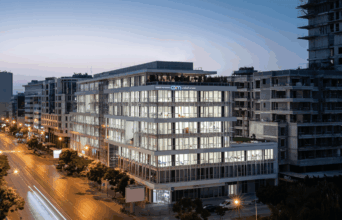
Article : Crédit du Maroc : ce que cache l’augmentation de capital à 699 MDH
Depuis son passage sous le contrôle de Holmarcom, Crédit du Maroc a changé de rythme. La banque affiche des bénéfices en hausse, prépare son plan CDM Boost 2028, et propose désormais à ses actionnaires de suivre le mouvement via une opération ouverte du 26 juin au 16 juillet. Derrière le prix fixé à 938 DH par action, le marché devra surtout juger si cette nouvelle étape confirme une trajectoire ou ouvre un pari plus large. Décryptage.
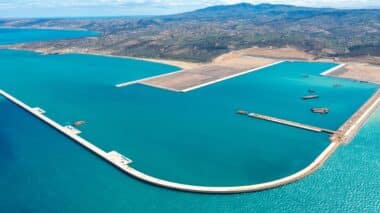
Article : Nador West Med : derrière le port, le pari industriel de l’Oriental
ROUND UP. Prévu pour entrer en service fin 2026, Nador West Med se construit déjà au-delà de ses quais : routes dédoublées, future autoroute vers Guercif, projets chinois dans l’éolien, les pneus et les alliages, ambition énergétique autour du GNL et de l’hydrogène vert. L’enjeu est désormais de transformer cette infrastructure en véritable moteur économique régional.